
 E-Paper



Guest Column| PAU’s G20 connect @60: Realising sustainable goals
Punjab Agricultural University’s research programmes complement G20 goals, particularly climate change mitigation and sustainable development. The university’s long alliance with G20 countries needs to be fostered for sustaining the development momentum across geographic borders


India can leverage its G20 presidency with the University Connect Project by creating engagement groups of high-level professionals for cohesive outcomes with member countries. Education, research, and skills-centric diplomacy offer a sustained opportunity for nation-to-nation and people-to-people relationships. Punjab Agricultural University (PAU), Ludhiana, had realised early that cross-border mobility not only contributes to national innovation capacity but also to international collaboration on global issues as the returned expatriates may contribute to the stock of highly-skilled human capital and serve as nodes of international knowledge networks.
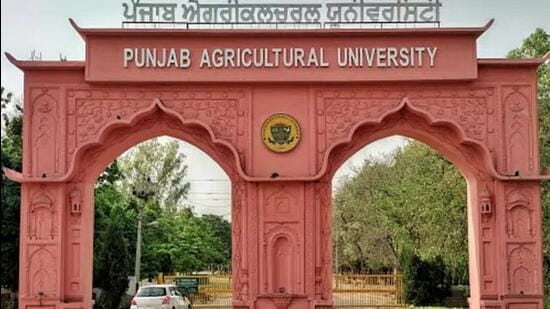
PAU has maintained linkages with G20 nations for orienting its research, education, and technology transfer programmes. The university was established in 1962 on the pattern of Land Grant Colleges in the United States and the Ohio State University aided the structuring of model academic programmes in its formative years. Germplasm selections from the International Maize and Wheat Improvement Center (CIMMYT), Mexico, strongly influenced the development of early wheat varieties PV18, Kalyansona, and Sonalika during the ’60s. With the technology-driven efforts of PAU, wheat and rice production quadrupled in a short period leading to the Green Revolution.
Crop improvement programmes
India’s rich plant genetic resources attract breeders from across the globe. William Farrer introduced Indian wheat in Australia in 1890, while wheat variety C591 was used in the Canadian wheat programme. Wheat variety PBW 65 has been used extensively in the breeding programme by CIMMYT, Mexico, while chickpea variety C 235 was released in Australia (as Tyson) and the US (as Farha). John Innes Centre, the UK, has provided pea germplasm for powdery mildew resistance.
There are several examples of successful deployment of introduced germplasm as cultivars, namely wheat Sonora 64, Lerma Rojo 64 from CIMMYT. CIMMYT germplasm selections continued to enhance wheat production (with mega-varieties PBW 343, DBW 187, and recently PBW 826). Mexican semi-dwarf wheat varieties crossed with indigenous germplasm prompted the development of WL 711. Two Indian mustard varieties (JM 1 and JM 2) were derived by utilising white rust-resistant accessions L 4 and L 6 from Canada.
Tomato varieties, Punjab Tropic and Punjab Varkha Bahar 4, were developed through selection from countries like the US. Chilli varieties Punjab Surkh and Punjab Guchhedar were selections from Indonesian germplasm.
Using SPLAT technology developed in the US, PAU provided an eco-friendly solution to pink bollworm in cotton. First in the country to release three Bt cotton varieties, PAU Bt 1, 2, and 3, a partnership is underway with Japan for breeding coloured cotton. With the first canola-quality hybrid, RCH1 in the country, PAU hopes to learn from Canada’s leading-edge innovations.
Technology advances
At present, PAU is pursuing a GI tag for the seed potato. The advanced blockchain technology in the US can be explored for promoting traceability in the seed chain.
PAU’s direct seeded rice (DSR) technology stems from a decade-long partnership with the University of Adelaide, Australia. It sourced a laser-assisted precision leveller from the US to conserve irrigation water. Happy seeder developed with the help of Australia seeded further innovative additions to the toolkit of no-burn crop residue management machinery. Rice germplasm sourced from Rothamsted Research (UK) is being explored for a host of DSR traits.
Genome editing technologies are being explored to diversify product matrix in sugarcane, especially ethanol production. Brazil can be reckoned as a potential partner in this regard.
The Leaf Colour Chart, originally designed by a Japanese company, has been reviewed and recommended by PAU to save nitrogen. It is looking at potential partnerships in biocontrol and drone technology for eco-friendly pest management. The FAO has adopted the PAU-developed technique for detecting early resistance in diamond moths. Similarly, Australia with the largest acreage under organic agriculture followed by Argentina holds promise in strengthening the knowledge base in organic certification. In farm machinery too, it is time for two-way technology flows with other G20 members.
The university has worked closely with the UK in developing packaging technologies. Agribusiness value chains can be built through meaningful relationships with nations such as the US, UK, Canada, and the EU. The export of traditional products like sugarcane jaggery to G20 countries can also be explored.
Agricultural illuminati linkage
The inflow and outflow of agricultural luminaries, mission directors, and policymakers from G20 nations have helped PAU in aligning its programmes as per global thrust areas. To name a few, Nobel Laureate Norman E Borlaug; World Food Prize winners Gurdev Singh Khush, Surinder K Vasal, and Rattan Lal; trustee of the board of CIMMYT, Khem Singh Gill, and, above all, King Charles III have had close ties with this university.
Alumni in G20 countries
World-class scientists, produced by PAU, have served in prominent positions in India and abroad, including in G20 countries. Hargurdeep Saini is the present president and vice-chancellor of Dalhousie University and the incoming vice-chancellor of McGill University, Canada. Similarly, Parwinder Singh Grewal has been appointed president of the newly created Vermont State University, US.
Knowledge partners
Memoranda of understanding (MoUs) with institutes in G20 countries addressing food security and natural resource conservation are the PAU’s iconic landmarks. Academic exchange programmes, such as Fulbright Fellowship (US), DAAD Fellowship (Germany), Erasmus Programme for Education (EU), Melinda Gates Foundation (US), and Rockefeller Foundation (US), have instilled global competence in PAU faculty.
Recently, in a session of the Voice of Global South Summit, minister of external affairs S Jaishankar cited India’s G20 priorities viz. Green Development Pact to tackle the climate crisis, food and energy security, sustainable lifestyle, and sustainable development goals. PAU’s ongoing and research programmes complement G20 goals, particularly climate change mitigation and sustainable development. The university’s long alliance with G20 countries needs to be fostered for sustaining the development momentum across geographic borders. vc@pau.edu
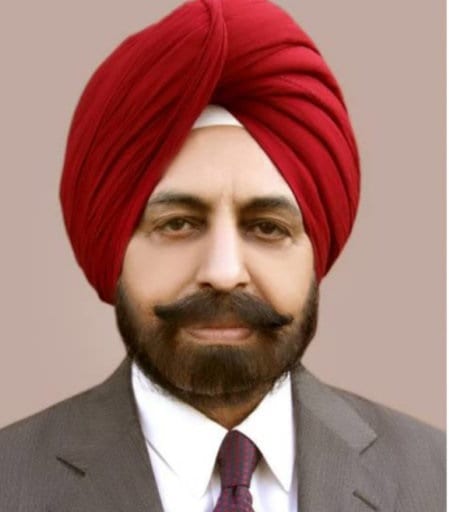
The writer is vice-chancellor, Punjab Agricultural University, Ludhiana. Views expressed are personal.


