
 E-Paper



Guest Column| Punjab must remember lessons of its tragic past
From the trauma of Partition to the dark decades of militancy, the state’s true healing lies in reclaiming the compassionate, unifying vision of its Gurus.

 Prefer HTon Google


Punjab is not merely a geographical region on a map. It is the sacred land of the Gurus, a soil that has inspired humanity for centuries with a universal message of peace, equality, courage, and selfless sacrifice. From Guru Nanak Dev, who preached the oneness of humanity, to Guru Gobind Singh, whose Khalsa transformed ordinary men into fearless defenders of righteousness, Punjab has stood as a beacon of spiritual strength and moral courage.
Historically, Lahore occupied a central place in this sacred geography. It was the ancestral home of the family of Guru Ram Das, and under the Sikh Misls and Maharaja Ranjit Singh, it served as the proud capital of the Sikh Empire for nearly a century. The Partition of 1947 shattered this historic landscape. Most of the territories associated with the Sikh Empire, along with many of Sikhism’s holiest shrines, were left in Pakistan. Millions were displaced, and countless families were uprooted from their ancestral homes in what became one of the greatest human tragedies of the last century. Punjab bore the deepest of these wounds, as Hindus, Muslims, and Sikhs all suffered enormously.
Human cost of discord
The trauma, however, did not end with Partition. Independent India faced the complex task of accommodating diverse linguistic, cultural, and religious aspirations. Over the decades, political competition, administrative failures, deep-seated mistrust, and growing alienation created conditions that contributed to the rise of militancy in the late 1970s and its rapid escalation through the 1980s.
Whatever the political arguments behind its origins, militancy proved disastrous for Punjab. Between 1981 and 1996, the state witnessed the loss of 21,535 lives. These are not merely cold statistics recorded in official archives; every single number represents a family whose future was permanently shattered. Among the dead were 11,696 innocent civilians—farmers, teachers, traders, and children who had no role in the conflict but simply happened to live through Punjab’s darkest hour. Another 1,746 security personnel sacrificed their lives in the line of duty, many of them sons of Punjab itself. The conflict also claimed the lives of 8,093 militants, many of them young Punjabis. No mother measures her grief by the path her son chose; every death left the same emptiness at home.
During the peak years of 1990-92, Punjab became a land governed by fear. Markets closed before sunset, public transport became a target, and weddings were conducted in hushed silence. Business investment stopped, industries migrated to safer states, and educated youth began leaving in search of security and opportunity. The state, which had proudly led the nation through the Green Revolution, lost its economic momentum, leaving psychological and financial scars that are visible even today.
Responsibility in remembrance
Perhaps the greatest tragedy of this era was that the overwhelming majority of those who suffered were Punjabis themselves—people sharing the same language, culture, and village boundaries. In many cases, both those who carried weapons and those who confronted them belonged to the same soil. Punjab was bleeding from within, a vulnerability exploited by external forces. Pakistan, sharing a 550-km border, sought every opportunity to fan the flames of instability for its own strategic interests. Yet, external actors never suffered the consequences. Punjab’s own families paid the price.
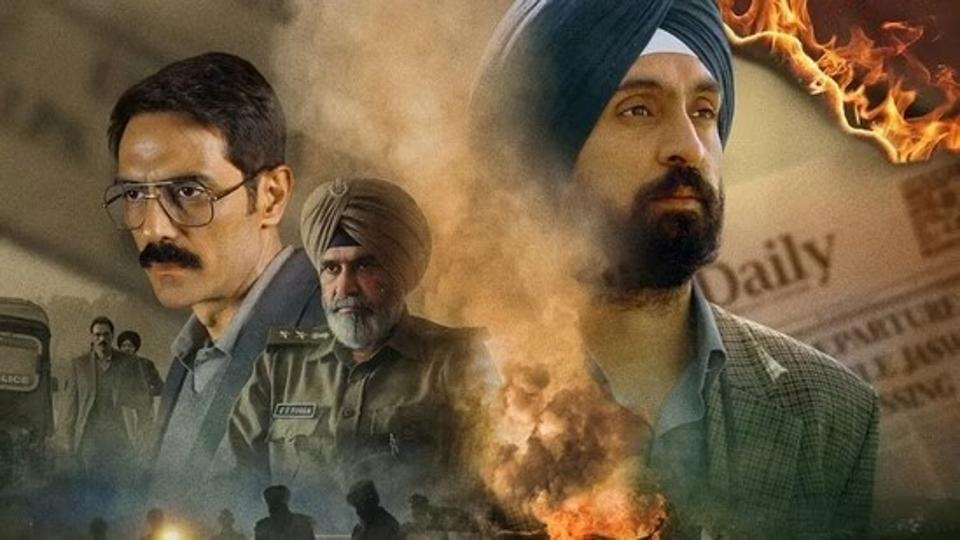
Today, cinema and media productions revisit those turbulent years. While cinema is a vital artistic medium, it is also a commercial enterprise that often relies on dramatic simplification and emotional amplification. Filmmakers carry a profound responsibility. Historical tragedies should educate future generations, not reopen healing wounds or deepen old divisions for commercial gain. Every creative work dealing with Punjab’s past must respect the real families whose lives were permanently altered.
Public debate regarding films depicting this period—including controversial productions like Satluj—must remain strictly within the framework of democratic dialogue. Differences of opinion should be resolved through constitutional mechanisms, not intimidation. Popular global artists, such as Daljit Dosanjh, enjoy immense influence. This stature carries a responsibility to promote harmony and historical accuracy, rather than allowing public discourse to become further polarised.
Reclaiming path of Gurus
Punjab does not need another generation divided by the memories of violence. It needs a generation inspired by the teachings of the Gurus.
Guru Nanak Dev rejected sectarian hatred; Guru Arjan Dev embraced martyrdom without bitterness; Guru Tegh Bahadur sacrificed his life for the religious freedom of others; and Guru Gobind Singh transformed suffering into courage while declaring the eternal dignity of all human beings. Their message was never one of revenge, but of righteousness tempered with compassion.
In recent years, initiatives by the Government of India under Prime Minister Narendra Modi have sought to honour Sikh history through commemorations, memorials, and the international recognition of Sikh contributions. These efforts should be welcomed as opportunities to build mutual trust and national integration. The Sikh community has always strengthened India, whether by defending the nation’s borders, feeding millions through the institution of langar, or driving the nation’s agricultural and scientific progress.
As the historic verse reminds us: “Na kahun ab ki, na kahun tab ki; agar na hote Guru Gobind Singh, sunat hoti sab ki.” This reflects the enduring truth that Guru Gobind Singh’s leadership protected the spiritual freedom of all.
Today, Punjab needs healing over hostility, dialogue over division, and development over destruction. The younger generation must know the truth about the past—not to inherit old hatreds, but to understand the cost of violence. The greatest tribute we can pay to all who lost their lives is to ensure that such a tragedy never returns to our land. The future of Punjab must be written not with bullets, but with compassion; not with fear, but with hope. iqbalsingh_73@yahoo.co.in
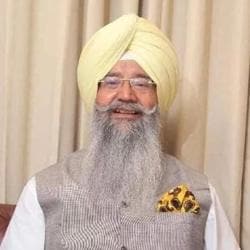
The writer is a former chairman of the National Commission for Minorities. Views expressed are personal.


