
 E-Paper


Guest Column| Reclaiming Himachal’s due through Vyavastha Parivartan
As the Congress government completes four years in office, long-pending legal battles over water, power, and ecology are finally translating into economic security for the hills state.

 Prefer HTon Google


As we approach the completion of the Congress government’s four-year tenure on December 11, the vision of Vyavastha Parivartan (systemic change) we set out with has been realised to a great extent. The people of Himachal Pradesh now know that Vyavastha Parivartan is not merely a political slogan or a tweak in administrative functioning. It is about ensuring every section of society receives its rightful share in the state’s resources, opportunities, and development. It is about correcting historical injustices, dismantling outdated practices, and placing the common citizen—especially in rural areas—at the centre of governance. Achieving this transformation has been an uphill battle, requiring a sustained fight to secure the rights of our people.
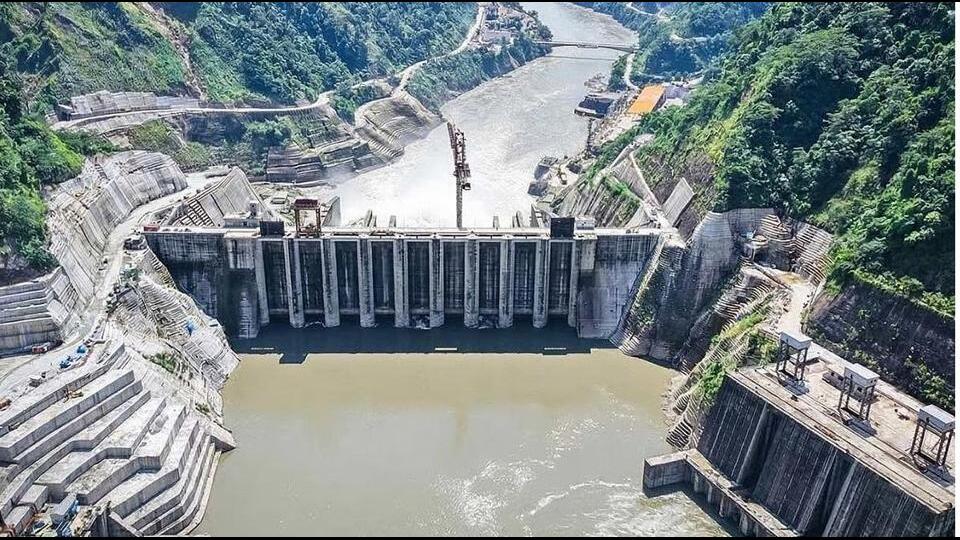
For decades, Himachal Pradesh and its people have made enormous sacrifices in the national interest, often without receiving commensurate economic returns. Our citizens gave up their land, homes, and livelihoods for dams and infrastructure projects of national importance. Many families faced displacement, lost ancestral properties, and were forced to rebuild their lives in unfamiliar surroundings. Brave sons of Himachal made the supreme sacrifice defending our borders, with four earning the Param Vir Chakra. Meanwhile, our people continue to bear the brunt of natural disasters, aggravated by a climate crisis they did not create.
Fair share
As chief minister, my primary duty is to safeguard the state’s interests and ensure our people receive their fair share from our own resources. A state that contributes so heavily to the nation’s energy, security, and water needs deserves more than symbolic praise—it deserves its legitimate economic entitlements.
Despite being endowed with abundant natural wealth, including five major rivers originating from our soil, Himachal Pradesh has long struggled to monetise its assets fairly. Serving as the ‘water bowl’ and the ‘lungs’ of North India, we play a vital role in maintaining the region’s ecological balance. Nearly 68% of our geographical area is forest land, leaving limited space for habitation and industrial growth. According to a scientific study by the Indian Institute of Forest Management, Himachal’s annual contribution in ecological services to the nation exceeds ₹90,000 crore. Yet, whether it is hydropower generated by our rivers, water shared with neighbouring states, or forest conservation, we have repeatedly had to fight prolonged legal battles just to claim what is rightfully ours.
Legal wins
One of the most significant breakthroughs in this effort is the recent Supreme Court verdict on the long-pending Bhakra Beas Management Board (BBMB) power arrears. While the Supreme Court had recognised Himachal’s entitlement to a 7.19% share in 2011, the state struggled for 15 years to realise the arrears pending since 1966 and 1978. Unfortunately, the previous government failed to pursue the matter with the urgency it deserved, leading to endless adjournments.
When we assumed office, we recognised the financial stakes and pursued the case with renewed vigour. We strengthened our legal team with some of the country’s top experts and adopted an integrated strategy across all pending hydro projects. We maintained that decisions regarding our natural resources must be guided by equity—especially given the enduring pain of our Bhakra and Pong Dam oustees. That shift in strategy paid off: Himachal will now receive 600 million units of power annually for the next 20 years, generating an estimated ₹20,000 crore in revenue.
The Kishau Multipurpose Project is another example of our resolve. I refused to accept an arrangement that imposed an unjustified financial burden on Himachal for the project’s power component, overturning terms previously agreed upon. We made it clear that Himachal could not be forced to fund the power component when the Centre was funding 90% of the water component, and it was our people who would face submergence and displacement. Our stand prevailed. Delhi and Rajasthan—two major beneficiaries of the water component—agreed to fund the power component instead. This saved Himachal roughly ₹1,500 crore upfront and secured an annual revenue of ₹1,200 crore to ₹1,500 crore once the project is commissioned.
Political will
The common thread linking these victories is political will. A state’s rights cannot be dictated by its geographical size or financial clout; every state is entitled to fairness. Real change requires challenging unfavourable agreements, exhausting every legal remedy, and refusing to back down until justice is delivered.
To me, this is the true essence of Vyavastha Parivartan—a system where the people come first, and the wealth of the state reaches those to whom it belongs. We will continue on this path with conviction, building a financially self-reliant, prosperous, and equitable Himachal Pradesh.
The writer is the chief minister of Himachal Pradesh.


