
 E-Paper



Guest Column| Regaining economic supremacy of Punjab through policy breakthroughs
The Punjab Vision Document 2047 covers fields, including economy, finances, agriculture, industry, service sector, rural and urban development, social sector, employment, gender equality, resources, including clean energy and climate change, technology and governance. This should serve as the foundational document for initiating policy deliberations in the cabinet on the development agenda.

 Prefer HTon Google


Punjab’s economy enjoyed the highest rate of growth in the country for nearly three decades, starting from the mid-1960s. During this period, Punjab also had the highest per capita income among states. However, the economic reforms of the 1990s marked the beginning of a deceleration era in economic growth. The state’s supremacy in terms of per capita income also got eroded.

Between 2012 and 2022, Punjab’s economy grew at an average rate of 5.03% per annum and it was at the 20th position among states. Punjab with ₹1,61,888 as per capita income in 2021-22 was at the 14th rank. For regaining economic glory, Punjab needs to grow at 10% rate of growth and register a two-fold increase in per capita income. Achieving these targets is a compelling challenge for Punjab. No single institution can help the state to reach these benchmarks. Policymakers, bureaucrats, intellectuals, including educational institutions, entrepreneurs, civil society, and the public, must collaborate on Punjab’s economic development by initiating policy breakthroughs.
Policymakers play a strategic role in creating a conducive environment for breakthroughs by formulating sound policies and setting priorities. Punjab’s policies have prioritised agriculture as the primary driver of development. The prolonged emphasis on agriculture alone has significantly contributed to the deceleration crisis. For achieving breakthroughs in economic policy, the political executive must prioritise new sources of development. Leveraging the strong foundation of agricultural development for rapid growth in industry, especially MSMEs, service sector and exports, is one of the most challenging questions before policy makers.
Harnessing the potential of social sectors, such as education and health for development, is equally crucial. Employment generation, fiscal health, investment, environment-friendly development and world-class infrastructure also requires thorough deliberations in policy circles. These are just sample policy issues. Once the policy-makers start the deliberating development agenda, other policy issues will follow.
Vision for development
The Institute for Development and Communication, Chandigarh, and the department of planning, Punjab, have prepared the Punjab Vision Document 2047. The document has covered fields, including economy, finances, agriculture, industry, service sector, rural and urban development, social sector, employment, gender equality, resources, including clean energy and climate change, technology and governance. This should serve as the foundational document for initiating policy deliberations in the cabinet on the development agenda. The cabinet approved document should be uploaded on the government website for public inputs, followed by deliberations in the assembly. The final agreed-upon blueprint titled, Development of Punjab: A roadmap should be rigorously implemented by future governments, regardless of the ruling political dispensation.
The bureaucracy plays an equally pivotal role in policy formulation, particularly implementation. Senior civil servants assist the political executive in framing public policies, while middle and street-level bureaucrats implement these policies and provide feedback on challenges. For rejuvenating Punjab’s economy, orienting the bureaucracy towards economic administration is essential. Along with performing general administrative functions, bureaucrats should be trained in economic administration to contribute more effectively towards economic policy formulation and implementation.
Intellectuals contribute substantially to improving the quality of public policies and their execution by undertaking research in cutting-edge areas of policy science. In Punjab, policy research, however, has not become integral part of mainstream research. Intellectuals of Punjab must realise that along with their professional growth, they have an obligation towards society. They, therefore, in addition to their ongoing research, should undertake policy research to help the government in formulating evidence-based policies.
University consortium
The education sector is the priority sector of the Punjab government. The institutions of higher learning are actively engaged in research and innovation but their outcomes remain confined to publications and patents. The outcomes of research and innovations are rarely transferred to market. The government should establish mechanisms to track the sector-wise contributions of universities and national labs in Punjab and facilitate the transfer of research and innovations to market and society. At present, universities and research institutions are working in isolation. These institutions should form a consortium for optimal utilisation of resources and undertaking joint research relevant to the state. The consortium can be modelled on the pattern of the Chandigarh Region Innovation and Knowledge Cluster (CRIKC), a consortium of 29 institutions. In the consortium, each institution should be made an anchoring institution for leading research in its niche areas.
It is also observed that in Punjab the entrepreneurs in industry, agriculture, and social sector; and research institutions work in silos. This dichotomy not only dampens research and development initiatives but also the ongoing R&D efforts are not fully utilised by entrepreneurs. Rejuvenating the economy through science and technology, particularly digital technology, should be the strategic decision of the Punjab government. In the light of this, the consortium’s jurisdiction should be extended to users of the research and innovation.
The university consortium, thus, should have three interrelated circles: The central ring, comprising universities and research institutions, the second ring consisting of industry and social partners, and the outer ring having policy-making institutions. The University Grants Commission (UGC) in 2023 also framed guidelines for a vibrant university-industry linkage system by forming research and development clusters facilitated by government for developing a robust ecosystem for research and innovation transfer.
Involve stakeholders
Civil society and the public play significant roles in shaping economic development. The government should involve stakeholders in policy formulation by mandating consultations with civil society. Social audits of policy outcomes should be made obligatory. For performing this role effectively, civil society and the public must develop necessary skills through structured discussions and other modes of interaction. Industry and business associations, farm and labour unions and NGOs can serve as platforms for these engagements.
For a powerful impact of these policy initiatives, the Punjab government should create an institutional forum where all stakeholders can work together for the implementation of the roadmap approved by the assembly. This platform should facilitate commitment from all partners to religiously implement the agreed-upon roadmap, ensuring consistent efforts across different government tenures. ghumanbs54@gmail.com
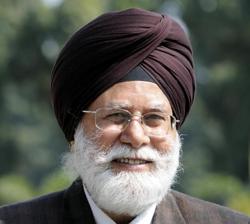
The writer is a former vice-chancellor, Punjabi University, Patiala. Views expressed are personal.


