
 E-Paper



Guest column | The madding rush to open medical colleges
By increasing the number of seats, what exactly are we trying to correct? Our problem is that we have a disparity in the clustering of qualified doctors in metropolitan and Tier 1 cities


There seems to be a mad rush to amend norms to facilitate the opening of new medical colleges to increase the number of MBBS and postgraduate seats. In this rush, we have lost sight of the goal.
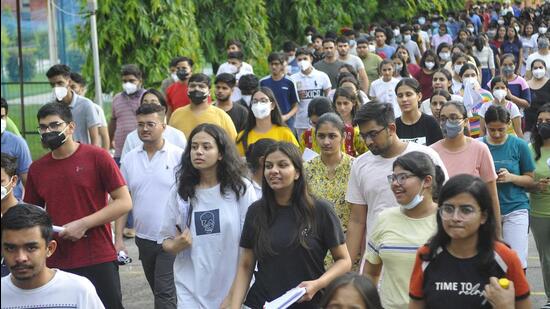
“What is our goal? Is it to produce more qualified doctors or to create and fill more MBBS seats in private medical colleges. The general public has been sold the idea that an MBBS degree is a license to mint money. Swallowing this propaganda hook line and sinker, around 18 lakh youngsters apply for the National Eligibility cum Entrance Test (NEET, undergraduate) every year. From this huge pool, the 50th percentile or 16.25%, which is the cutoff for general category candidates provides a pool of 8.8 lakh candidates, who are eligible and many of them are able to afford a seat in medical colleges.
At present, there are 97,093 MBBS seats and 49,452 postgraduate (doctor of medicine, masters of surgery, postgraduate diplomas, master of chirurgiae (MCh) seats) apart from diplomate of national board (DNB) seats. Already, there are 13.5 lakh MBBS doctors in the country. How many more do we need?
By increasing the number of seats, what exactly are we trying to correct? Our problem is that we have a disparity in the clustering of qualified doctors in metropolitan and Tier 1 cities. Increasing the total number of doctors will increase this disproportionate density in these cities and will not cause large-scale migration of qualified doctors to rural areas. The likely result is exploitation of unemployed and under-employed qualified doctors in cities. This is a typical bureaucratic response to a problem and will create more problems rather than solve the original issue.
With 16.25% marks as cutoff for general category, we are obviously not setting quality as the criterion to select our future doctors. The change from 50% marks for eligibility to 50th percentile was done subtly and smoothly so as to escape public scrutiny. But this masterstroke suddenly provided a large pool of aspirants, who may not have scored 50% marks in the entrance test, but can afford to pay the exorbitant fee of private medical colleges. Earlier, this segment was not eligible for admission, not having scored the 50% cutoff marks.
What are the solutions? Reservation on basis of caste is too sensitive an issue to be touched. However, leaving reservations as they are, could it be considered that those scoring less than 50% 45 % and 40% (not percentile), respectively, in unreserved category, other backward classes and Scheduled Caste and Scheduled Tribe (SC/ST) category will be admitted to MBBS only with a service bond of three to five years?
They should then be given guaranteed employment in an area of need already identified and given preference to by the candidate at time of admission on a fee equivalent to government seats of the particular medical college.
Those who secure less than 50% marks, but more than 50th percentile (or less than 40% marks but more than 40th percentile for reserved category) may then be given admission to colleges, whether government or private.
What is needed is more infrastructure and more employment for MBBS doctors in rural areas.
The total vacancies for MBBS doctors to work in primary health centres across the country remains static at 3,000. If these vacancies were not being filled when we were producing 45,000 MBBS doctors, they will still remain vacant despite producing more than 97,000 doctors.
It is time to hit the pause button and rethink the strategy.
hopeclinics@yahoo.com
( The writer is Chandigarh-based convener of the Medicos Legal Action Group. Views expressed are personal)


