
 E-Paper



Guest column: Tracing the saga of law and class privilege in Vivek High’s derecognition
The UT administration has derecognized Vivek High School in Chandigarh for failing to comply with the enrollment requirements of the Right to Education Act. The school had claimed minority status to exempt itself from the act, but a 2018 judgment invalidated this status. A legal battle is ongoing.

 Prefer HTon Google


Recently, the UT administration derecognised Vivek High School, Sector 38, for its non-compliance with the Right of Children to Free & Compulsory Education Act’s requirements concerning the enrolment of at least 25% students from weaker sections and disadvantaged groups.
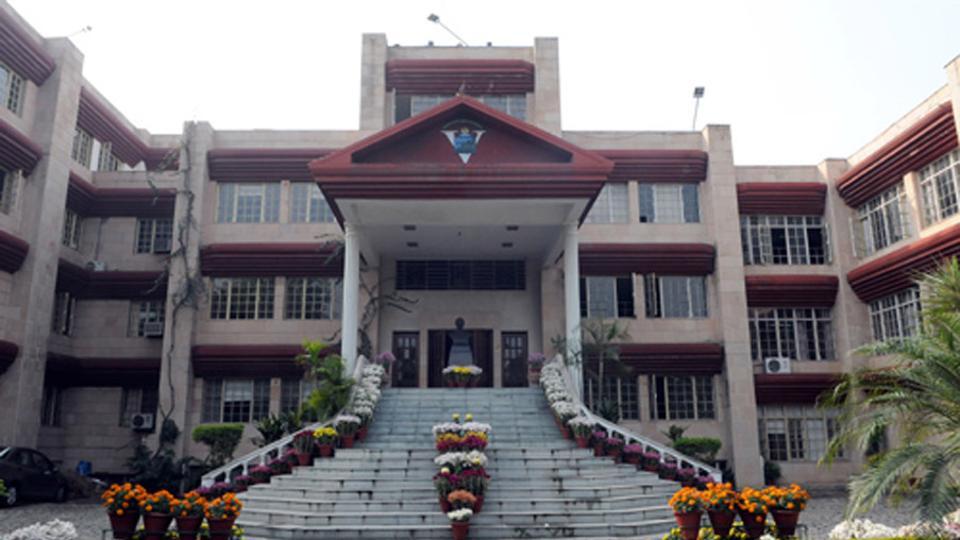
The background of the dispute finds elaboration in a 2018 judgement delivered by Justice RK Jain of the Punjab and Haryana high court, which invalidated the status of a Sikh-minority educational institution granted to Vivek High by the National Commission for Minority Educational Institutions. The label of a “minority educational institution” is significant because acquiring it allows a school to legally exempt itself from the Right to Education (RTE) Act’s reservation requirement, in line with two Supreme Court judgments delivered in 2012 and 2014.
Justice RK Jain justified the invalidation of VHS Chandigarh’s minority status primarily on the ground that the National Commission had no jurisdiction to grant such status. The judgement explains that the original trust deed of the Bhagwant Singh Charitable Trust (which started VHS Chandigarh) never reflected a Sikh-minority character. Further, VHS Chandigarh applied for such a status only after the Supreme Court (in 2012) held that (unaided) minority institutions were exempt from the RTE Act’s reservation requirement. It was only in 2014 that the deed’s list of objectives was amended to clothe it with a Sikh-minority upholstery; this was done after VHS had already applied for “minority educational institution” status directly to the National Commission without seeking a no-objection certificate from the UT authorities. While dismissing the 2014 modifications to the deed as “illegal” (since Clause 33 of the deed did not provide powers of subsequently amending the Clause containing the Trust’s objectives), Justice Jain held that UT authorities should have been approached first for the grant of a no-objection certificate (NOC) to establish a minority educational institution.
Additionally, Justice Jain clarified that the National Commission could not have been approached directly since the deed at the time did not reflect that the object of the Trust was to work for the Sikh community. The amendments were made only when proceedings to determine such status were already underway at the National Commission. In Justice Jain’s view, one can approach the National Commission only when one is asking for a declaration of minority status for an already existing minority institution; at the time of applying for such status directly before the National Commission, the school (as a result of the trust deed) could not have been considered a minority institution. In Justice Jain’s view, the correct way to seek such a status should have been to employ the procedure applicable to persons who desire to establish a new minority educational institution. This procedure (provided under Section 10 of the RTE Act) involves an application to the UT’s competent authority for grant of NOC. Since the school had not chosen such a route and had instead applied to the National Commission directly, the minority status granted by the Commission was set aside by the HC.
Supreme Court (SC) case law on the procedure that would have applied in such a case does not directly settle the dispute. Although, in Sister of St. Joseph of Cluny v. State of West Bengal (2018), the SC stated that all applications for the (fresh) establishment of a minority educational institution must go to the competent authority (in this case, the UT authorities), it simultaneously held that the declaration of status for existing minority institutions could be provided directly by the National Commission. The significant questions now are: could Vivek High be termed as an already “existing minority institution” when it applied for minority status directly to the National Commission? Since the trust deed at the time did not reflect any commitment to such a status, one would rightly conclude that it couldn’t have been termed as an already “existing minority institution” at the time of application. However, one might ask, which date matters, the date of application or the date on which the National Commission granted minority status? On the latter date, the trust deed stood amended to reflect its commitment to working for the benefit of the Sikh community. Unfortunately for Vivek High, even this argumentative manoeuvre might fail in light of improprieties associated with the way in which the deed was amended; the modus operandi of the amendment already suffers from the declaratory taint of “illegality” in Justice RK Jain’s judgement.
Nevertheless, Justice Jain’s judgement suffers from a hopelessly inadequate analysis of the law on amending trust deeds. Given how crucial the issue of amending trust deeds was to this controversy, one would have hoped for a more comprehensive scrutiny of applicable precedent. Even though an appellate bench may ultimately agree with Justice Jain’s decision, the effect of the trust deed’s amendment on the grant of minority status is an issue which merits re-examination. An appeal is pending before the Punjab and Haryana HC.
A protracted legal battle
Legal wrangles aside, it is utterly deplorable that a school professedly devoted to “generosity of spirit and integrity in thought, word, and action” (source: VHS Chandigarh’s website) must go to such lengths to escape a statutory requirement that embodies the same values. One wonders if this protracted legal battle cloaks nothing but the impulse to “exclude” and preserve an aura of “exclusivity” in the process. An aura that establishes privileged places for the privileged, hermetically sealed to keep the disdained “outsider” at bay.
One only hopes that the legal battle is not animated by a disdain for those less fortunate, for those who might “adulterate” the school’s claim to exceptionalism, for those who remain “outsiders” to this day despite the RTE Act. But, when a slew of Chandigarh’s private (and often, very prestigious) schools seek minority status in the immediate aftermath of the SC’s 2012 decision, one can only wonder if the ruse is all about guarding class privilege.
(The author, a former student of Vivek High School, Chandigarh, is Singhvi Trinity Scholar at University of Cambridge, UK.)
jsl76@cantab.ac.uk


