
 E-Paper



Haryana agri min assures support to Ambala farmers hit by waterlogging
During the visit, the minister interacted with the villagers and farmers, who apprised him about crop damage in several acres in Paplotha and nearby villages.

 Prefer HTon Google


Haryana agriculture and farmers’ welfare minister Shyam Singh Rana on Tuesday visited Paplotha village in Ambala district and assured support to farmers and to address their concerns over waterlogging caused by the overflowing Begna river, a tributary of the Markanda river known for seasonal flooding in the region.
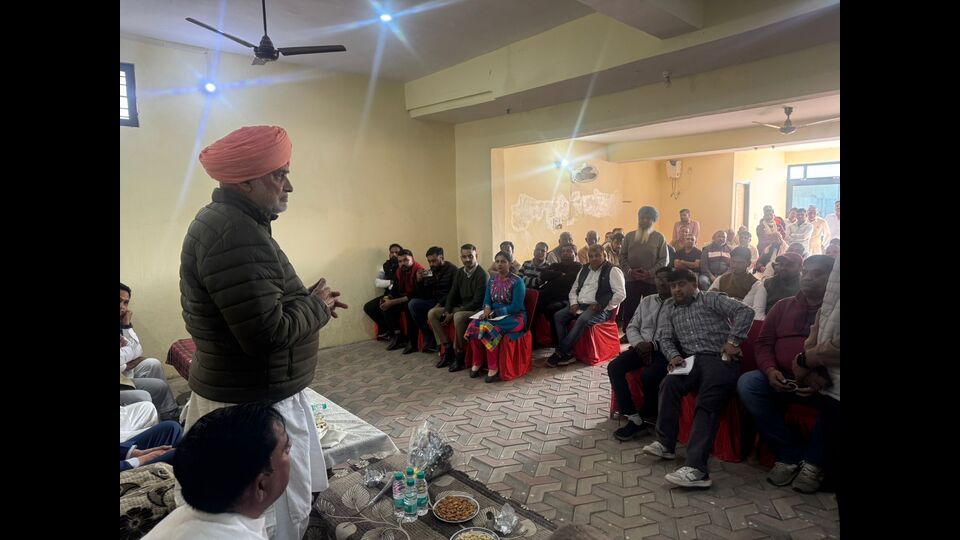
During the visit, the minister interacted with the villagers and farmers, who apprised him about crop damage in several acres in Paplotha and nearby villages. They highlighted that floodwaters frequently enter residential areas and fields annually, exacerbating losses.
A key grievance was the lack of regular cleaning of the Begna river over the past couple of years, leading to silt buildup and reduced flow capacity.
In response, Rana assured the locals that the issue would be resolved promptly.
He directed officials from the irrigation department and local administration to take immediate steps to prevent waterlogging from impacting crops further and to ensure regular cleaning and maintenance of the water body.
“We are committed to providing relief to the affected farmers and villagers,” the minister stated.
The visit comes amid statewide efforts to assess crop damage, as Rana noted that teams are travelling to villages across Haryana on government directives to gather firsthand information about losses.
He emphasised the need for better crop residue management, urging farmers to avoid burning stubble, which contributes to environmental degradation.
Additionally, the minister advised farmers to minimise the use of harmful pesticides and insecticides, promoting sustainable practices instead.
“There is a need to boost natural farming and increase production through eco-friendly methods,” he said, highlighting that the government has introduced several schemes to support natural cultivation and provide incentives for adopting these approaches.


