
 E-Paper



India still sees through 1971 prism but Bangladesh has moved on: Deep Halder
Journalist and author Deep Halder’s book, ‘Inshallah Bangladesh’, which looks at the events leading up to the downfall of the Sheikh Hasina government in 2024, was launched during the event.

 Prefer HTon Google


While India may still view Bangladesh through the prism of the 1971 Liberation War which freed it from Pakistan, the neighbouring country has undergone a fundamental shift in its identity, experts at a panel discussion at the 13th Edition of CLF Literati 2025, being organised by the Chandigarh Literary Society(CLS), which kicked off at the Lake Club on Saturday.
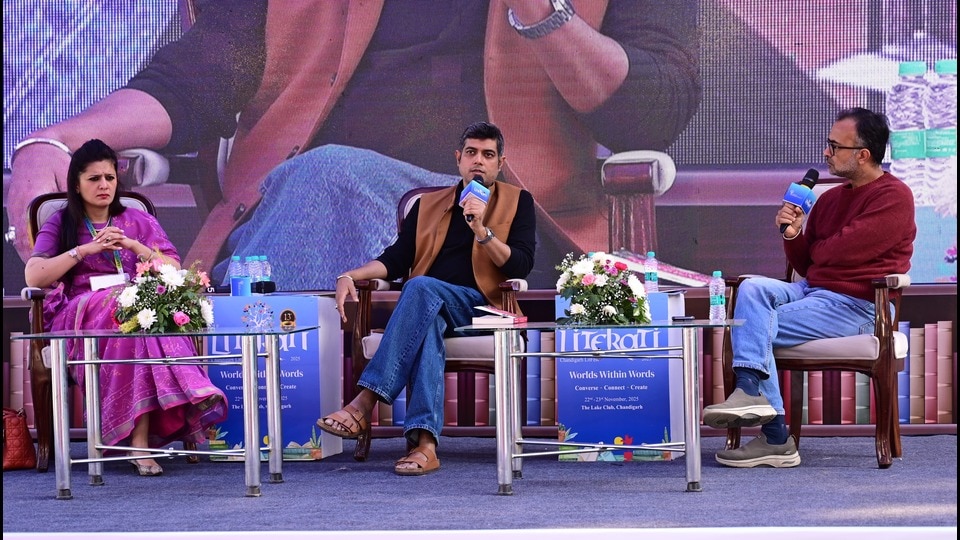
Titled ‘Bangladesh: The story of an unfinished revolution’, the discussion featured journalist and author Deep Halder besides author and researcher Rami Desai, and was moderated by senior journalist Kartikeya Sharma.
Halder’s book, ‘Inshallah Bangladesh’, which looks at the events leading up to the downfall of the Sheikh Hasina government in 2024, was launched during the event.
Explaining why the newer generation in Bangladesh may not identify with India’s portrayal of it, Halder said, “If you do the math, somebody who was in their early 20s during the 1971 war, that gentleman or lady may be in the later stages of their lives now. So, while India tends to look at Bangladesh through the prism of 1971, the new generation may not look at it like that anymore.”
He added that the “anti-India” sentiment was rampant in the country even during Hasina’s regime. “In the interiors of Bangladesh, citizens increasingly view India as a ‘Big Brother’ that interferes in its domestic politics by running the country through rigged elections and dummy prime ministers,” Halder said.
Desai echoed similar views, “We look at the 1971 war as though it brought a loyalty towards India... but the fact of the matter is that there was always a simmering group, which wanted to be a part of Pakistan even then.”
There is a level of radicalisation in the country, which, Desai says, leaves a lot of scope for manipulation (by anti-India forces) and it is something that India will have to deal with.


