
 E-Paper



J&K admn approves regulations for functioning of agriculture markets
The Jammu and Kashmir Agriculture Produce and Market Committee (APMC) Act had ceased to exist after the operation of J&K State Reorganisation Act, 2019


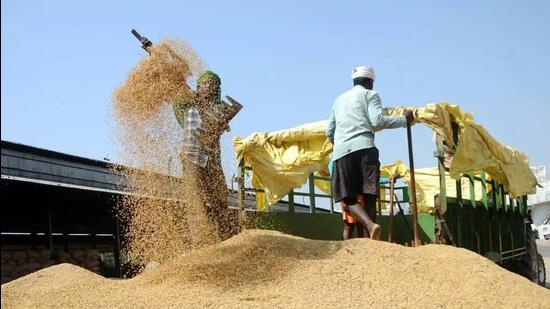
The Jammu and Kashmir administration on Friday approved regulations for the functioning of agriculture markets across the UT. The Jammu and Kashmir Agriculture Produce and Market Committee (APMC) Act had ceased to exist after the operation of J&K State Reorganisation Act, 2019, a spokesperson said.
The administrative council, which met here under the chairmanship of the Lieutenant Governor Manoj Sinha, approved the ‘regulations for the functioning of agriculture markets across Jammu and Kashmir’, the spokesperson added.
This board will manage and regulate the established mandis in J&K and remove the operational difficulties faced due to non-existence of statutory mechanism as on date, he said.
The board will be headed by the additional chief secretary and have representatives of mandis and food associations as members besides other official members, the spokesperson said.
In terms of the new mechanism, director, horticulture (planning and marketing) will declare any store, cold store, warehouse with above 3-tonne capacity and cooperatives, store centres as sub-yards of mandis for purpose of doing trade on e-NAM platforms and making e-payments on the portal, he said.
The director will be the sole authority to issue unified licences for carrying out trade in any mandi in J&K, he added.
It has a provision to allow traders from outside J&K to do trade on the e-NAM with the local growers, the spokesperson said. The director is allowed to recognise the licences issued by the outside APMCs as valid for doing trade on e-NAM on mutual understanding basis with other states, he added.
Nod to subsidy for rooftop solar power panels
The Jammu and Kashmir administration has also approved installation of rooftop solar power plants on residential buildings across the UT and promised subsidy for the same.
The 20MW rooftop solar power plants on residential buildings will be installed by the Jammu and Kashmir Energy Development Agency under ‘Grid Connected Rooftop Solar Programme, Phase-II’ at a cost of ₹104 crore. These plants will be connected with the grid on net metering basis, they said.
Besides providing a clean and green environment through reduction of carbon emission, the generation of energy through rooftop solar programme will also offset power requirement of domestic consumers in Jammu and Kashmir, the officials said.
“The government would extend subsidy contributions up to 25% of the project for the installation of grid tied roof top solar power plants across all districts,” they added.
The project is to be completed by the end of November 2023 and will be maintained free of cost for a period of five years through the empanelled vendors.
(With inputs from HTC Jammu)


