
 E-Paper



Kataria launches month-long Swachhata Hi Seva campaign in Chandigarh
The campaign, being observed from September 17 to October 17 under the theme “Swachhata Mein Sahbhag – Swachh Bharat, Viksit Bharat”, was launched at Rani Laxmi Bai Mahila Bhawan

 Prefer HTon Google


The month-long Swachhata Hi Seva 2026 campaign was launched on Thursday, with Punjab governor and UT administrator Gulab Chand Kataria calling for greater public participation to make the city cleaner, healthier and more sustainable.
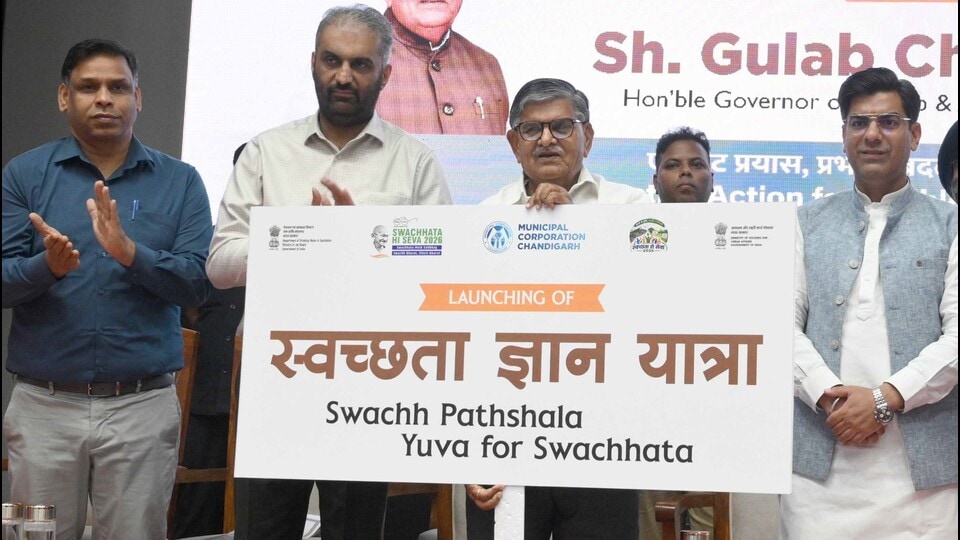
The campaign, being observed from September 17 to October 17 under the theme “Swachhata Mein Sahbhag – Swachh Bharat, Viksit Bharat”, was launched at Rani Laxmi Bai Mahila Bhawan, Sector 38-C. Kataria also administered the Swachhata pledge along with officials and citizens.
Kataria said cleanliness should be treated as a shared responsibility rather than merely a government exercise. He urged residents to adopt waste segregation, reduction, reuse and recycling, following the principle of “My waste, my responsibility”. He also stressed ensuring the safety, health and dignity of Safai Mitras.
The campaign will focus on “Swachhata Se Samriddhi, Swachh Pathshala”, youth engagement and cleaner public spaces. Special drives and awareness activities will be held at markets, parks, schools, public toilets, tourist destinations, bus stands, railway stations and water bodies. Citizens have also been urged to participate in the “Ek Din, Ek Ghanta, Ek Saath” shramdaan programme on October 1 and Swachh Bharat Diwas activities on October 2.
Technology to strengthen monitoring
The administration also launched technology-based initiatives to improve monitoring and accountability. Through the Cleaning Target Units (CTU) Monitoring App, officials will record the location, time and photographs of sanitation activities, including before-and-after documentation.
A news tracking and issue monitoring system will track civic issues reported through newspapers and forward them to concerned officials for action and follow-up.
Mayor Saurabh Joshi said cleanliness could not be achieved by the municipal corporation (MC) alone and called for participation from residents, RWAs, educational institutions, youth groups, social organisations and self-help groups.
MC commissioner Amit Kumar said cleanliness drives, awareness programmes and community activities would be organised throughout the campaign. Special drives will also target garbage vulnerable points (GVPs) and Swachhata target units, while educational institutions will be encouraged to involve students as cleanliness ambassadors.
Kataria calls for stronger disaster preparedness, inter-agency coordination
Kataria on Thursday called for stronger disaster preparedness, better coordination among agencies and greater public participation to minimise loss of life and property during disasters.
Addressing the inaugural session of a two-day integrated symposium on disaster management, organised by the Indo-Tibetan Border Police (ITBP), National Institute of Training for Search, Rescue and Disaster Response
(NITSRDR) and the National Disaster Management Authority (NDMA), Kataria said the experiences and outcomes of such deliberations should be translated into effective disaster management strategies and action.
Highlighting the growing complexity of disasters, he stressed the need for advance preparedness, risk assessment, mitigation and coordinated response, particularly in vulnerable Himalayan and high-altitude regions. He said collective efforts by ITBP, NITSRDR, NDMA and other agencies should help develop stronger mechanisms to protect lives and build disaster resilience.
The first day focused on national disaster risk profiles, disaster management policy and disaster risk reduction (DRR). Experts discussed India’s shift from a largely relief-oriented approach towards greater emphasis on preparedness, risk assessment and mitigation.
Sessions covered the Sendai Framework for Disaster Risk Reduction, its four priority areas and integration of DRR with the sustainable development goals (SDGs). Participants also discussed coordination among the NDMA, NDRF, CAPFs, ministry of home affairs and state disaster management authorities.


