
 E-Paper



Centre flags low transition rates in Chandigarh govt schools during PAB meeting
As per the Unified District Information System for Education Plus (UDISE+) report, the transition rate has declined from 79.8% for boys and 80.2% for girls in the 2019-2020 academic session to 77.8% for boys and 78.9% for girls in the 2020-2021 academic session


The Centre has expressed concern over low transition rates in government-run schools in Chandigarh.
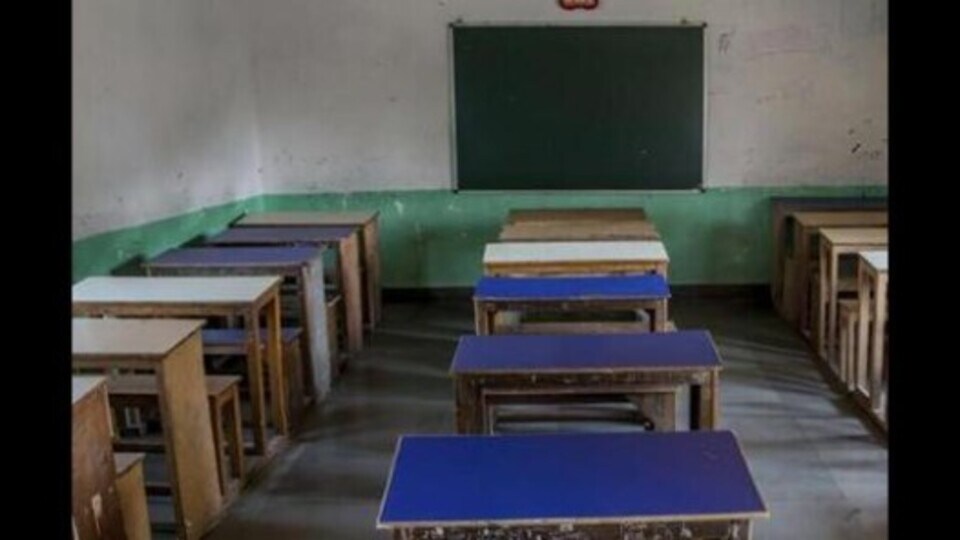
In an annual meeting of the Project Approval Board (PAB) of Samagra Shiksha, the Union ministry of education had questioned the UT education department about the decline in transition rate – percentage of students advancing from one level of schooling to the next – from elementary to secondary level and about surplus teachers at elementary level in city’s schools.
As per the Unified District Information System for Education Plus (UDISE+) report, the transition rate has declined from 79.8% for boys and 80.2% for girls in the 2019-2020 academic session to 77.8% for boys and 78.9% for girls in the 2020-2021 academic session.
While the latest figures are not available, the UT education department officials claim that the transition rate for session 2022-23 and 2023-24 has improved. As per officials, Covid was a big factor behind why the rate had gone down in 2020-2021. The PAB has directed UT to share details of measures taken to improve this rate.
It was also pointed out that there are 83 surplus teachers at elementary level and the UT needs to go for a rationalisation of teachers to ensure availability of the required number of teachers in all schools. In its reply, the department said the pupil-teacher ratio (PTR) of 32:1 is maintained at elementary level and the UT has schools with both Hindi and English as instruction medium, so separate teachers are required for both. Following this, PAB directed UT to rationalise the surplus teachers and devise a teacher transfer policy.
Currently, 165 posts are vacant out of 1,398 sanctioned posts of junior basic teachers (JBT).
As per the report, out of 2,60,538 students, the number of children with special needs (CWSN) is 3,492, which is around 1%. Further, out of 230 schools, 154 schools (49%) have CWSN. Out of these 113 schools have more than 10 CWSN. For its commitment to inclusive education, PAB had requested the UT for timely identification and wider coverage.
The department said they have initiated identification drives for CWSN in all the government schools by involving special educators on the screening tool developed by NCERT. The UT has been asked to document this process and upload it on the SHAGUN portal.
Besides this, the UT has also been asked to mainstream the out of school children (OoSC) for the 2023-2024 session, as only around 5% of 3,288 OoSC have been mainstreamed with special training. The department also provided details of recruitment of various teachers being carried out after PAB asked the UT to expedite this.
Those present in the meeting held by the Union ministry of education also included Sanjay Kumar, secretary, school education, literacy, and undersecretary Subhendu Das, among others.


