
 E-Paper



Ludhiana: ₹48 cr down in drain; 66 water tanks lying defunct
The reasons behind this widespread failure are a mix of systemic and maintenance issues; an earlier audit revealed that despite the substantial expenditure, not a single one of these reservoirs was operational


Despite a staggering investment of approximately ₹48 crore over the years, Ludhiana is grappling with a severe water crisis, with as many as 66 overhead water reservoirs lying non-functional across the city. These structures, originally built to ensure a steady supply of drinking water, have remained unused for several years, becoming monuments to civic neglect and mismanagement. The scale of the problem was recently highlighted in a survey conducted by a team from the World Bank as part of the preparations for the city’s ambitious 24x7 water supply project. The survey identified the 66 defunct reservoirs and proposed the construction of 136 new ones.
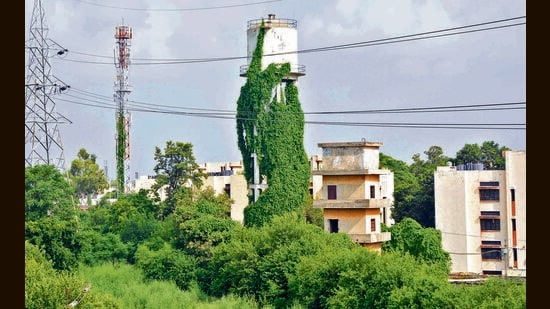
The reasons behind this widespread failure are a mix of systemic and maintenance issues. An earlier audit revealed that despite the substantial expenditure, not a single one of these reservoirs was operational. The causes range from the dilapidated condition of old structures and inadequate pipeline networks to recurring pumping problems and poor maintenance.
Giaspura Flats among worst hit
The municipal corporation (MC) now plans to address this monumental failure under the new World Bank-funded project. The strategy involves a two-pronged approach: rehabilitating the 66 non-functional reservoirs and constructing the remaining 70 afresh. The success of this project, however, hinges on the MC’s ability to not only build new infrastructure but also to effectively revive and manage the existing defunct tanks. This is a crucial point, as residents and civic activists remain deeply skeptical, given the MC’s track record.
The frustration is particularly acute in areas like Giaspura Flats, where a brand-new water tank, constructed just a few years ago, has never supplied a single drop of water. “We live on the sixth floor, and sometimes even the eighth-floor residents have to carry buckets from the ground floor. The tank is right here, but it’s just for show,” lamented Jaspreet Kaur, a local resident. “When we ask MC officials, they blame the pipelines or say the pumps are not working. What’s the use of spending lakhs on building it if it can’t give us a single drop?”
Another resident, Gurmeet Singh, voiced his outrage, highlighting the financial burden on citizens. “We pay water charges, but still have to depend on private tankers. This is a sheer waste of public money. If the MC cannot maintain these tanks, how will they run 136 new ones?”
Civic activist Rajinder Sharma has also questioned the MC’s planning and accountability. “This is not just about one or two tanks, it’s about the entire system. ₹48 crore has already gone down the drain. Unless the MC takes strict monitoring measures, the World Bank project could also end up the same way.”
Some defunct structures are ageing,say officials
Officials, including chief officer Ravinder Garg, have acknowledged the issue. “Overhead water reservoirs are presently non-functional due to old structures,” he stated, adding that “recently built overheads which are non-operational will be rectified soon.” He promised that rehabilitation work would begin promptly after the survey. The stated goal is to make the existing reservoirs operational before the new ones are constructed, a promise that many find hard to believe given the history of failed projects. The path to uninterrupted water supply in Ludhiana is paved with both hope and considerable doubt.


