
 E-Paper



Ludhiana: AAP government’s flagship education scheme faces tech hurdle
Neman Nahar, programme manager for Ludhiana and a member of Rocket Learning, the NGO collaborating with the state government for the initiative, highlighted the approach of the project


‘Aarambh,’ an initiative to revolutionise early childhood education, was officially launched across eight districts, including Ludhiana, on November 14. However, it faces a significant hurdle, as nearly 30% of students in Ludhiana lack access to smartphones. The programme heavily depends on WhatsApp groups to share daily learning activities, posing a challenge to families without digital access.
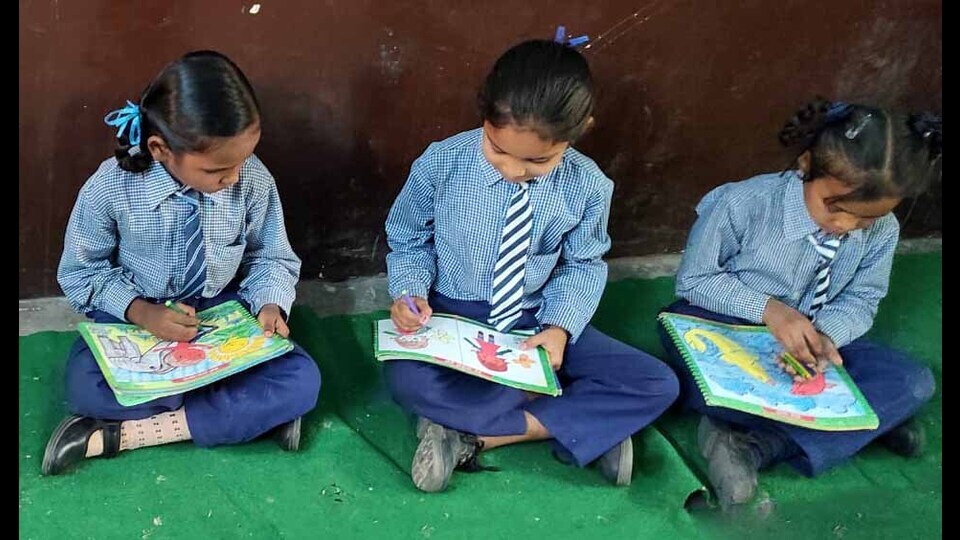
The project, focusing on children aged 0-6 years, aims to boost motor skills, mental abilities and confidence through parental involvement. The programme, first introduced as a pilot project three months ago in Ludhiana district, was unveiled by education minister Harjot Singh Bains during a state-level event at the Mahatma Gandhi State Institute of Public Administration (MGSIPA), Chandigarh, on the occasion of Children’s Day.
Neman Nahar, programme manager for Ludhiana and a member of Rocket Learning, the NGO collaborating with the state government for the initiative, highlighted the approach of the project. “This is the first time in India that a structured curriculum has been designed for children in this age group, with activities tailored to their financial backgrounds,” he said.
To address the digital divide, the teachers have stepped up. “For students without smartphones, teachers conduct activities in school, acting as parental figures,” Nahar explained. On weekends, the programme includes confidence-building exercises for mothers to enhance their engagement in the learning process.
Manmeet Singh, head teacher at Government Primary School, Sidhwan Bet-2, shared that two WhatsApp groups have been created, one for nursery and LKG students and another for UKG students. “The focus is on playful and joyful learning,” Singh added.
Charanjeet Kaur, head teacher at GPS Barewal, revealed that neighbours, whose children study in their schools, often help students without smartphones. “During admissions, we identify families without WhatsApp access. These children are either supported by neighbours or perform activities at school,” she said.
District education officer (Elementary) Ravinder Kaur, said, “Despite challenges due to the unavailability of smartphones, the teachers ensure that every child participates, conducting activities before or after regular classes to foster inclusivity.”


