
 E-Paper



Ludhiana: PAU webinar puts focus on paddy dwarfing disease management
Satbir Singh Gosal, vice-chancellor of PAU, Ludhiana, chaired the webinar and emphasised the need for inter-institutional collaboration in countering the dwarfing disease in paddy

 Prefer HTon Google


A webinar on paddy dwarfing disease was organised by Punjab Agricultural University (PAU) on Wednesday in collaboration with the Philippines-headquartered International Rice Research Institute (IRRI). Around 100 scientists from India and abroad participated in the event. The webinar shed light on the mysterious dwarfing disease affecting rice crops in north Indian regions, specifically Punjab and Haryana during the kharif 2022 season.
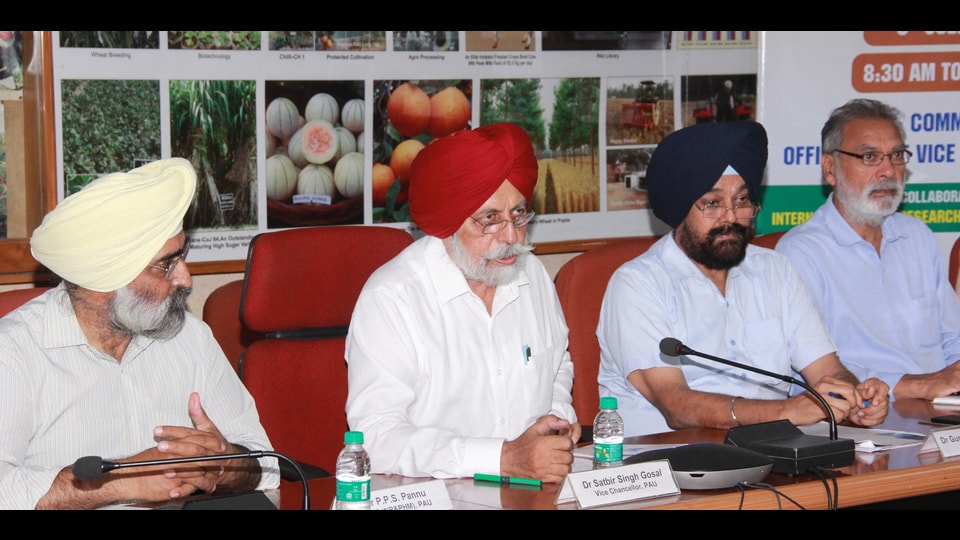
Satbir Singh Gosal, vice-chancellor of PAU, chaired the webinar and emphasised the need for inter-institutional collaboration in countering the dwarfing disease in paddy. He highlighted the significance of a comprehensive approach from biological, agronomic and ecological perspectives, urging researchers to pool their wisdom and explore important points such as the disease’s origin, spread and survival during the off-season.
During the webinar, Gosal revealed that PAU researchers were the first in the country to determine that the dwarfing disease was caused by the Southern Rice Black-streaked Dwarf Virus (SRBSDV). Punjab alone witnessed an impact on approximately 34,000 hectares of land. Originating in China, the disease spread to Vietnam, Japan and other regions, primarily carried by the white-backed plant hopper (WBPH) insect.
Scientists from various institutions shared their observations and recommendations for future work. RM Sundaram, Director of Indian Council of Agricultural Research (ICAR)-IIRR (ICAR-IIRR), Hyderabad, suggested intensifying field surveys and learning from management strategies employed in Vietnam and China. VK Baranwal, National Professor at ICAR-IARI, New Delhi, emphasised the importance of standardised detection methodologies and the development of quick on-field detection assays. Van Luu from IRRI proposed the establishment of an SRBSDV surveillance and monitoring network across southeast Asia and south Asia.
Hoang Anh Ta from the Plant Protection Research Institute (PPRI), Vietnam, shared disease mitigation strategies adopted by Vietnamese farmers, emphasising the need for early monitoring and management of vector populations. GS Buttar, director of extension education at PAU, highlighted the institution’s efforts in formulating an adhoc disease management strategy and disseminating relevant information through various channels, including the extension services network, publications, media, farmer-scientist interactions and online platforms.
The webinar concluded with a panel discussion involving scientists from different departments of PAU, IRRI Philippines, PPRI Vietnam, South China Agricultural University, China, ICAR-IARI, ICAR-IIRR, IRRI India, Chaudhary Charan Singh Haryana Agricultural University, Hisar and heads of departments related to plant breeding, genetics, agronomy, entomology and agricultural biotechnology. The discussion focused on short-term strategies such as surveillance, virus-vector-host relationships, weed management as well as long-term strategies like breeding strategies, biotechnological tools and weather forecasting.


