
 E-Paper



Ludhiana: Traditional ‘hatdis’ lose appeal among young shoppers
The traditional hatdis — small clay temple structures used during Diwali pooja — are witnessing surprisingly low sales amid fading awareness of their cultural and spiritual significance


With Diwali just around the corner, markets in Ludhiana are bustling with shoppers picking up earthen lamps, clay idols of Lord Ganesha and Goddess Lakshmi and other decorative items. Yet, the traditional hatdis — small clay temple structures used during Diwali pooja — are witnessing surprisingly low sales amid fading awareness of their cultural and spiritual significance.
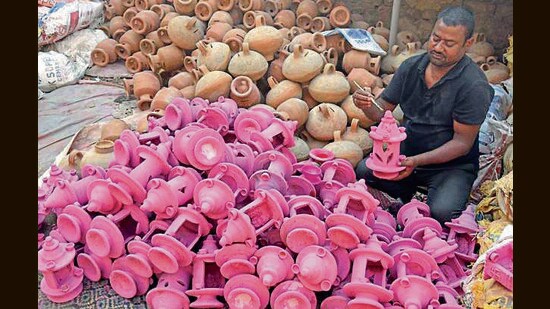
Local artisans and vendors say the decline goes beyond changing consumer preferences.
Sudhir Kumar, an artisan from New Chander Nagar, said, “The drop is a result of younger generations being unaware of the cultural importance of hatdis. Earlier, families would buy at least one hatdi every year to welcome Goddess Lakshmi into their homes. Now, many simply choose decorative idols or ready-made kits, ignoring the spiritual value of the traditional piece.”
Traditional significance
Explaining the religious and cultural importance of the hatdi, local priest Devinder Dimri said, “The hatdi is made from natural clay and shaped like a miniature temple that houses Lord Ganesha and Goddess Lakshmi. It is traditionally filled with grains and is believed to invite the Goddess’s blessings, symbolising prosperity, purity and spiritual well-being.
After the pooja, families immerse the hatdi in water — a practice rooted in sustainability and respect for tradition. More than just a ritual object, the hatdi embodies simplicity, heritage and the eco-friendly ethos of past generations.”
Changing consumer trends
Amid limited sales, many shoppers in Ludhiana now prefer hatdis sourced from Kolkata and Meerut, which are often adorned with vibrant designs, glass work, beads and gotas.
Sahil, a vendor near Ghumar Mandi, said, “These ornamental versions are priced nearly twice as high as traditional Ludhiana-made hatdis, yet they are more popular. Traditional ones cost between ₹70 and ₹ 90 per piece, while the Kolkata-based versions retail at ₹150 to ₹200. They appeal to urban buyers due to their ready-to-use design and decorative appeal, showing a clear preference for aesthetics over authenticity.”
Impact on local artisans
Artisans say the drop in sales has significantly affected their earnings. Dharamvir, a local artisan near Dandi Swami Mandir, said, “During Diwali, we used to earn ₹25,000 to ₹30,000 over four days. This year, sales have fallen to just ₹5,000 to ₹ ₹6,000. Many younger buyers don’t understand the value of hatdis and flashy alternatives are taking over.”
He added that the clay for hatdis is locally sourced and each piece is handcrafted — a labour-intensive process that sustains many small families. “The declining demand threatens not only our livelihood but also centuries-old cultural traditions. If this trend continues, future generations may completely forget the ritual of using hatdis during Diwali,” Dharamvir said.


