
 E-Paper



Monsoon leaves Chandigarh with 16% deficit
Dry weather is likely to continue in Chandigarh in the coming days and a gradual drop in temperature is expected over the month as winter approaches


The India Meteorological Department (IMD) has finally declared that the monsoon has withdrawn from the region and from Chandigarh.
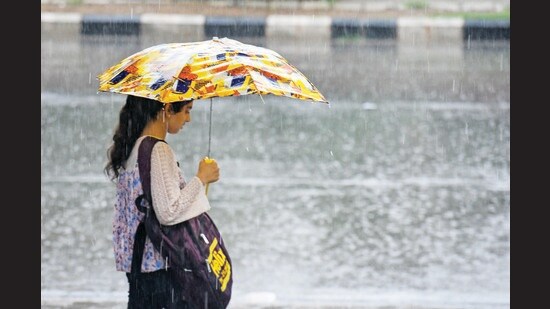
As per IMD’s daily bulletin, the withdrawal line now passes over western Uttar Pradesh, western Madhya Pradesh and Rajasthan, and has withdrawn entirely from Punjab, Haryana, Himachal Pradesh and even Chandigarh.
While the normal date for withdrawal of monsoon is September 25, this time it was a week late. It is also later than the last two years, but in 2021 withdrawal was declared on October 21.
Many factors are considered by the weathermen for declaration of monsoon withdrawal, apart from at least four to five days with no rain in the entire region.
Humidity also has to start reducing while an anticyclonic movement has to develop over the region.
Speaking about the withdrawal, IMD Chandigarh director Surender Paul said, “While monsoon’s retreat did happen after the normal date, it wasn’t too late and won’t be considered delayed. Overall, there is a trend where monsoon onset and withdrawal are both getting delayed by a few days in previous years.”
Overall, 710.8 mm rain has been recorded at the Sector 39 observatory of the IMD this monsoon.
This figure is lower than 2023 and 2022, while in 2021 600.2 mm rain was recorded.
At 710.8 mm, the rain is 16% below the normal rain figure for the monsoon season, which is 844.9 mm.
However, if the departure is below 19%, then the monsoon is considered normal as per IMD.
Further, IMD takes rain recorded in the entire months of June, July, August and September for compiling the overall monsoon figure, even as onset of monsoon was declared in the city on July 1.
While this figure is close to normal, last year just July had witnessed 693.2 mm rain, while overall 1,227.1 mm rain was recorded.
Meanwhile, dry weather is likely to continue in the city in the coming days and a gradual drop in temperature is expected over the month as winter approaches.
The maximum temperature rose from 33.8°C on Tuesday to 35.3°C on Wednesday, 2.7 degrees above normal. On the other hand, the minimum temperature dipped from 23.6°C to 22.4°C, 0.3 degrees above normal. In the next three days, the maximum temperature will remain between 34°C and 35°C and the minimum temperature will remain around 22°C.


