
 E-Paper



Wildbuzz | Kaun hain yeh, dukhi Sukhna se
Like, pilgrims in a prone position paying obeisance at a shrine, some with desperate prayers on lips! Even fish experts were startled at the rare spectacle because they had never seen so many, and in such formation.

 Prefer HTon Google


*Many fish species of the Sukhna lake have not been seen by common citizens, dead or alive. However, the researchers know these reclusive species, but to an extent. The monsoons revealed one such species, otherwise known to dwell at the bottom and among submerged rocks. There were three schools (groups) of esoteric, snake-like creatures, very visible and lined up with their heads poking from the Sukhna’s brimming beauty. They were seen clinging to the embankment slopes of the regulator-end on Thursday. Like, pilgrims in a prone position paying obeisance at a shrine, some with desperate prayers on lips! Even fish experts were startled at the rare spectacle because they had never seen so many, and in such formation.
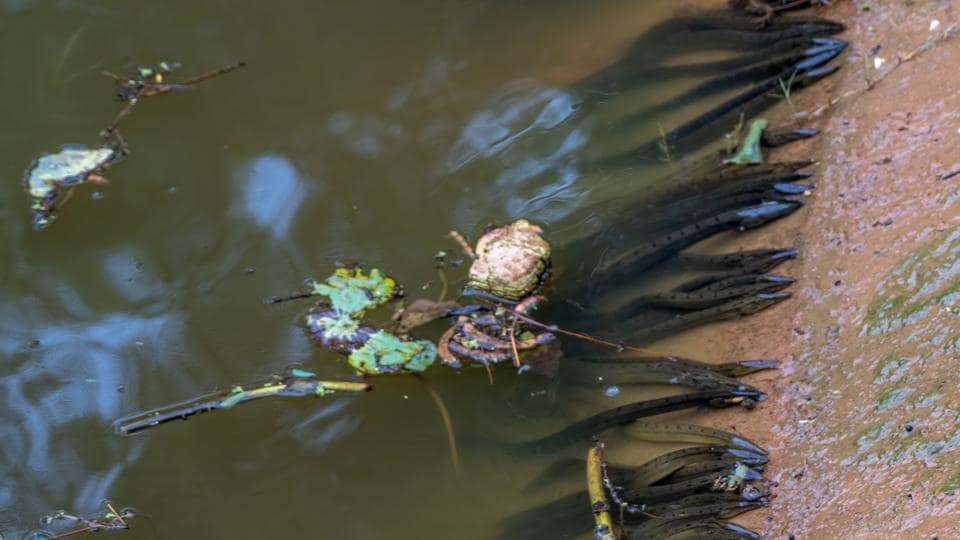
The “Sukhna pilgrims” were actually in distress, caused by silt-heavy waters flowing in from catchment areas. The water so muddy it resembled “dhaba chai” dispensed by a cook not granted a free hand with milk! Turbidity leads to a sudden reduction in water’s dissolved oxygen and inflicts respiratory problems, even asphyxiation deaths, on fishes as nano particles of silt and clay adhere to gills. The distressed creatures were identified as belonging to the Mastacembelus armatus species, possibly Tire-track Spiny eels, and were alive. Though known as swift swimmers, they appeared sluggish.
I consulted experts, Yogesh K Raval, head of zoology department, Panjab University, and Onkar S Brraich, assistant professor, fish and fisheries, Punjabi University, Patiala. While Rawal reckoned the M. armatus a species of “true eels”, Brraich differed by stating they were “eel-like but not true eels”. Rawat assessed they were “trying to breathe in air through the vascular head portion” due to turbid water. But Brraich did not agree with the proposition that in distress they had the ability to breathe in atmospheric air through head vascular portions. He assessed they were “feeling suffocated in the water and were just trying to escape”.
‘Nalla paambu’ or good cobra
* The Spectacled cobra (Naag) is a flaring-hood serpent with widespread presence and among the smallest of the five cobra species found in India. It is a revered, respected serpent, known as the “nalla paambu” or the “good, tolerant snake” in certain cultural traditions of Tamil Nadu. Especially among the iconic Irula tribals who have contributed robustly to snake-bite mitigation, wildlife conservation and indigenous knowledge of serpents. Women in some cultural traditions worship the imagery of darkish cobras disappearing into ant hills as subtle symbols of sexual vigour and fecundity.
There are cogent reasons why this species enjoys such an exalted status in Indian cultural diversities, apart from its mythological association with Lord Shiva. The cobra, unlike the Saw-scaled viper, is reluctant to bite humans / animals that either do not present a threat or are not fit as a prey species. The first thing a cobra may do in such encounters is to slink away. In case they cannot do so, they inflate hoods to deter humans with an intimidating persona and back it up with terrifying hisses without showing any inclination to chase the human and bite him / her like a dog.
Even when forced to deliver a bite to a human, say when trod upon accidentally, it could take the form of a “dry bite”, ie, when fangs penetrate the skin but do not release venom. High-speed videography undertaken by legendary herpetologist Rom Whitaker showed that when cobras struck with an inflated hood at a human foot, it was with mouth closed: a harmless assault known as a “mock charge” aimed at deterring the human not killing.
On the other hand, the Saw-scaled viper is invariably a compulsive biter, it will sink in fangs and discharge venom. The Russell’s viper is reckoned as causing the maximum human fatalities in India. All these well-intentioned deterrence strategies have led the cobra to be deemed a serpent possessing a “higher consciousness” in comparison to Saw-scaled and Russell’s vipers.
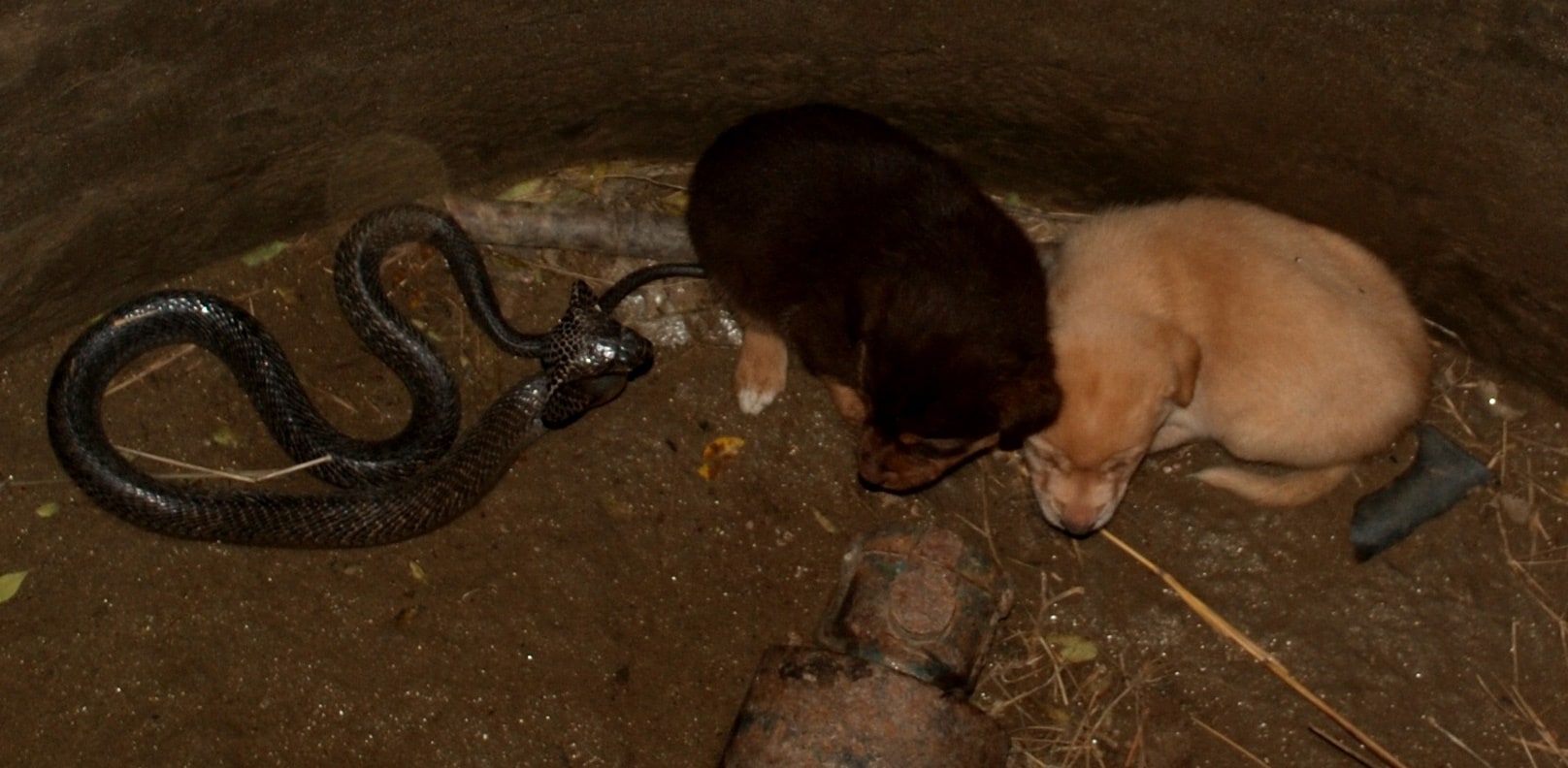
An adult cobra essayed an episode of the species’ celebrated restraint when marooned in a well of Jaffarpur village (SBS Nagar, Punjab) with pups for 48 hours. “The cobra was sometimes in a prone position with hood inflated. It struck at the terrified pups but never bit them. Its aim was to keep pups away from it. This tendency of the cobra was evidenced during rescue operations to remove cobras from homes when I was struck a couple of times on my shoes. But those cobra strikes were with mouths closed,” snake-rescue expert, Nikhil Sanger, told this writer.
vjswild1@gmail.com


