
 E-Paper



No scientific study to blame Punjab farm fires for Delhi’s pollution, says NGT member
The statement of a sitting judicial member of the National Green Tribunal (NGT) assumes significance as in most judicial proceedings and public discourses paddy crop residue burning in the neighbouring states, especially Punjab, has been blamed for Delhi’s worsening air pollution.


There has been no scientific study to back the claim that farm fires in Punjab contribute to air pollution in Delhi, NGT member Justice Sudhir Agarwal has said and deprecated imposing fines and jailing farmers of the state over stubble burning, calling it “grave injustice”.
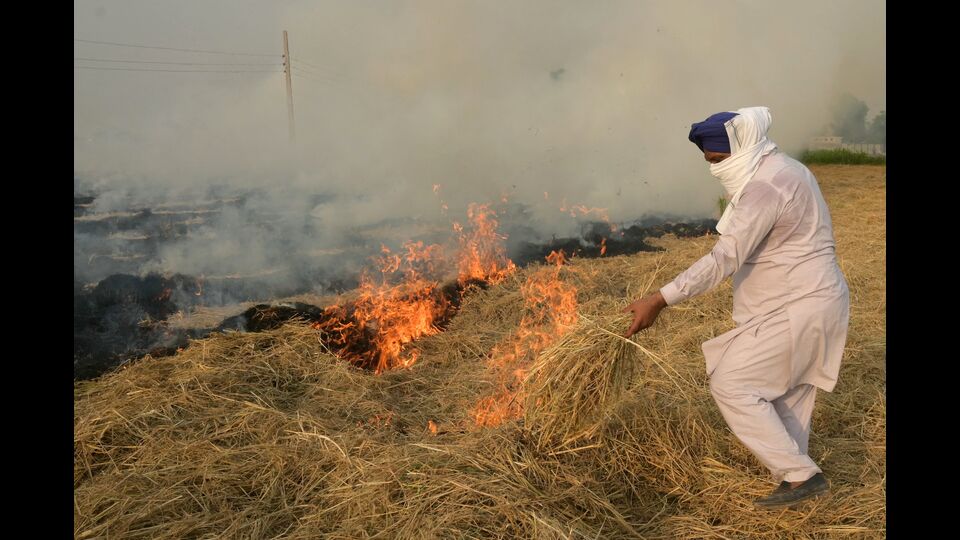
The statement of a sitting judicial member of the National Green Tribunal (NGT) assumes significance as in most judicial proceedings and public discourses paddy crop residue burning in the neighbouring states, especially Punjab, has been blamed for Delhi’s worsening air pollution.
Observing that curbing air pollution in Delhi is the shared responsibility of all, Justice Agarwal said, “Prosecuting, fining and jailing the farmers only (for stubble burning) will be grave injustice”. Justice Agarwal was speaking at the ‘Conference on Environment Friendly Paddy Cultivation’ and ‘Savior of Natural Resources and Environment Award’ held in the national capital on July 1.
Justice Agarwal said stubble burning was often considered the main cause of rising air pollution in Delhi but Punjab not even an immediate neighbour of Delhi, which shares its borders with Haryana, Uttar Pradesh and Rajasthan. Moreover, a particular wind speed and a specific direction were needed to ensure that the so-called polluted Punjab air reaches the national capital, he said.
“Holding farmers responsible for everything is beyond my comprehension,” said Justice Agarwal.
“Was there any scientific study conducted before alleging so?” he asked, adding that the Delhi air had oily content and it not possible that crop residues, which are biodegradable in nature, can have these.
Senior advocate HS Phoolka also spoke at the event and said there are two approaches to saving the falling water table and preventing the land from turning barren.
“The first approach which is being followed since many decades is diversification. But, unfortunately, this approach has failed and every year the area under cultivation of paddy is increasing and not decreasing. The main reason for the failure of this approach is that there is no viable alternative,” he said.
The second approach is eco-friendly cultivation of paddy, he added.


