
 E-Paper



Orange alert in Punjab: Thunderstorms, gusty winds threaten standing wheat crop
According to the IMD’s daily weather forecast, thunderstorms accompanied by lightning and gusty winds of 40-50 kmph, along with hail at isolated places, are likely over Ludhiana, Patiala, Sangrur, Mansa and Bathinda over the next 24-48 hours, as the wheat harvesting season approaches.

 Prefer HTon Google


The India meteorological department (IMD) on Thursday issued an orange alert for thunderstorms, lightning, gusty winds and isolated hailstorms across several parts of Punjab, triggering anxiety among farmers over potential damage to the standing wheat crop, which is at a crucial stage of maturity.
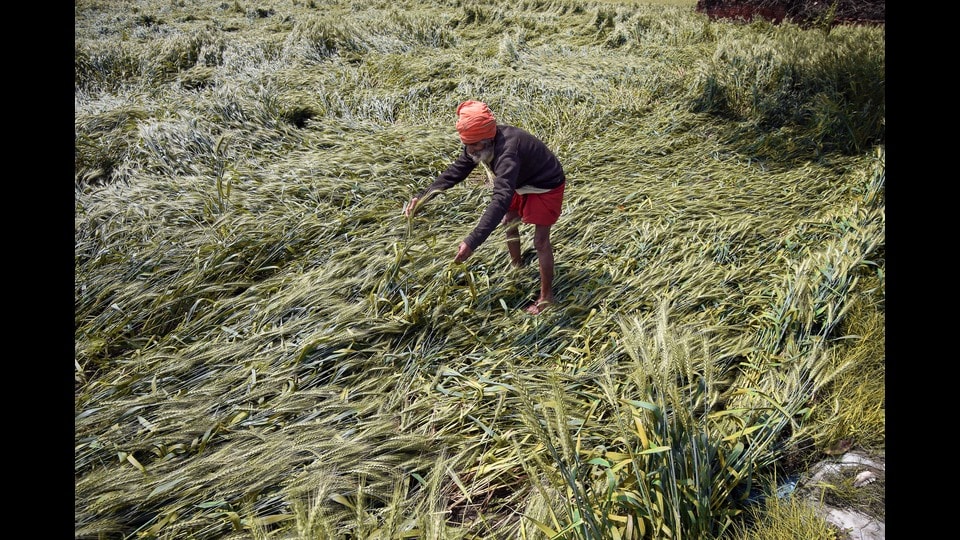
According to the IMD’s daily weather forecast, thunderstorms accompanied by lightning and gusty winds of 40-50 kmph, along with hail at isolated places, are likely over Ludhiana, Patiala, Sangrur, Mansa and Bathinda over the next 24-48 hours, as the wheat harvesting season approaches.
Farmers expressed concern over the impact of hail and strong winds. “The crop is almost ready. Even a short spell of hailstorm can cause irreversible damage,” said a farmer from Sangrur district.
The IMD has forecast light to moderate rainfall at many places on March 20, with isolated showers expected later in the week. Weather instability is being driven by a western disturbance and cyclonic circulations over the region.
Punjab has also witnessed a sharp dip in maximum temperatures, currently about six degrees Celsius below normal, which, along with rain and hail, could affect grain formation and maturity. Meteorological data shows the highest maximum temperature in the state was 23.7°C in Pathankot, with appreciable falls across other districts. Amritsar recorded 22.1°C, Ludhiana 23.4°C and Patiala 21.6°C, all below normal. Haryana also experienced below-normal temperatures, with Ambala at 25.8°C, Rohtak 20.7°C, and Hisar 23.2°C. Light to moderate rainfall and thunderstorms were reported in several parts of Punjab and neighboring Haryana over the past 24 hours.
Agricultural experts have advised farmers to delay irrigation, ensure proper drainage to prevent waterlogging and closely monitor weather updates to protect the standing wheat crop from potential damage due to strong winds, hail, and rain.


