
 E-Paper



Paddy sowing: Punjab farmers miss DSR deadline
The agriculture department owes the slow pace of paddy sowing to erratic power and water supply and lack of outreach to the farmers; the deadline to sow paddy through the DSR method was May 31

 Prefer HTon Google


The farmers in Punjab have missed the May 31 deadline to sow paddy through the DSR method, as against a target of 12 lakh hectares, only 80,000 hectares have been sown with the non-conventional technique so far.
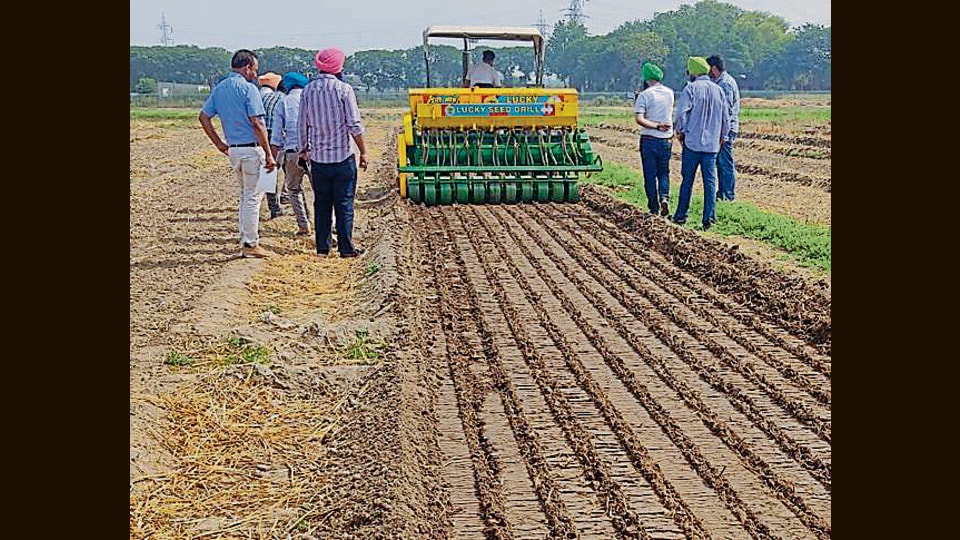
As per the schedule set by the state agriculture department, paddy sowing through the DSR method was to done between May 20 and 31 with 8 hours regular power supply, every alternate day. According to agriculture experts, paddy sowing should have been over by May 31. However, it is still continuing.
The agriculture department owes the slow pace of paddy sowing to erratic power and water supply and lack of outreach to the farmers.
“Shutting down of Sirhind canal, a major source of irrigation in the Malwa belt, for 20-25 days in May led to the delay in the paddy and cotton sowing,” said an officer of agriculture department.
Contradicting the claims of the agriculture department, senior officers in Punjab state power corporation limited (PSPCL) said that power to the agriculture feeders is being supplied as per the schedule cleared by the state agriculture department.
“As required, we have supplied power for 8 hours every alternate day from May 20 and for 3 hours at present (from May 31),” said a top officer of the PSPCL. He adds that from June 14, power supply will be for 8 hours for 6-7 days a week till the crop matures.
As per information from the state agriculture department, a sizeable number of farmers in Bathinda, Muktsar and Sangrur districts have opted for the method whereas, in other districts there is not much enthusiasm among the farmers. The slow pace is a cause of worry for the state functionaries who were pushing for the non-conventional method.
According to director agriculture Gurvinder Singh, despite odds, efforts were made to bring larger possible area under the DSR method.
In kharif season, paddy in the state is sown over 30 lakh hectares (73.5 lakh acres), out of which 5 lakh hectares is expected to be under premium aromatic basmati variety.
Last year, paddy with the DSR method was sown over 6 lakh hectares. The Aam Aadmi party government, this year, proposed to double the area and launched an awareness drive across the state to promote the DSR method, which saves water by atleast 30% as compared to the conventional method that requires transplanting saplings in puddled fields.
To motivate the paddy growers to opt for the DSR method, the state government has offered an incentive of ₹ 1,500 per acre.
The state department has also involved the scientists from the Punjab Agricultural University, for extension support. However, the impact is not very visible, despite the fact that university experts held a series of camps in the villages to educate farmers about DSR sowing.
Paddy sowing by conventional method
The Punjab government had earlier set the schedule for paddy sowing through conventional method by dividing the state into four zones. The rice transplantation was to happen in four phases- June 18, 20, 22 and 24. However, after being opposed by the farmers, paddy transplantation schedule was preponed with only two phases- June 14 and 17.
Hoshiarur, Kapurthala, Jalandhar, Tarn Taran, Nawanshahr, Gurdaspur, Pathankot, Amritsar, Ropar and SAS Nagar districts will start paddy sowing with the conventional method from June 14.
Bathinda, Barnala, Faridkot, Fatehgarh Sahib, Ferozpur, Ludhiana, Malerkotla, Mansa, Moga, Muktsar, Patiala, Sangrur and Fazilka will start rice plantation from June 17.


