
 E-Paper



Punjab politics: Pushed to margin, SAD woos fringe to win back faith
Shiromani Akali Dal chief Sukhbir Singh Badal’s overt show of support to fundamentalist forces is being seen as bid to placate the Panth, the core Sikh constituency, but can he win them over?


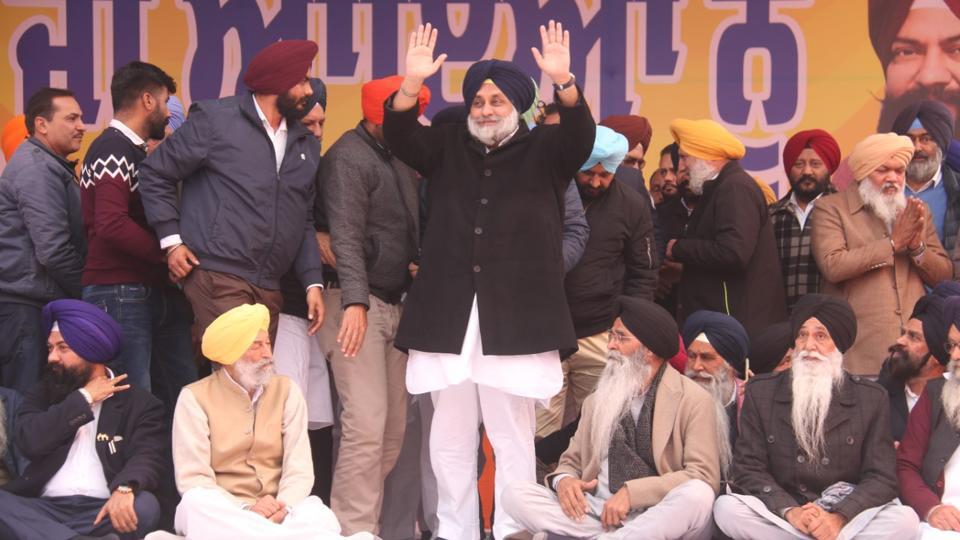
In a bid to retrieve lost political ground following the backlash to the 2015 sacrilege incidents and its initial support to the Centre’s (now rolled back) farm laws that cost it two successive assembly elections, the Shiromani Akali Dal (SAD) is seen courting fringe elements and embracing radical agenda of late to further the Panthic agenda and win over its core Sikh constituency, particularly in rural Punjab.
Also read: Need to introspect why Sikhs are repeatedly rejecting SAD, says Sukhbir
Though the SAD has termed party president Sukhbir Singh Badal’s recent visit to former Prime Minister Indira Gandhi’s assassin Satwant Singh’s house in Gurdaspur and his attending the wedding of militant leader Jarnail Singh Bhindranwale’s grandson in November as “routine course”, political observers see it as an overt attempt of the party leadership to placate the Panth to stay relevant.
According to Jagrup Singh Sekhon, a former head of the political science department of Amritsar-based Guru Nanak Dev University, “There is a void in the religio-political space in Punjab after the SAD’s defeat in successive elections. Some forces are trying to occupy it but the Akalis are struggling to hold on.”
Countering challenge
The SAD is trying to counter the challenge posed with the emergence of radical leader Amritpal Singh of Waris Punjab De as it sees its Panthic constituency, once its core strength, drifting towards him. Amritpal, 29, emerged on the religio-political scene last year when he took control of the outfit founded by late actor and farm activist Deep Sidhu to “fight for social justice and preserve the rights and culture of Punjab”.
When contacted, SAD senior vice-president Daljit Singh Cheema evaded a direct reply on Amritpal Singh, saying: “The party does not talk about individuals”, but he justified Sukhbir’s meeting Satwant’s family and attending Bhindranwale’s grandson Gurkanwar Singh’s wedding at Damdami Taksal, the Sikh seminary at Chowk Mehta in Amritsar district. “We have been supporting families of Sikhs who laid down their lives for the Panth and we will continue doing that,” Cheema said.
He cited how the Shiromani Gurdwara Parbandhak Committee (SGPC) has been supporting “dharmi faujis” who had deserted the army to protest Operation Bluestar at Golden Temple in 1984.
Religion vs politics
“The SAD leadership is left with no option but to make such efforts to strike a chord with a section of the Panth that has a radical bent. They are trying to win back the support of the Sikh population, particularly in the rural areas, who have a soft corner for such elements. Of them, a large section is peasants,” says Sekhon.
Ashutosh Kumar, the head of the political science department at Panjab University, Chandigarh, agrees that the SAD has lost its core social constituency and its president is forced to go back to issues of Sikhs in a desperate move. “But Sukhbir needs to bring in collective leadership and move away from dynasty politics because the core Akali ideology is vibrant internal democracy where everyone has a role to play,” he says.
The SGPC, according to Sekhon, continues to be the SAD’s primary source of strength as a large section of the Sikh community feels the party is a better choice as compared to its political rivals when it comes to religious matters. “As far as the SGPC is concerned, the SAD has a better chance than fringe elements who don’t find favour with the larger Sikh masses. However, when it comes to an elected government in the state, people of the state think differently and are autonomous in their choice as was proved in February 2022 elections when the Aam Aadmi Party came to power with an overwhelming majority,” he says.
The SGPC, where the SAD enjoys a majority, is running a signature campaign in gurdwaras, particularly those under its control in Punjab and adjoining Haryana, seeking the release of Sikh detenues lodged in jails across the country for years despite having completed their sentence. In the move, the SAD hopes to build pressure on the BJP-led government at the Centre and win over support in the state.
Taking Taksalis along
Ashutosh says the biggest challenge for the SAD is to regain support in Malwa, which voted for the AAP. “In playing the Panthic card, Sukhbir risks losing favour with other communities, which his father Parkash Singh Badal managed to take along smartly,” he says, suggesting the SAD chief revive the party’s leadership to gain acceptance among the Taksalis (senior leaders).
“Sukhbir has been pushed by his party and circumstances to take up the Panthic agenda. How much he will gain only time will tell. Radicals are unlikely to support him,” says Sukhdev Singh Dhindsa, who was number two as secretary general in the SAD and quit the party in 2018 against Sukhbir’s leadership.
“He may get a commitment but he won’t be able to perform as per their will,” adds Dhindsa, who floated the rival Shiromani Akali Dal (Sanyukt) before the last elections.
Struggle for survival
The SAD found itself losing grip over its core constituency after the public outcry against incidents of sacrilege of Guru Granth Sahib in 2015 when the party was in power in the state with ally BJP. The farmers, predominantly Sikhs, punished the Akalis in the 2017 assembly elections and reposed faith in the Congress, hoping for justice. Dissatisfied with the slow pace of probe, the farmers saw promise in the AAP in 2022 and the SAD’s count in the 117-member assembly fell to three.
Seven years on, it is still a challenge for the SAD, and Sukhbir who was the deputy chief minister and held the home portfolio in 2015, to convince the Panth that it had no role in the sacrilege incidents and that the party was being defamed by “anti-Sikh forces”. In this struggle to stay politically relevant, the SAD is leaving no stone unturned, including courting the fringe to win back the faith of the Panth.


