
 E-Paper



Constitutionally united India
Implementation of the law elevating Vande Mataram to the same status as the national anthem needs not a heavy hand, but a soft touch

 Prefer HTon Google


With the passage of a bill that makes any insult or obstruction to the singing of Vande Mataram a punishable offence, the national song has officially ascended to the same status as the national anthem, marking yet another instance of the Bharatiya Janata Party’s (BJP) cultural nationalism push. This is the culmination of an initiative that began with the government mandating the singing of the controversial six-stanza version of the national song and holding gala celebrations of the 150th anniversary of the song — which its supporters interpreted as championing nationalism and opponents insisted was cynical politics with an eye on elections. The bill amends the Prevention of Insults to National Honour Act, 1971, which makes desecration of or disrespect toward the country’s national symbols — including the national flag, the Constitution, and the national anthem — a criminal offence, carrying a punishment of up to three years’ imprisonment. It is a milestone for a song written by Bankim Chandra Chatterjee in Sanskritised Bengali in the 1870s, picked by the freedom movement to praise the motherland, and whose first two stanzas were adopted as India’s national song in 1950.
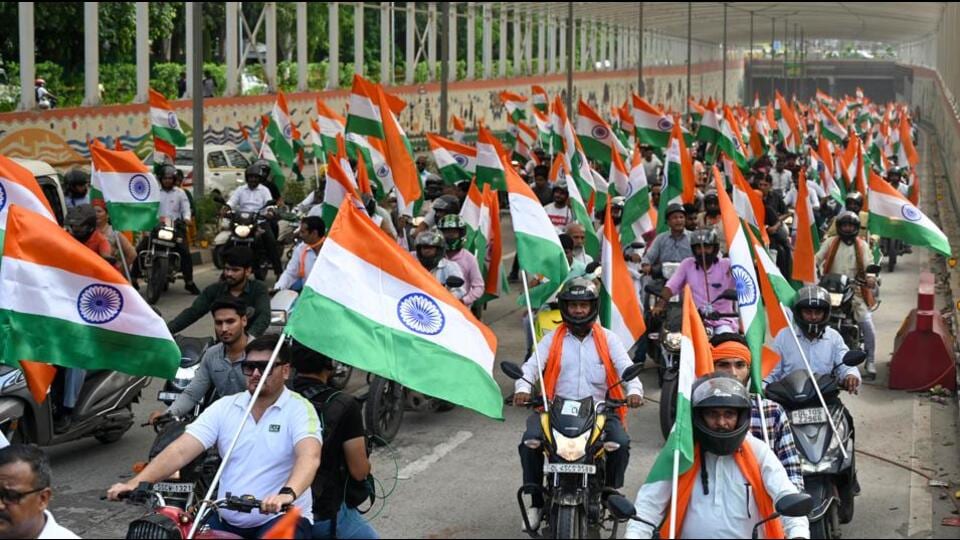
Of course, the feeling of belongingness and patriotism is at the core of any modern nation-State project. But in a postcolonial State such as India, which was not only born after overthrowing colonial masters but also survived when few thought it possible, patriotism and nationalism hold special pride of place because it is the glue that binds this incredible union of diverse regions, tongues, geographies and histories, food habits, clothes and climates. This union has thrived because of the perseverance and patriotism of the ordinary citizen who has not only often risen above narrow community concerns for national service, but has done so without coercion.
Right from the generation of people who fought the British in the streets to the generation that now shouts slogans in 18th century city squares for a more accountable democracy, patriotism and confidence in a better India has always flowed spontaneously. Of course, the law is required to deal with errant elements who may try to hurt the dignity of the national symbols. But in general, patriotism in India has never needed a policeman’s baton or the furrowed brow of the law. The implementation of the new law, therefore, requires not a heavy hand, but a soft touch.


