
 E-Paper



Punjab ready for first intensive electoral roll clean-up in 22 years: CEO Anindita Mitra
While electoral rolls are updated four times a year, the SIR is an extensive exercise to prepare and validate the mother roll

 Prefer HTon Google


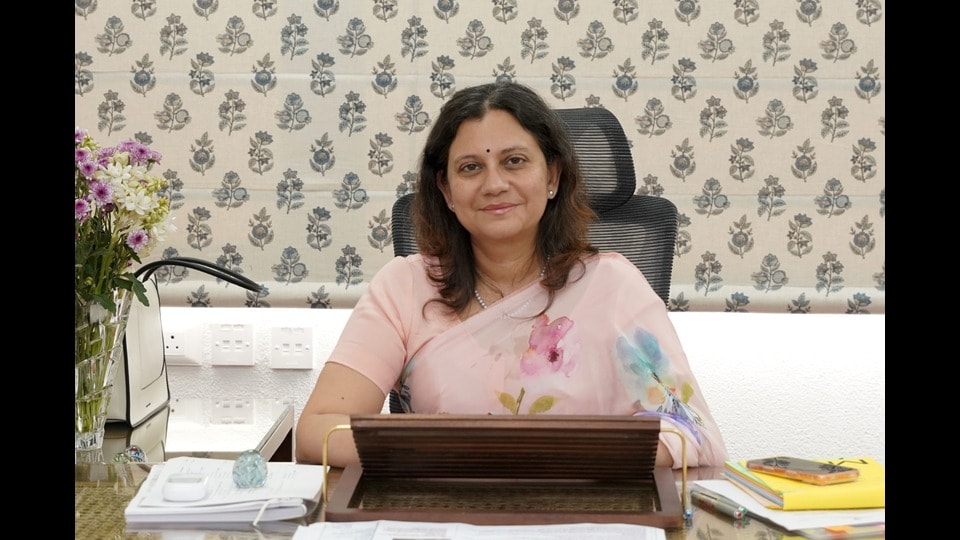
With assembly elections early next year, all eyes in Punjab are on the Special Intensive Revision (SIR) of electoral rolls in the state. The SIR will roll out once the Election Commission (EC) announces the schedule for the third phase, covering 22 states and Union Territories. Several political parties view the exhaustive electoral roll clean-up with suspicion, leading to confusion and questions. In a conversation with Hindustan Times, Punjab’s chief electoral officer Anindita Mitra explains the contours of the exercise. Edited excerpts:
What is Special Intensive Revision (SIR)?
SIR is a comprehensive, door-to-door exercise carried out by the EC to update and ‘purify’ electoral rolls. At its core is the concept of a mother electoral roll. While electoral rolls are updated four times a year, the SIR is an extensive exercise to prepare and validate the mother roll. It verifies voter details, adds eligible new voters, updates records of those who’ve shifted, and removes deceased or duplicate entries by linking current records with the last nationwide SIR from 2002-04. The last SIR in Punjab was conducted in 2003. The exercise determines voter eligibility. The aim is to ensure that the electoral rolls are accurate and inclusive.
How will SIR be carried out?
Pre-SIR mapping is underway, where voters enrolled in Punjab are being mapped to the electoral roll of the last SIR. The SIR will begin after the EC issues a notification followed by a preparatory phase of seven to 10 days. This will be succeeded by a month-long house-to-house enumeration drive during which booth level officers (BLOs) will visit each registered voter’s house with the required forms. Voters must fill out the forms and submit them along with a recent photograph, which the BLOs will collect. The draft electoral roll will be published, followed by a 30-day period for filing claims and objections. Notices will be issued to those whose forms are not received or have discrepancies before the final roll is published.
How is SIR different from regular voter list revisions?
Regular updating is done through the special summary revision, under which the voter list is revised based on applications received from first-time and existing voters. Under SIR, every voter must submit an enumeration form as part of a mandatory exercise.
How did you prepare for this exercise?
Our first step was pre-SIR mapping. As of Friday, we mapped more than 80% of the 2.14 crore registered voters in the state, and aim to cover at least 90% of the voters. We have BLOs, supervisors, and state-level master trainers in place. Electoral registration officers (EROs) have been posted, except in one or two places across the state.
Who will conduct SIR at the ground level?
We have 24,453 polling booths, each manned by a BLO, who are employees of the state government. A BLO covers around 300 households and will reach each household under his or her jurisdiction. In most cases, they reside in the area.
What documents does one need to keep ready?
Under the SIR framework, if an individual is mapped to the 2003 electoral rolls, no document is required. However, supporting documents will be required in case of a mismatch, discrepancy or inconsistency in details. There is an indicative list of 12 documents for establishing identity with address. If an individual was born in India before July 1, 1987, any one of these documents, establishing the date and place of birth, is sufficient. For those born in India between July 1, 1987, and December 2, 2004, a document for either the father or the mother, establishing his or her date and place of birth, must be provided. For individuals born in India after December 2, 2004, documents for both parents must be furnished. If either parent is not an Indian citizen, a copy of his or her passport and visa at the time of the applicant’s birth is required. If born outside India, proof of birth registration issued by the Indian mission abroad must be provided.
Can one fill out forms for family members away from home during enumeration?
According to instructions for other states, personal presence is not mandatory and an adult family member can fill the form on a voter’s behalf. This applies only in cases where the person is unable to be present. However, the ERO must exercise due diligence and may require verification if any doubt arises.
What if a voter is not available at the given address during enumeration?
If a house is locked or a voter is not present, instructions state the BLO can leave the form, which has to be filled and returned to him or her. The BLO is required to visit the house at least three times to collect the filled-out form. The enumeration form is important. If the form is not received back then, the person’s name will not feature in the draft electoral roll, which will be placed on the websites of the CEO and EC. Those who are not in the draft roll will have to submit Form 6 along with requisite documents to either the BLO or ERO during the claims and objections period.
What safeguards are in place to prevent wrongful deletion of voters?
Since a large workforce is involved, there may be occasional gaps. We have robust checks and balances in place. We will conduct an awareness programme to ensure that voters understand their rights and responsibilities. Parties will be provided polling booth-wise voter lists of 2003 and 2025. Having a vote registered in more than one place is a punishable offence, carrying an imprisonment up to one year. The voter must have their name deleted from one place. The only categories of people whose votes may not be included in the draft roll are: a) Those whose enumeration form has not been received; b) those who have passed away; c) those who have changed residence; and d) those with duplicate entries.
How will the SIR process impact NRIs and migrant voters?
NRIs have a right to vote. The enumeration form can be filled online. As for migrant workers from other states, we have already mapped 80% of voters in the 2025 electoral roll with the 2003 list. The remaining will be covered during the house-to-house enumeration. If they want to enrol as voters in Punjab, they just have to fill the form along with the required documents. But a voter is not allowed to have votes in two places.
Since Punjab has multiple cantonment areas, what about service voters?
Service voters are handled differently from ordinary voters in this process. They are not mapped in pre-SIR. They are in a distinct category on the electoral rolls. Their details are maintained separately through an institutional mechanism.
Voters in Punjab
(as on Oct 1, 2025)
2.14 crore: Total number of voters
1.12 crore: Number of male voters
1.02 crore: Number of female voters
Pre-SIR mapping exercise
80.55% Voters mapped with 2003 SIR so far
87.06% Rural voters mapped
68.74% Urban voters mapped
How to check your mapping status online
Visit www.voters.eci.gov.in and, under the heading Special Intensive Revision (SIR) – 2026, select “Search Your Name in Last SIR”.
Documents needed during house-to-house enumeration (any one of these)
Any ID card/certificate/document issued in India by govt/local authorities/banks/post office/PSUs on or before July 1, 1987
Any ID card/pension payment order issued to regular employee/pensioner of nay central govt/state govt/PSU
Aadhaar as proof of identity
Passport
Birth certificate
Matriculation/educational certificate issued by recognised boards/universities
Forest right certificate
OBC/SC/ST or any caste certificate
National Register of Citizens (wherever it exists)
Family register, prepared by state/local authorities
Any house allotment certificate by govt
Permanent residence certificate by competent state authority.


