
 E-Paper



Punjab set to engage RMPs to combat Covid in rural areas
Chief secretary asked district administrations, health department officials to chalk out a plan to improve rural outreach


The Punjab government has decided to rope in registered medical practitioners (RMPs) in its fight against the coronavirus pandemic in rural areas of the state.
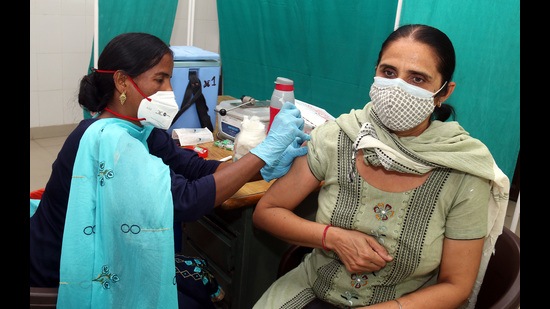
In a video conference, chief secretary Vini Mahajan on Sunday asked the district administrations and health department officials to chalk out a plan to improve rural outreach across the state.
Officials said RMPs, also referred to as quacks by medical professionals, may prove helpful in convincing residents in villages to get themselves tested for Covid-19 and follow the medical protocol.
According to estimates, Punjab has nearly 70,000 RMPs working in cities and rural pockets.
The RMPs do not have medical degrees but practice medicine, predominantly in peri-urban and rural areas. “They might be criticised by various sections but the RMPs can play a significant role a time when the pandemic has spread aggressively in rural pockets and people are hesitating to get tested,” said a senior health official.
Mansa was the first district to engage RMPs to contain the spread of virus in villages.
Bathinda deputy commissioner B Srinivasan said a special outreach drive with RMPs on board will commence in the district from Wednesday.
“The RMPs will be members of a group of health workers contacting residents in the rural belts. They will not treat any patient but will take stock of health condition of people and report to the health authorities for further action,” he added.
In the predominantly rural belt of south Malwa districts, there has been a spurt of infections and mortalities.
On Monday, Fazilka had 10 villages declared as containment zone.
Fazilka civil surgeon Parminder Singh said the health teams will be strengthened by engaging RMPs and they can help in reducing the burden on over-stressed hospitals.
“People in villages hesitate in sharing their health status with officials but they feel comfortable with RMPs. They share a bonding with these practitioners and we can make use of their relationship in enhancing health surveillance effectively,” he said.
Ramesh Kumar Bali, president of the Medical Practitioners Association of Punjab, a union of RMPs, said he recently discussed the issue of roping in RMPs with health minister Balbir Singh Sidhu and the chief minister’s adviser Sandeep Sandhu.
“More than 60,000 RMPs in Punjab have at least an experience of 10-years and they can be engaged for mass awareness at villages. The RMPs have the largest network of healthcare at the grassroots level. Our team can motivate people to go for isolation and taking vaccination by removing misconception about the pandemic,” said Bali.


