
 E-Paper



Roundabout: Spring spells hope as the heart hums forgotten songs
The merry month of March was marked by the celebration not just of the changing seasons, but the revival of the spirit to seek and give more to the passing caravan of existence


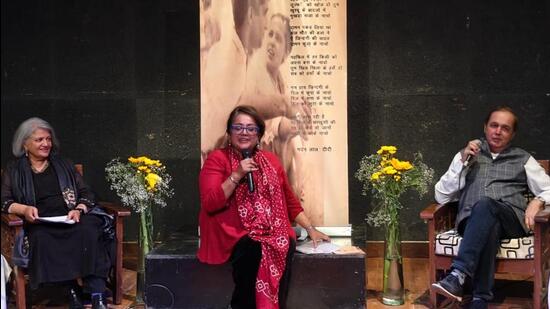
Music certainly was food for the soul the past week, witnessing two soulful events from Chandigarh to Amritsar, playing on the melodies that make the journey of life, with all its ups and downs, something to be cherished. The musical trail started a little after the ides of March in the Tagore Theatre’s mini auditorium with a very alluring title of “Nazrein Mila Ke Dekho”, which defies any translation. Shumita Didi Sandhu of eclectica had curated a musical tribute to Com Madan Lal Didi (1924-2008), who was her father, on his birth anniversary. But Didi, pronounced with an accent on “D”, was a poet and an activist dear to the working class. Together with his wife Sheela Didi, a singer, activist and lawyer, they were an inspirational duo from the 1950s and stars of the 70s, in this city of ours in which we grew up, holding them in deep regard.
A comrade and contemporary of Sahir Ludhianvi, Didi was born in Hadiabad near Phagwara in Punjab and graduated from the Government College, Ludhiana. The city those days was the hub of progressive activities and writers with dreams in their heart were all attached to the Progressive Writers Movement spearheaded by Syed Sajjad Zahir in Lucknow in 1936. They say every young man is a socialist in his youth and a conservative as he grows older. But Didi was one of those who held onto his beliefs till the end. In his early youth, he became a wholetimer with the Communist Party of India and held the office in Ludhiana, then the den of writers, poets, musicians and painters. The city boasted of poets like Kumar Vikal, Krishan Adeeb, one of the first painters who got recognition in Europe, Harkrishan Lal and the famous Bombay films musician Jaidev.
Shumita recounts: “When Jaidev became famous in Bollywood, he asked Papa to sell all his poetry to him for a handsome amount along with the copyright.” But Didi declined, saying these were songs of struggle and belonged to the people and he could not sell them. Such was his idealism. His son Rahul Didi says, “He was greatly influenced by leaders like EVS Namboodiripad and when I was born in 1960 he was underground as he had been supporting the Telangana Movement .”
Dedicated to his poetry and politics, he would dismiss marriage proposals, joking “my wife will come from seven seas away”. So it happened and Sheela, who was the daughter of a man from Una who had migrated to Kenya to seek his fortune and which he did find the hard way. Sheela had come to Ludhiana with a Bar at Law from London and also became a wholetimer with CPI. Their first child, Poonam Didi Singh, was the editor of Preetlari. My fond acquaintance with Poonam began in the mid-70s at the Government College for Girls, Sector 10, when she organised the first strike ever there in support of the mail students protesting for their demands. We were charmed by this determined Prep student who held her own against the formidable principal, K Atma Ram. Later, a fond and volatile bond was formed with the younger sister Shumita that faced several storms and dull moments. Her mother’s daughter, she has sought justice and resisted many storms. Interesting when the sisters ever accuse their brother Rahul for “chauvenry” he retorts: “How dare you say this! Remember I am Sheela Didi’s son.”
It was with this regard that the three celebrated the centenary year of their father with a musical rendering of his poetry by singers Devinder Pal Singh and Radhika Sood Nayar, from Mumbai and Poonam, a graceful theatre person too, leading the dance to the famous poem, which Didi dedicated to women: “Nazrein mila ke nacho, Shole jala ke nacho, Ulfat ki chandani mein, Sab kuch bhula ke nacho ke nacho,” the finest tribute to lives lived well and in this case their names were Madan and Sheela.
Lo Phir Basant Aaayi
In this journey across the countryside blooming with mustard flowers from Chandigarh to Amritsar, the destination was the Spring Lit Fest at the Majha House. Amidst discussions from Punjab to Palestine on the stage bedecked with embellished kites, readings of poetry, screening of films, came a delightful musical interlude delving on common culture in spite of religious differences.
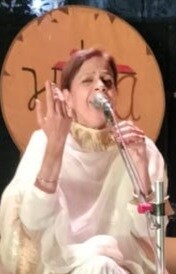
It was an amazing congregation of music, culture and the much-cherished Ganga-Jamuna tehzeeb of togetherness and which celebrated festivals in the spirit of “Real Love” or “Love of God” that takes one to the love of people created by the lord in the transcendence of “Ishq Haqiqi to Ishq Majazi”. The famous trio who tell and sing of the Sufi culture, orators Sayeda Hameed and Lokesh Jain with singer Rene Singh, took us to the jubilee of the shared joy, love and pain of all humanity.
Hameed in her eloquent Urdu narrated the story of how “Basant (Spring)” became a part of the Kishti Sufi culture. The story took us to times of Hazrat Nizamuddin Aulia when his disciple Amir Khusrao, trying to take him out of the loss of sorrow, decked out in yellow flowers and clothes went dancing to his dargah and the Nizammudin joined them to take flowers to the temple. Rene as she moved from one song to the other with finesse had the audience in raptures singing Khusrau’s poetry “Sakal Ban Phooli Sarson”. The melody and passion was such that the singer became the song. The crowning was singing of Sufi songs and their interpretation by singer-academic Madan Gopal Singh.


