
 E-Paper



‘Satluj’ row: SAD calls core committee meeting on July 16
SAD senior vice-president Daljit Singh Cheema announced that following the crucial core committee session, party president Sukhbir Singh Badal will hold a strategy meeting with halqa (constituency) incharges to dissect the fast-evolving political dynamics in the state.

 Prefer HTon Google


The Shiromani Akali Dal (SAD) has called an emergency meeting of its apex decision-making body, the core committee, on July 16 to address the building socio-political turmoil sparked by the controversial digital release and sudden removal of the biographical film ‘Satluj’.
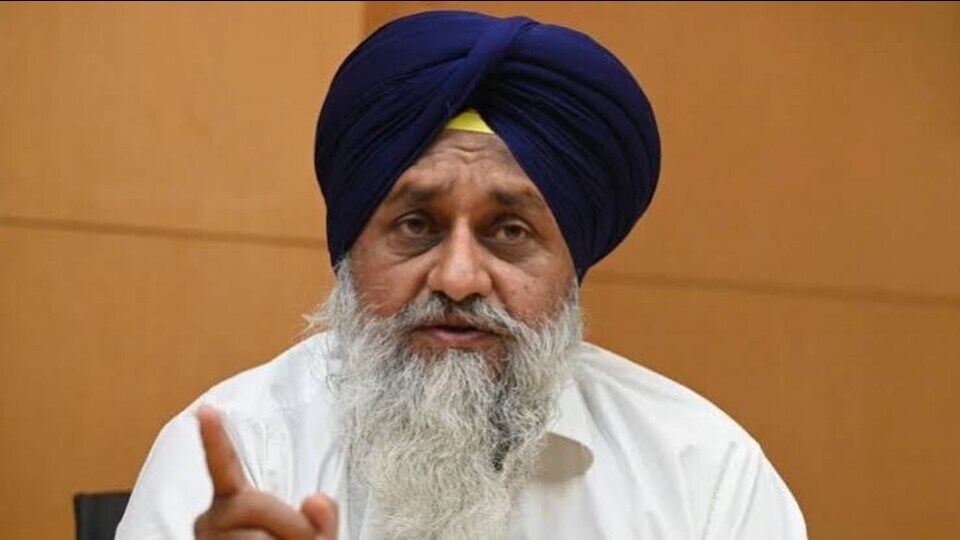
Based on the life of missing human rights activist Jaswant Singh Khalra, the movie was pulled from an OTT platform within 48 hours of its release last week, triggering widespread political fallout across Punjab.
SAD senior vice-president Daljit Singh Cheema announced that following the crucial core committee session, party president Sukhbir Singh Badal will hold a strategy meeting with halqa (constituency) incharges to dissect the fast-evolving political dynamics in the state.
Over the past week, Akali Dal (Punar Surjit), the breakaway faction of the SAD, held public screening of the banned movie in the villages of Majha belt of the state. Subsequent to which the SAD also announced screening of the movie.
The controversy further intensified with Union minister of state Ravneet Singh Bittu demanding that the film’s creators present the complete history of Punjab’s decade of turmoil rather than a selective narrative.
‘Satluj’ not ‘Punjab Files’: Sahney
Rajya Sabha member Vikramjit Sahney said that he was pained by the recent discourse surrounding the film ‘Satluj’. “Any film based on historical events should be viewed as an artistic interpretation of a particular subject and must not become a means to reopen old wounds or create fresh divisions,” suggested Sahney, adding that it has been established that Khalra pursued the issue of disappearances and illegal cremations through constitutional and legal means, including filing habeas corpus petitions before the courts.
It is not ‘Punjab Files’, nor does it seek to present the entire history of terrorism and militancy in Punjab. Equally, neither Diljit Dosanjh nor the makers of the film have sought to justify terrorism or diminish the immense suffering caused by militancy.


