
 E-Paper



Test soil before opting for direct seeding of rice: Agri experts
Experts said that though direct seeding of rice saves labour, water and energy, it is recommended only for soils with a medium to heavy texture

 Prefer HTon Google


With the state government announcing incentives for those opting for direct seeding of rice, agricultural experts have advised farmers to get their soil tested before using the water-saving technique as it is not suitable for light-textured soil.
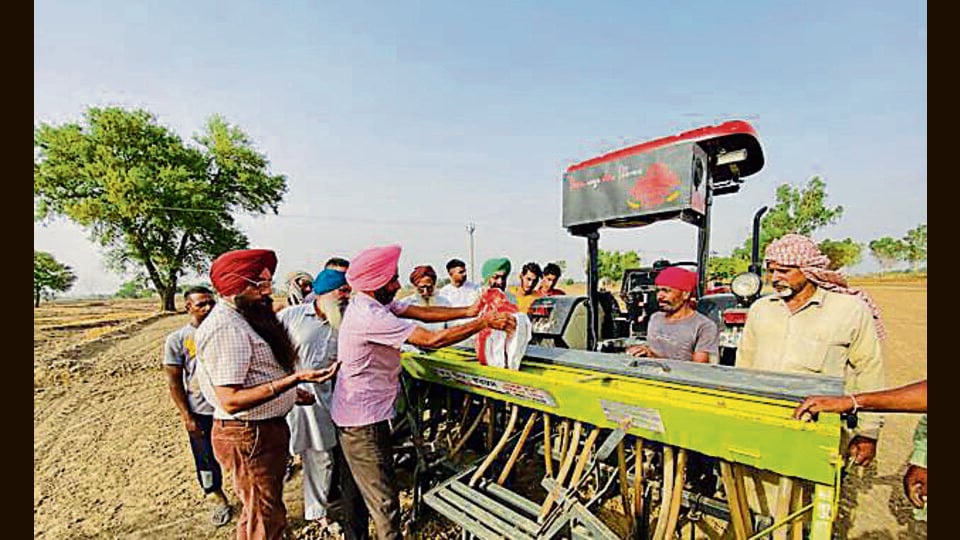
Experts said that though direct seeding of rice (DSR) saves labour, water and energy, it is recommended only for soils with a medium to heavy texture.
Moga plant protection officer Dr Jaswinder Singh Brar said, “Rice seeds should never be cultivated in light-textured soil as it is deficient in iron. Soil should be of the right texture to improve irrigation, water management and to ensure germination of rice seeds,” he said.
DSR has been projected as an alternative to puddled transplantation of rice. The state government has announced assistance of ₹1,500 per acre to farmers using the direct seeding method to plant paddy. The agriculture department has set a target of bringing 1,202 hectares of land under DSR in Punjab.
Agricultural experts say the seeds should be planted before the onset of monsoon. “For Basmati, the optimum sowing time is the second fortnight of June. Short-duration varieties of rice are suitable for DSR, and 8-10kg seeds are sufficient for sowing over one acre,” he said.
“Farmers can use the direct seeded rice drill Or lucky seed drill to cultivate paddy using the direct sowing technique,” said project director, Agriculture Technology Management Agency (ATMA), Faridkot, Amandeep Keshav.


