
 E-Paper



Ukraine crisis: Back home, Punjab students say erasing trauma won’t be easy
The shock of the first airstrike, the anxiety inducing air-raid sirens, endless hours in bunkers with little food or water, long walk in sub-zero temperatures to get to safety are some of the memories the students are carrying home from Ukraine


The shock of the first airstrike, the anxiety inducing air-raid sirens, endless hours in bunkers with little food or water, long walk in sub-zero temperatures to get to safety – these are the memories that Abhishek Sharma, 22, has of his last few days in Ukraine.
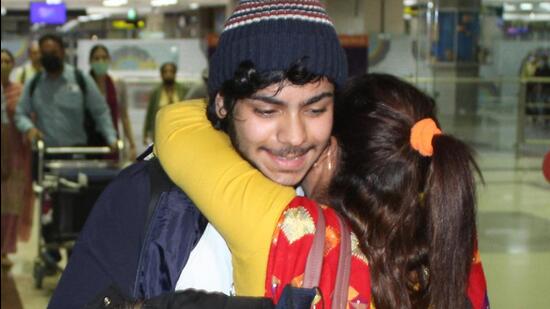
Finally back home, the 22-year-old Kotkapura native says it’s a trauma that won’t go away soon. “After the first air strikes on February 24, we were moved to the basement of our university. We remained there for three days, but as the Russian attack intensified, we were moved to an underground metro station,” he recounts.
“When we finally got out of the bunker, we were shocked to see destruction all around,” he says.
Abhishek and his group walked almost 10-kilometres to reach a railway station, from where they hoped to board a train to take them to a safe zone. “But the guards at the station did not let us board the train. We didn’t know why they were pushing us back, but as the Indian Embassy had told us leave Kharkiv immediately, we were left with no option but to walk another 8-kilometres to reach Pisochyn, where we took shelter in a military camp,” he said. But their troubles did not end there.
“We had spent almost $600 to reach Romania border in private buses. But as the trains there were crowded, we boarded a bus after paying $300 each to travel from Piscochyn to Lviv. As we found Poland border to be very crowded, we hired two mini buses to reach Chernivtsi city near Romania border. We had to pay $300 dollars more for the journey. After a journey of around 8-hours, we reached Chernivtsi, where we met an Indian embassy official. After that everything was taken care of by the officials, and we got on a flight back home within 24 hours,” he added.
Khushwinder Kaur, 23, who belongs to Faridkot, who also reached home on Monday after an 80-hour wait at the Poland border said she may never forget the death and destruction that she witnessed.
“The first four years at Kharkiv National Medical University were amazing. But everything changed after war.”
“For three days, we remained in a bunker without food or water. We heard explosions at frequent intervals. As time was running out, we boarded a train for Lviv on Tuesday. We reached the Shehyni-Medyka border to enter Poland, where we were stranded for hours. It was a terrible sight as thousands of Ukrainian families, including elderly and women, were scrambling to cross over to safety,” she recounts.
“After crossing Polland border, we were kept in a hall of a hotel for over three days without clarity over our evacuation. We heaved a sigh of relief when we finally boarded the flight home,” she added.
‘Even girls roughed up at Kharkiv train station’
Prakriti Thakur, a first-year medical student at Kyiv Medical University, and Ruchika Sharma, a student of Kharkiv National Medical University, heaved a sigh of relief as they finally reunited with their families.
“The last few days were scary. We were shifted to bunkers the same day that the Russian invasion began. We were provided everything, but the frequent explosions were frightening,” she said.
On February 27, after an advisory from the Indian Embassy, she, along with a few other students, tried to catch a train for the Western Border.
“But the Ukrainian officials barred us from boarding the train. They even assaulted some girls.”
After that she took a train to Vinnytsia, where she stayed in a hostel for a night, and later booked a bus to Hungarian border. Once she crossed to Hungary, the Indian Embassy took charge. “We stayed in an ashram for four days before we boarded a plan for Delhi from Budapest Airport,” she said.
For Ruchika too, it was a long wait at the Hungary border before she could reach home. She was delighted to see her parents and brother waiting for her at the Delhi airport.
Meanwhile 14 out of 21 Ferozepur students are still languishing in Ukraine while 7 out of 10 of Fazilka district have returned safely so far.
(With Gaurav Sagar Bhaskar in Ferozepur)


