
 E-Paper



Up efforts to tackle vector-borne diseases: Health minister
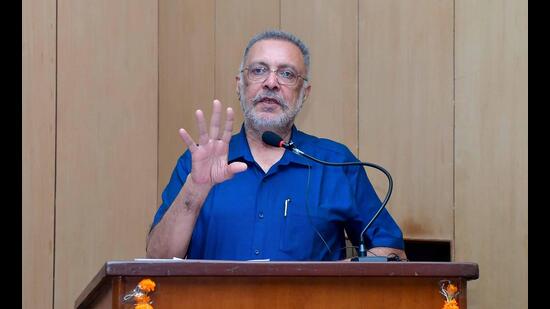
Punjab health minister Dr Balbir Singh directed officials from the health, local bodies, rural development and panchayats departments to work in close coordination to curb the spread of vector-borne diseases.


Punjab health minister Dr Balbir Singh directed officials from the health, local bodies, rural development and panchayats departments to work in close coordination to curb the spread of vector-borne diseases.
The risk of spread of vector-borne diseases rises in the ongoing monsoon season.
Chairing a district-level meeting in Ludhiana, Dr Singh emphasised the need for collaboration among these departments to prevent and manage outbreaks.
He said all officials must have immediate access to data on cases, hotspots, samples and other crucial information related to the diseases. He stressed the shared responsibility in controlling water-borne diseases such as diarrhoea, cholera and hepatitis-A, and vector-borne diseases such malaria, dengue and chikungunya.
“In the event of an outbreak, the municipal corporation, nagar councils and other relevant agencies should identify the sources of water contamination and rectify the situation. Door-to-door outreach should be done to deliver necessary medications and information in affected areas. There should be an awareness campaign to educate the public,” the health minister said during the meeting.
He also reviewed the operations of Aam Aadmi Clinics’ out-patient departments (OPD), availability of medicines, functioning of outpatient opioid assisted treatment (OOAT) centres and drug de-addiction and rehabilitation centres.
Deputy commissioner Sakshi Sawhney apprised the health minister that daily monitoring was being done and all departments were submitting water sampling reports every evening. Immediate corrective actions are implemented for any unsatisfactory reports, she added.
Health minister inaugurates WHO collaborating centre
Dr Singh inaugurated a World Health Organization (WHO) collaborating centre for stroke at the Christian Medical College (CMC).
Highlighting the increasing problem of stroke with 40,735 cases being registered annually, he said that the state government will sign a memorandum of understanding (MoU) with the private hospital where stroke patients will be able to get free treatment.
The treatment of stroke is time-sensitive.
The minister said that the state government will explore collaboration opportunities with the hospital to develop a hub and model of stroke care in Punjab.


