
 E-Paper



Wild Buzz: Embers of spring
A leopard clambers atop a palash in bloom in Rajasthan, while a dear comes to a painstaking death in Chandigarh


In the Shivalik foothill jungles that loom over the tricity, fires have flushed the complexion of predominant tawny-olive flora. Blood-stained, tiger claw-shaped or parakeet beak-shaped flowers of the ‘flame of the forest’ tree have come to abundant bloom.
They are beauteous beacons to behold. A raging pyre of spring’s last rites, these April ‘phools’ embody an eloquent dread of summer’s advancing inferno.
The awkward looking tree with a crooked trunk and ungainly branches sports the most unusual flowers, whose elegance has inspired poets as exalted as Rabindranath Tagore and enriched India’s diverse folk cultures. In contrast to the tree’s rugged grey bark, the blooms are silken to touch but lacking in the gentle, esoteric whiff of a jungle flower.
The palash, dhak or tesu is the state flower of Chandigarh and three states, though it is a rare spectacle to behold within the city’s green lungs. However, nature enthusiasts would do well to drive out just 30 minutes from the heart of the city to savour clumps of palash trees in the foothills. They are especially visible along dry, seasonal rivulets.
If the human soul revels in the tree’s post-Holi exuberance, an astonishing diversity of birds, bees, butterflies and insects are attracted to its blooms by its riveting colour, edible petals and nectarine gifts. It is not unusual to come across langoors on this tree or a civet silhouetted against bloom and moon.
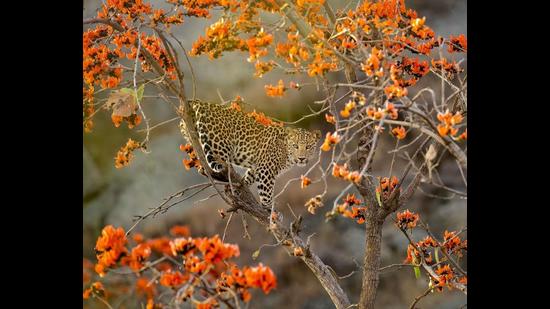
What was missing from the repertoire of photographs was a leopard clambering aboard the tree. Though the Shivaliks enjoy a good representation of leopards, no photographer has chanced upon that vivid spectacle. It was, therefore, a definitive moment in the palash’s reputation as one of the most unconditional hosts when photographers recently discovered a leopard clan amid the blooms in the Jawai hills of Rajasthan. I take great delight in sharing a mesmerising image with Wildbuzz readers.
Repeat offence
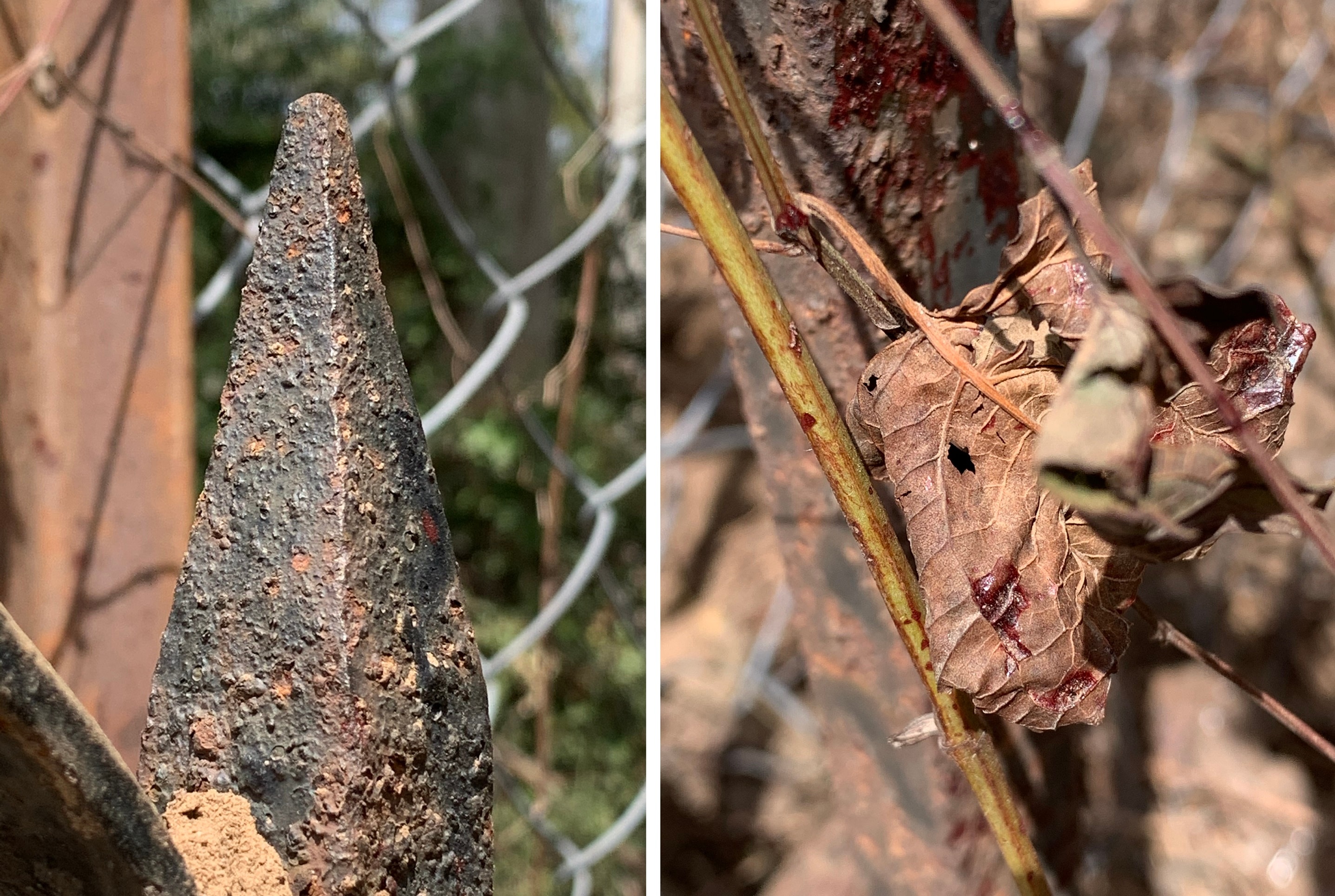
Last week, another Sambar died in horrific, blood-curdling contortions after it was impaled while attempting to jump over the crude, spear-tipped fence that cuts off Nagar Van from Uttar Marg, opposite Sector 5.
In November, a fawn had similarly perished while attempting a leap within the Sukhna Lake Nature Trail over a speared fence.
The fence, whose height varies between 5.5-7ft, is a death trap for young, infirm and old sambars or those who panic and misjudge the leap while seeking foraging pastures outside Nagar Van.
These senseless deaths anguished a Chandigarh-based educationist, Divye Mathur, who saw both the dead sambars impaled in brutal fashion while out for a walk early in the morning.
Flagging the issue on social media, he said: “What is the point of these sharp spikes? These poor creatures had to die in such a brutal manner just because this killer boundary has been installed. Has it been installed to save wild animals or to kill them? Everywhere else a net fencing is installed around wildlife areas not these spear tips,” Mathur, a Sector-8 resident, told this writer.
The good news is that the forest and wildlife department is finally rectifying the issue.
“On a trial basis, we are welding flat plates on top of the spikes so as to remove the threat, especially along routes frequented by animals. If it works, we will remedy the fencing more exhaustively,” chief wildlife warden Debendra Dalai told this writer.


