
 E-Paper



Wildbuzz: Chandigarh’s pretty chicks
The grey partridge finds home in the heart of Chandigarh; violet blooms of Jacquin’s nightshade of pharmaceutical importance hug the ground in humility


A definitive indicator of habitat acceptance by a wild creature is that the species is able to breed and rear its offspring to maturity. So it is with the grey partridge (francolin), an iconic bird of the North-west Indian countryside facing a rapid decline in numbers in its stronghold habitats, but one that has adapted and settled down in the heart of Chandigarh. It can be encountered in parks in pairs or small coveys or perched on boundary walls like a common dove or babbler. At the sprawling and verdant complex of the Government College for Girls, Sector 11, birder and conservationist Vikas Salil Sharma has photo-documented the successful breeding of partridges, a species whose reproductive season is currently underway.
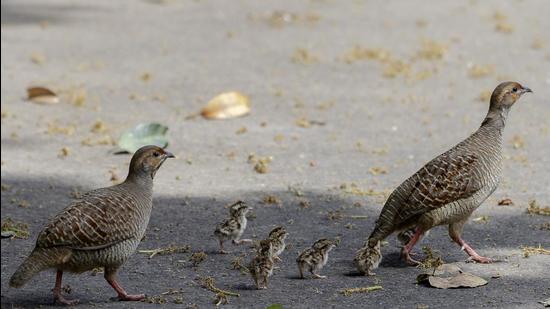
Zoologist and author Dr Rajive Kalsi has undertaken extensive field research and conducted radio collar studies on the breeding ecology and conservation status of partridges. He explains why this bird has been able to breed successfully in an urban habitat. “Chandigarh sports mature trees which partridges use to roost at night and be safe from ground predators. The city is landscaped with shrubs, hedges and bushes and these not only provide cover to partridges but are the habitat for insects, which partridge chicks feed exclusively on. The city has abundant ‘deemak’, which chicks relish. The grey partridge, as compared to the black partridge, is a bolder species and ventures into new areas to find suitable habitat. Hence, the grey partridge adaptability to diverse habitats. Hunting and trapping is of relatively low incidence in the city. Finally, the application of pesticides is lesser in the city as compared to the partridge’s traditional habitats spanning the agriculture-jungle-scrubland mosaic. Pesticides constitute the main factor for partridge decline in the countryside,” Dr Kalsi told this writer.
Beauty at our feet
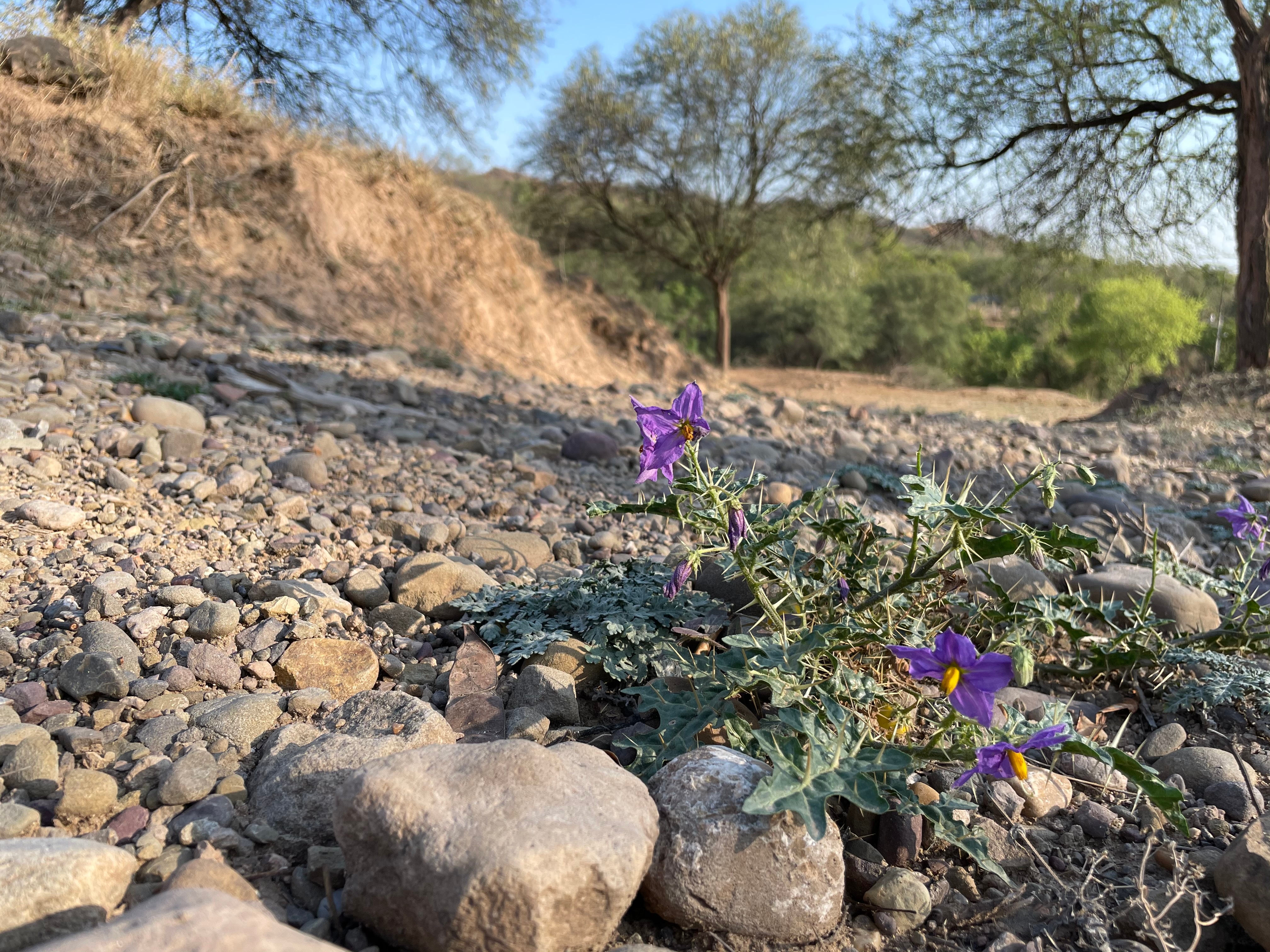
The soil from where these violet flowers bloom is riddled with pebbles and is stone-dry. Hugging the ground in humility, the blooms smile at the clear sky even though they lie bang in the centre of a winding cattle track that leads over the Mirzapur check dam’s embankment to the waters below. The cattle’s heavy hooves have somehow missed these flowers attended by fabulously fiendish, upright thorns, festive yellow berries and greenish, deeply-lobed leaves that resemble a human palm with more than five, awkwardly jutting and stubby fingers.
This lovely shrub inhabiting the arid terrain of the Shivalik foothills goes by the intriguing common English names of dwarf wild brinjal, Jacquin’s nightshade, prickly brinjal, prickly nightshade, Thai eggplant, thorny nightshade and yellow-berried nightshade. In Punjabi, it is known as kandiali, chhoti mauhari or unt katara and in Hindi as kantkari. It is recognised in the scientific world by the botanical nomenclature of Solanum virginianum.
Despite its seemingly unobtrusive life at the mercy of the various clumsy feet of men and big beasts that may trod and trample over it at the peril of inviting a thorny jab, derivatives of this shrub are an important ingredient in the preparation of the ayruvedic dashmool formulation used in the treatment of cough, asthma and chest complaints. Pastes derived from the shrub find application in traditional and folklore medicines, too. As a research study pointed out while underscoring the pharma potential of Solanum virginianum: “Herbal medicines are of growing interest because of their cost effective and eco-friendly attributes.”
So, the next time when out for a nature ramble in the Shivaliks, pay attention to the beauty and utility of these self-effacing shrubs that lie at your feet and smile up at you amid the perennial adversity of existence.


