
 E-Paper



Wildbuzz | O Noor of the Himalayan moors
No pilgrim can forget the ethereal spectacle of the Hemkund slopes garlanded in the monsoons with clumps of the sacred Brahma Kamal flower, which is the Noor of the Himalayas


Not all tricity citizens have been fortunate enough to undertake a pilgrimage to Hemkund Saheb nestling at over 15,000 feet in Uttarakhand. But a lot of them have heard anecdotes of ancestors and friends who have taken the rugged, adventurous route to this pristine gurdwara associated with Guru Gobind Singh. As pilgrim lore has it, sheer exhaustion instantly dissipates upon entering the divine alpine ambience.
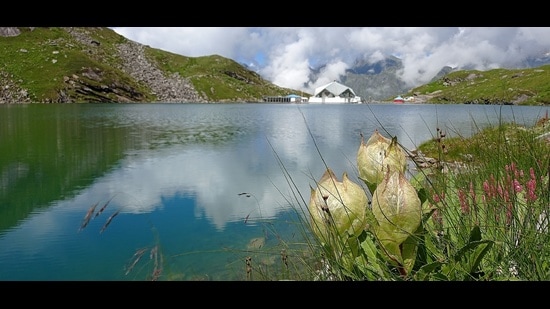
No pilgrim can forget the ethereal spectacle of the Hemkund slopes garlanded in the monsoons with clumps of the sacred Brahma Kamal flower (Saussurea obvallata),also known as ‘God’s own lotus’. Associated with the image of Lord Brahma cupping a white lotus in one of his four hands, the perennial herb is the state flower of Uttarakhand but declared ‘endangered’ because of over-extraction for religious, cultural and medicinal uses.
On the flip side, cynics compare it to a glorified ‘patta gobhi’ (cabbage)...! Its strongly aromatic or smelly flowers can cause a headache, a dicey proposition accruing from the health hazards that haunt high-altitude jaunts.
So intoxicating is the effect of the Brahma Kamal blooming in ethereal alpine environs on aesthetic sensibilities that it has found mention in the epics and a particularly eloquent one at that in Kalidas’ Meghdoot: “Land lotuses on an overcast day, neither open nor closed…The lovelorn Yaksha is talking of his wife’s tear-laden eyes...”.
Centuries after the mahakavi’s romantic flourish, a Gujarati explorer from Bhavnagar, Bhavesh Visani, ‘translated’ the verses into a truly memorable photographic composition of the Hemkund ambience. Last August, Vasani trekked to the shrine with his son. Brahma Kamals were blooming on the far side of the Hemkund lake with pure white clouds floating low like billowing dresses shed by the cavorting Gods far, far above. The relieved robes fell down in reflections, without so much as a giveaway rustle of silk, upon the floor of a lake tiled with many-splendoured hues.
“The ambience is indescribable. The snow-melt waters are crystal clear but turn into an aqua-rainbow due to reflections. The lake changes colours from green to blue to silver and even something like shards of glass, hues so original they can’t even be found in Picasso’s palette. This kaleidoscope of colours casts a magical spell due to the ever-changing light as the sun plays hide and seek with the clouds. These wild Brahma Kamals seem to be Nature’s offerings to the shrine,” Visani told this writer.
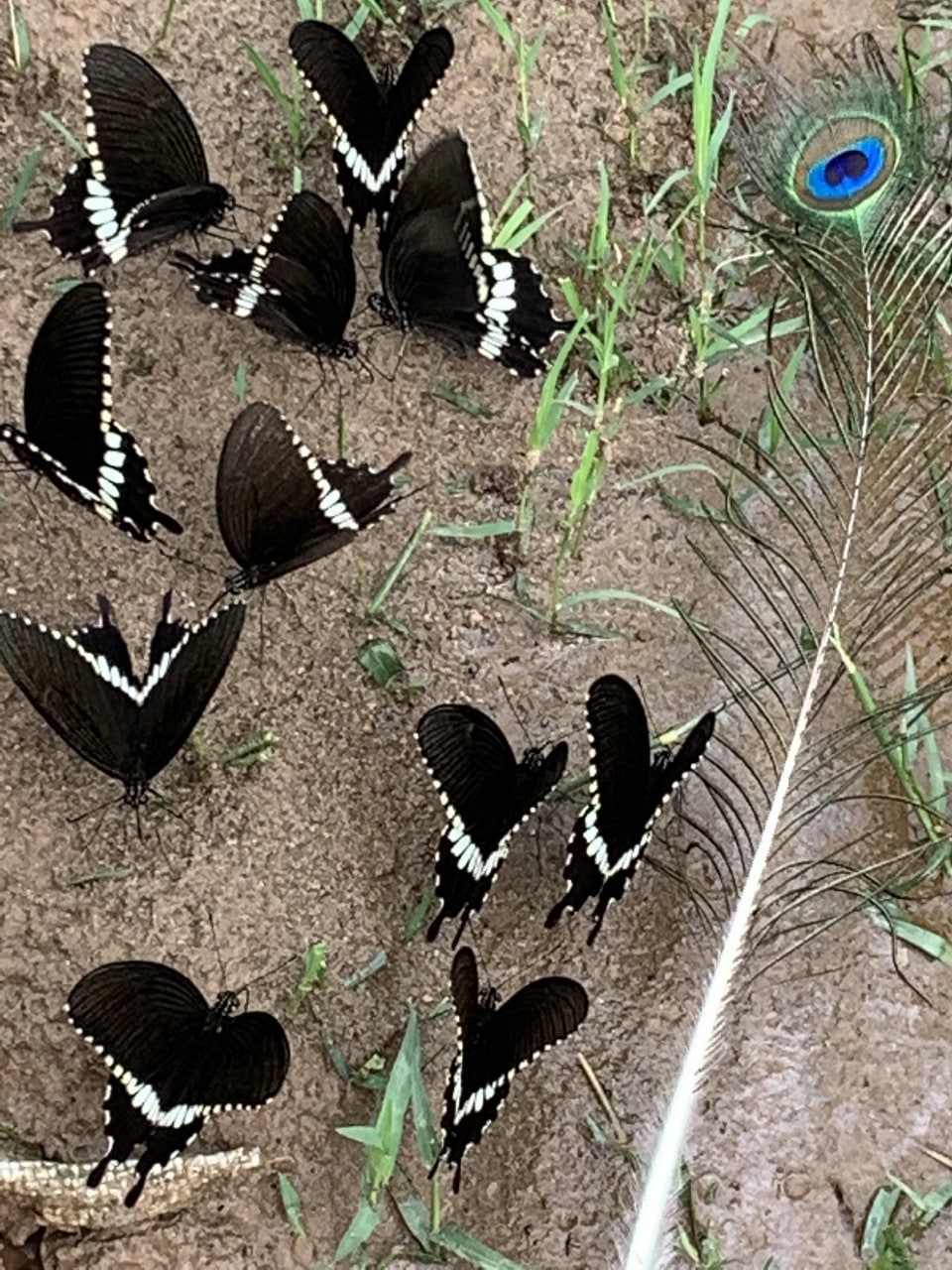
Meanwhile, mosaics of monsoon magic linger nearer to the tricity due to the rains extending well into September. An enthralling spectacle is of swarms of common mormons mud-puddling in drenched soils along the Shivalik foothills.
During monsoon mud-puddling, male butterflies gather on substrates like wet soil, dung and rotting animal bodies to obtain nutrients such as mineral salts, sodium and ammonium ions, amino acids and simple carbohydrates, which may be absent in nectar. Males pass on these collections to females as nuptial gifts through the spermatophore (a sac of nutrients combined with the sperm). Females apportion these gifted nutrients towards improving egg viability.
vjswild1@gmail.com


