
 E-Paper



Wildbuzz | Siachen’s Pista & Pisti
The remarkable story of two country dogs, who braved Pakistani firing to reach troops of the 27 Rajput in a Siachen post; snake-rescue personnel and wildlife photographer Kirtikumar Londhe captured amazing moments of an astounding reversal of fortunes

 Prefer HTon Google


The Army’s trained sniffer dogs, Dot & Misha, gained nationwide fame when they helped locate Lance Naik Hanumanthappa, the lone survivor (who died later) of the deadly Siachen avalanche of February 2016. However, troops situated in the world’s highest battlefield are also assisted by adopted high-altitude country dogs. Those canines proved their worth in conflict situations just as native donkeys of Ladakh fared better under shelling and negotiating cliffs and crevices as compared to the army’s transport mules during the Kargil War.
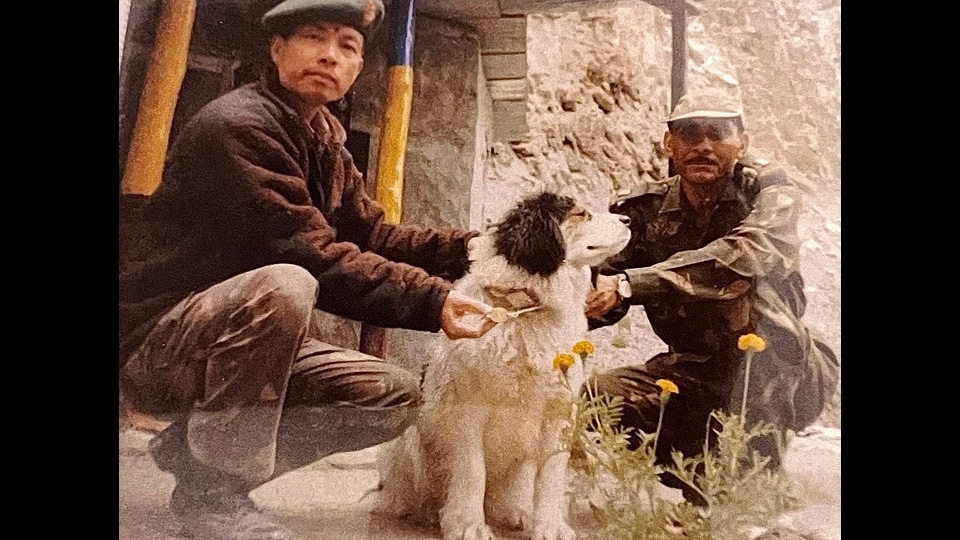
Here is the remarkable story of two country dogs, who braved Pakistani firing to reach troops of the 27 Rajput in a Siachen post. The post was so isolated that a soldier had died there and his body could not be evacuated for four months. The recount comes from none other than Lt Gen Konsam Himalay Singh (retd), who has been awarded the Uttam Yudh Seva Medal and Yudh Seva Medal, and has the distinction of being the first man from the north-east to rise to the august rank in the army. Later, he also chaired the Manipur Public Service Commission. As the commanding officer of the 27 Rajput during the Kargil War, Singh’s battalion undertook one of the most daring and difficult of assaults on Point 5770 (18,930 feet) at the south Siachen Glacier.
A star gazer, mountaineer and passionate wildlifer, Lt Gen Singh recounts a memorable anecdote from the Siachen saga in his recent, well-acclaimed book, Making of a General: A Himalayan Echo: “We had Pisti, a high-altitude country dog operating in the same post ferrying medicines and letters etc to troops deployed there. The Pakistani troops were after her life. They frequently used medium machine guns at the sight of the dog to eliminate her. Pisti’s companion, Pista, lost his life in one of the Pakistani firings. My troops took special care to ensure that the dogs were fed with their favourite food, a milk tin, every day from their share of rations. At the end of the (battalion’s) tenure, I recommended Pisti for a commendation from the Army Chief. When I left Pisti finally, I took out one of the three commendations that I wore to pin it on her. I have been wearing one less on my uniform ever since. Finally, both dogs received the Army Commander’s commendation in August 2000.”
Death slow, thoughts racing
Photographs and videos of pythons and other snake species swallowing frogs slowly are common enough. Snakes normally kill the frog before commencing ingestion. What would be the plight if the predicament was reversed, in its entirety?
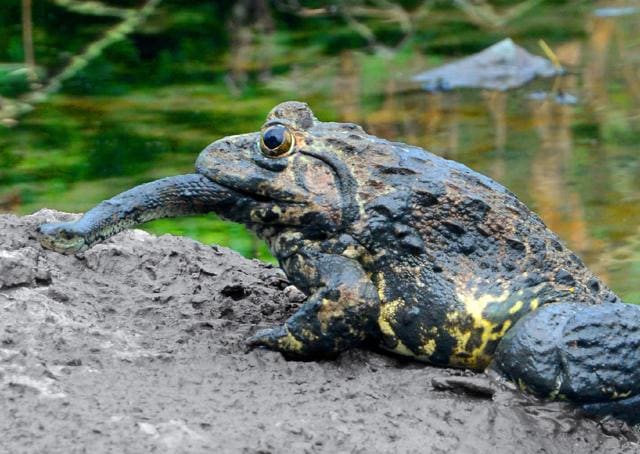
Snake-rescue personnel and wildlife photographer Kirtikumar Londhe captured amazing moments of an astounding reversal of fortunes. Londhe was called to rescue a snake supposedly “wriggling” in the grass near his home in village Anthurne, Pune (Maharashtra). When he parted the grass next to a pond, he found occasion to put aside the rescue equipment.
An aquatic snake, the Checkered keelback, had been nabbed by the ponderous, pugnacious predator, the Indian bullfrog. “The 1.5 foot-long keelback was alive with the bullfrog swallowing from the tail upwards. The bullfrog then jumped onto a rock by the pond and took deliberate gulps to swallow the snake, millimetre by millimetre. Gulps got harder as more and more of the snake filled the bullfrog. On every deliberate swallow, which signalled the end was nearing, the noose was tightening ever so slowly and agonisingly, the leftover snake would jerk to life in vain writhing. The snake’s upper body contortions got circumcised to ever-shortening sways as the two heads eased closer for the kiss of death. It took 15-16 minutes for the snake to disappear from the face of this earth,” Londhe told this writer.
vjswild1@gmail.com


