
 E-Paper



Wildbuzz: Yeh dil maange more irises
Life survives under great adversity in Drass, somewhat controversially marketed as the second-coldest inhabited place after Siberia; 29 gentle giants are committed to the lifetime care of the NGO at the Elephant Conservation and Care Centre, Mathura


The towering mountain of nearly 16,608 feet that takes its name after the dominant tiger stands quiet and solemn like a sentinel over Drass. There is no giveaway clue on the distant horizon that Tiger Hill was riven by a bloody battle 22 years ago. Standing on the outskirts of Drass below, one gazes at wild yellow roses blooming in abundance along the skipping, whirling snow streams.
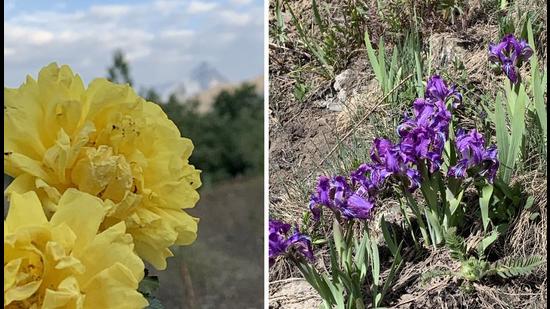
Another summer will go by too quickly in icy Drass just as young soldiers had gone too quickly to their Gods in the summer of 1999. In their melancholic silence, the elegant roses frame Tiger Hill’s grieving homage to the indomitable spirit of our soldiers.
Westwards of Tiger Hill stands the equally quiet Batra Top (Point 4875) in the Mashkoh LoC sector. Here, Captain Vikram Batra’s heart’s desire for more fighting was fulfilled and he was later awarded the Param Vir Chakra. On Batra’s 22nd death anniversary that fell on July 7, northern army commander Lt Gen YK Joshi, UYSM, Vir Chakra, Sena Medal, flew over Batra Top in a Su-30 MK1 fighter to pay homage and express solidarity with his fallen comrade from the 13 JAK Rifles. Just 1,706 feet below Batra Top and situated in its towering shadow stands an abandoned Pakistani stone bunker at Point 4355. This bunker had stymied the Indian Army’s approach up the Safed nallah during the Kargil War. Here, amid unexploded mines, live grenades and rifle-propelled grenades abandoned by fleeing, rattled intruders, wild Hooker’s irises grow sparsely. They pay lonely homage to the fallen soldiers’, whose eternal memorial majestically looms above in the guise of Batra Top.
Life survives under great adversity in Drass, somewhat controversially marketed as the second-coldest inhabited place after Siberia. To catch a glimpse of these blooms is to get a feel of how life raises its dainty head for just the brevity of a summer song. Flowers breathe easier now as there are no shells landing and blowing them to oblivion or cordite and artillery explosives contaminating snow and the tumbling melts along which they erupt. These petalled embers of summer are no longer crushed under army boots fearlessly charging up ibex trails and bullet hails.
From hell to heaven
From doom and gloom to a very cool pool! As many as 29 elephants rescued from a life of cruelty, damaged health and serfdom at circuses, shrine rituals, tourist rides, begging on streets and wedding processions are enjoying the bliss of a proverbial second life. The NGO, Wildlife SOS, has transformed their hitherto hellish existence into one where their emotional and physical needs are minutely cared for and even the anniversary of their freedom from exploitation is celebrated with an extravagant cake of vegetables and cooked pulses!
These 29 gentle giants are committed to the lifetime care of the NGO at the Elephant Conservation and Care Centre, Mathura, whose patrons include celebrities like Canadian PM Justin Trudeau, superstar Amitabh Bachchan and turbanator Harbhanjan Singh.
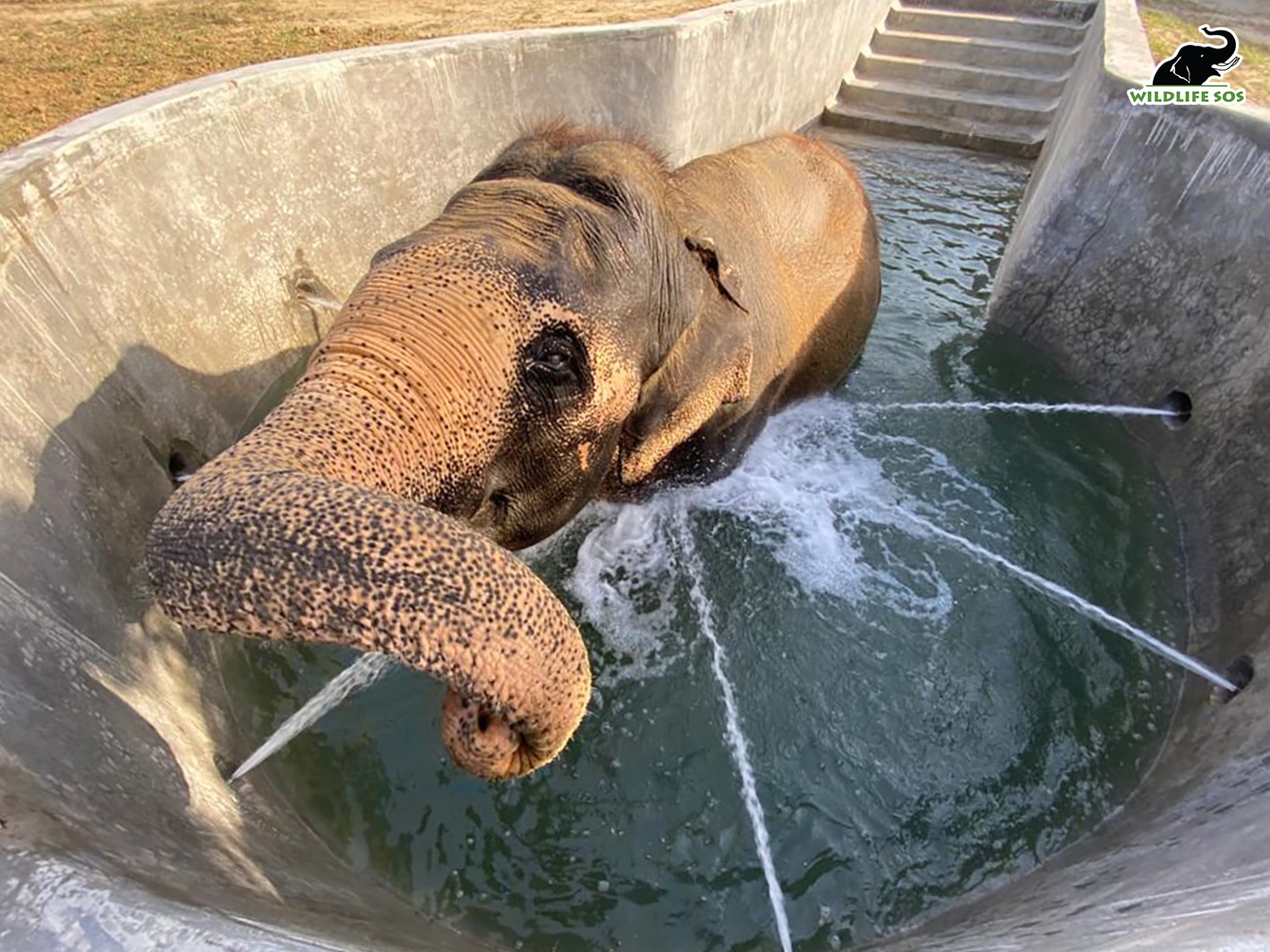
The latest facility to heal the damaged giants suffering from a gamut of health issues is the introduction of India’s first jumbo hydrotherapy pool firing 21 high-pressure jets. “An effective complementary treatment for the elephants’ painful joints, it uses the therapeutic benefits of water to perform physical rehabilitation in animals. Exerting hydrostatic pressure compresses muscle and joints. helps in relieving chronic muscle aches, aids blood circulation and rebuilds muscle memory with its natural resistance,” according to a wildlife SOS media release.
While the elephants’ horrific past cannot be changed, the NGO’s rehab work amounts to an atonement on behalf of a guilty society. Elephants enjoy their personal pools as well as dips in the Yamuna river to beat the heat. Buoyancy of water helps take the massive weight off the elephants’ damaged feet and relaxes them.
“Older elephants spend hours relaxing in cool, refreshing water. Younger, more playful ones like Peanut, Coconut, Laxmi and Chanchal dive headlong into water and play with rubber tyres inside the pool!” the release added.
vjswild1@gmail.com


