
 E-Paper



Wildbuzz: Hear the silent cry
It was not uncommon for gardeners at large schools with playfields shrouded in wild grass or greenskeepers at the Chandigarh Golf Club to bring back adorable bunnies cupped in their hands


It was not uncommon for gardeners at large schools with playfields shrouded in wild grass or greenskeepers at the Chandigarh Golf Club to bring back adorable bunnies cupped in their hands. Children would drool over them. These leverets of the wild Rufous-tailed hares were usually unearthed while slashing ‘waste’ grasses and shrubs.
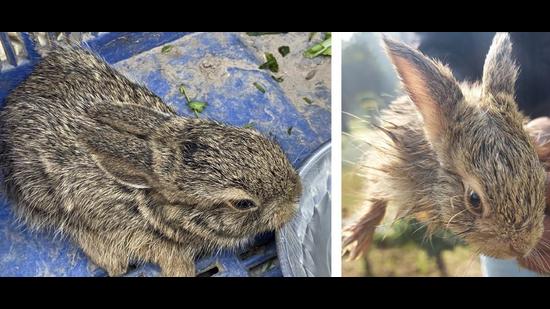
In the countryside encircling Chandigarh, hares were common. At night, they would astound travellers on a dusty track by getting transfixed in car headlights or race along for a distance. But these ‘lesser forms’ of biodiversity have been relegated to grandpa memories or rare sightings. Our children will never savour the joy and wonder of cradling a wild bunny.
Known as ‘saiha’ or ‘seha’ in Punjabi, hares have reduced due to the application of fertilisers and pesticides, and the reclamation of grasslands and scrublands for crops and colonies. An increasing population of stray dogs also takes a toll on hares. Hare meat is a delicacy. Tribal or village poachers with hound packs leave hares with minimal chances of escape. When wounded by gunshot, hares let out the most heart-rending and piteous cries not unlike human children tortured by stereotypical stepmothers. The day is not far when hares will virtually disappear from the countryside like the hedgehogs or ‘jhar chuhas’ of yore.
Teri bindiya re
Depictions of Nature in painting are lush in expression and symbolism but their interpretation, or the so-called ‘meaning’ embedded in them, may elude audiences uninitiated to aesthetic review. Herein, lies the beauty of art that it can lend itself to differing interpretations or the construction of a ‘story’ according to the particularities of a viewer’s sensibilities.
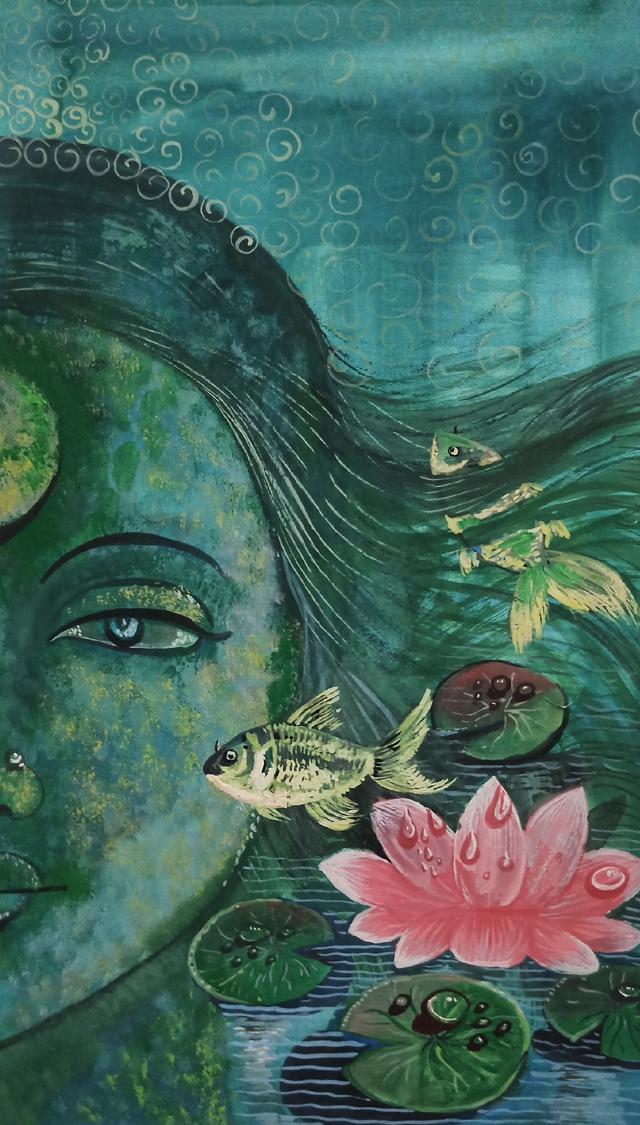
At the recent 19th all-India annual exhibition hosted by the WE Group of Contemporary Women Artists at Government Museum and Art Gallery, a painting depicting the gentle beauty of the water world and washed in soft, understated colours caught the eye, though no award was bestowed on it.
Painted by Seema Gupta of the faculty of visual arts, Banaras Hindu University, viewers wondered at the meaning of the half-moon-like lady immersed like a Durga Puja idol. “The round bindi on her forehead seems indicative of the circle of continuity, rejuvenation and renewal; the depiction merges Nature into a mother-like figure. The universal mother beckons and nourishes all beings from the fish trying to embrace it to the lotus blooming under her care,” was the considered view of one visitor nurturing cultural and aesthetic sensibilities.
The paintings were kept untitled —deliberately by organisers — to encourage interpretations free of the artists’ agenda. But left clueless, some viewers found Gupta’s work mysterious, and it was but natural for them to wonder what the artist had in mind. ‘Was the ethereal woman drowning with a gentle smile?’ Our cultures celebrate the ‘bindi’ but are there unseen, unfelt shadows to the brow’s luminous moon?
When I spoke to Gupta, she revealed her work’s title: Inner Beauty. “When it comes to depicting beauty, it is the woman’s beauty which is forever foremost. However, many thoughts — unknown to all and more than those nurtured by men — race through a woman’s mind, like a fish wandering listlessly, going ‘idhar-udhar’ in the dark depths. Like the lotus, a woman presents a beautiful, happy face to the world, though her heart may be brimming with untold sadness,” said Gupta.


