
 E-Paper



Year after Vaishno Devi stampede, two key projects to help streamline pilgrimage
Being built at a cost of nearly ₹25 crore, the four-storeyed Durga Bhawan can house 2,000 to 2,500 people at a time.


A year after a stampede claimed the lives of 12 pilgrims, the Shri Mata Vaishno Devi Shrine Board is on the verge of completing two key projects – the skywalk and Durga Bhawan – that will help streamline the pilgrimage at the cave shrine in the Trikuta hills of Katra.
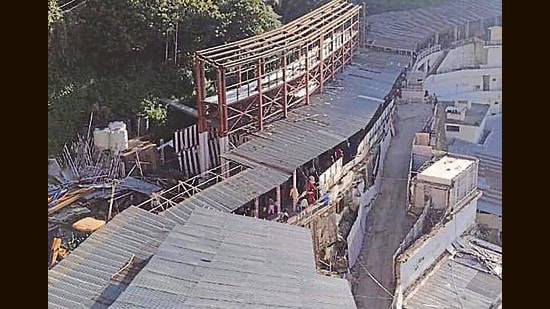
Being built at a cost of nearly ₹25 crore, the four-storeyed Durga Bhawan can house 2,000 to 2,500 people at a time. “It will have 16 rooms with attached bathrooms, 17 dormitories (six-bedded with a common toilet), 28 halls with a common toilet, a bhojanalaya, restaurant, tea shop, and café,” said a senior officer of the shrine board.
The Bhawan will provide blanket and locker facilities to the pilgrims. There shall also be provision for providing free accommodation to those who cannot afford it. The building will be equipped with four lifts. The project is expected to be completed by December this year.
Similarly, the board’s ₹10-crore skywalk project (yatri queue management project) is expected to be ready in three months.
“The skywalk has been designed by the school of planning and architecture, New Delhi, and is being executed by central public works department (CPWD) with technical vetting by the Indian Institute of Technology (IIT) Roorkee,” said the official.
“The walkway will be nearly 200 metres in length and 2.5 metres wide with two rescue areas. It will be constructed 20-feet above the existing track. It will also facilitate multi-directional flow of the yatra. The passage will be used by 6,000 devotees to enter the Bhawan area and the existing track beneath the sky walk will be used to leave the sanctum sanctorum,” he said.
“Once completed, all pilgrims will reach the main sanctum sanctorum through the walkway, which will have waiting halls with chairs to accommodate senior citizens, specially abled and women,” the officer said, adding that the project was envisaged by lieutenant governor Manoj Sinha after the January 1 tragedy.


