
 E-Paper



Pune’s current groundwater usage exceeds entire water stock of Khadakwasla dam at capacity
These are constructs from a report, “Pune’s Aquifers: Early insights from a strategic hydrogeological appraisal”, as released in August 2019 by a team of hydrologists

 Prefer HTon Google


Pune’s groundwater pockets are depleting as a result of the city’s rapid expansion, inadequate controlling functionaries and a biased approach to use of surface water sources.
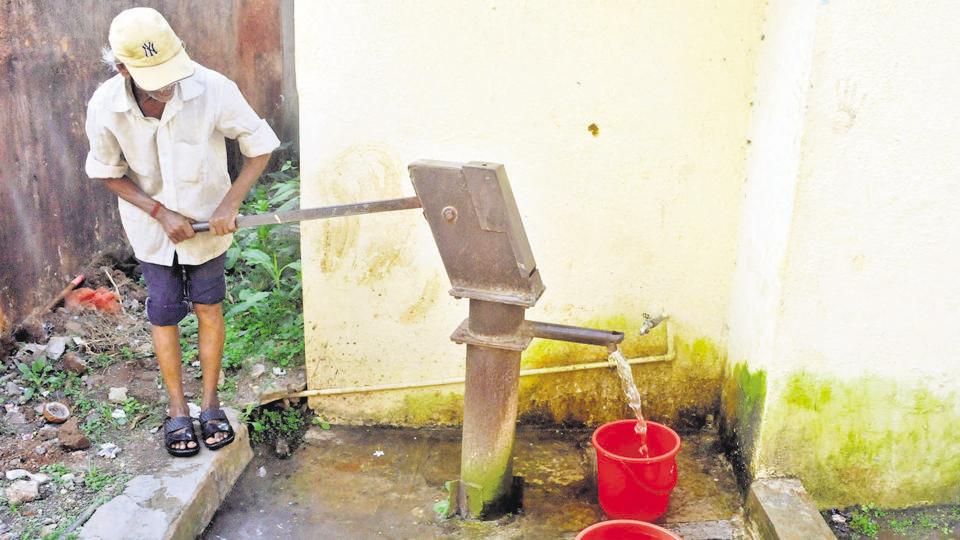
These are the constructs from a report, “Pune’s Aquifers: Early insights from a strategic hydrogeological appraisal”, as released in August 2019 by a team of hydrologists, Himanshu Kulkarni and Manoj Bhagwat.
Kulkarni and Bhagwat represent the Advanced Centre for Water Resources Development and Management (Acwadam), and based the report on a two-year survey on the city’s water sources.
The survey itself was conducted by Acwadam in collaboration with Centre for Environment and Education (CEE) and Mission Groundwater (Bhujal Abhiyan), both government backed agencies.
“The report draws heavily on the collection of primary data and some secondary data also validated on the field. We shared much of this data during sensitisation and awareness workshops on groundwater and rainwater harvesting conducted by Mission Groundwater and CEE, both Acwadam’s partners on this project,” said Manoj Bhagwat.
For Pune, the report attempts to paint the stark facts without being alarmist.
For example, as per the report, the city is using close to 4 TMC (thousand million cubic feet) of ground water, an amount that exceeds the entire water stock of Khadakwasla dam, at capacity.
As per the report, the city is located almost entirely on terrain underlain by volcanic rocks.
“The basalt rocks that constitute lava outpourings some 65 million years ago, cover 80% of the state of Maharashtra - what is called the ‘Deccan Volcanic Province (DVP)’. The shallow, weathered-fractured layers of basalt rocks have been tapped through the large diametre-dug wells (also called open wells) for many centuries. However, the last six decades have seen an explosion in the number of wells in Maharashtra, so much so that the yield per well since the 1990s has seen a steady decline. This implies that the aquifer storage is now being used by many more sources than ever before, an increase by five times over the last 50-60 years,” reads an extract from the report.
Bhagwat further explains, “Pune has always been regarded as a city serviced by reservoirs, but Pune’s groundwater extraction is not insignificant. The main source of Pune’s water supply, the Khadakvasla reservoir is fed by two upstream dams, Panshet and Varasgaon. While the actual figures may vary, it is safe to assume that at least 13,000 million cubic feet of water is currently supplied to Pune city.”
Explaining the method’s used by the survey, Bhagwat adds, “An indirect method of calculating groundwater extraction is looking at the difference between actual sewage generated and potential sewage generated, purely as a consequence of civic water supplies (surface water); this was estimated for the year 2011. Groundwater extraction then was just over 2 TMC. Recently, as part of the current study, results from sample surveys regarding groundwater extraction, show nearly 4 TMC of annual groundwater is extracted in Pune city.”
Estimated of depth of water column over an area of 400 km2 points to 283 mm of precipitation per annum. If we can augment a recharge of 35% of the average annual precipitation (rainfall), current level of groundwater extraction can be sustained. This is a highly challenging task, especially in an area like the Deccan,” he claims.
“This initiative, which commenced in May 2017, with the help of student interns of different colleges, continued for two years. It is quite challenging to survey wells in an urban area. People do not necessarily encourage you to record their well/bore. Access to a source is often not as easy as in rural-agrarian regions. Geotagging all the 500-odd wells that were observed/inventoried, proved difficult,” said Sanskriti Menon, project director, CEE.
Mangesh Dighe, environment officer, PMC, said, “Ground water is one of the natural resources that is seeing an increase in its extraction and needs to recharged. It is the duty of every citizen to recharge the groundwater which provides water to rural as well as urban areas of the state.”


