
 E-Paper



Civic bodies, PWD say pumps and machines being deployed at flooding-prone points
While the three civic bodies said they had completed desilting of drains last month, the PWD said a few drains are left to be covered and that the coronavirus disease has delayed the cleaning of drains since resources had to be diverted to fight the pandemic.


With a short spell of heavy rain on Sunday inundating several arterial roads, uprooting 20 trees, causing portions of two buildings to collapse and washing away of over a dozen hutments by an overflowing drain, exposing the Capital’s poor monsoon preparedness, the three municipal corporations and the Public Works Department (PWD) said they have identified waterlogging spots and are deploying machines and pumps to drain water.
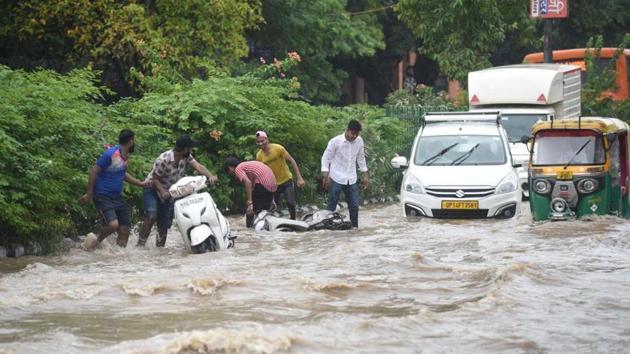
While the three civic bodies said they had completed desilting of drains last month, the PWD said a few drains are left to be covered and that the coronavirus disease has delayed the cleaning of drains since resources had to be diverted to fight the pandemic.
The PWD manages 1,260 km of major roads (which are 60-foot wide) along with drains on these stretches. All others roads are cleaned and managed by the three municipal corporations, the Delhi Cantonment Board, NHAI, and flood and irrigation department.
North Delhi Municipal Corporation’s mayor Jai Prakash said, “We have around 24 railway under-bridges (RUBs) in our jurisdiction, which are prone to waterlogging. We are getting the permanent and portable pumps installed there checked and made a junior engineer responsible for each point so that even if water stagnates, it is drained out at the earliest,” said Prakash.
The north corporation manages around 200km of drains along its roads.
Civic officials said desilting of drains usually starts in March and ends by May end. But this year due to coronavirus pandemic the process of allotment of tenders was delayed and hence desilting began late in April and May.
South Corporation mayor Anamika Mithilesh said they have identified 36 major waterlogging-prone points. The South civic body manages around 180km of drains. “We have around 249 small and big drains. We have been monitoring the points prone to waterlogging and have got enough super sucker and jet machines to drain out the water,” she said.
Officials in the East DMC said they have 21 permanent pumping stations and 150 portable pumps. “We had to use the portable pumps for the first time on Sunday on the PWD roads, as they did not have enough functional pumps to drain out rainwater,” said a senior official, who did not wish to be named.
PWD officials said they have deployed over 200 pumps across the major waterlogging-prone points. The officials said that around 1,200-1,500 labourers are engaged every year for desilting. This year, adequate workforce was not available since most of them went to their native places because of Covid-19 pandemic.
“The lack of availability of labourers had delayed the desilting process. The desilting of drains was started in the last week of April. It picked up slightly in May and most of the drains have been covered except for a few, which need more cleaning,” said a senior PWD official, requesting anonymity.
Residents of south Delhi neighbourhoods such as South Extension and Defence Colony said the desilting of Kushak drain -- a big stormwater outlet for several south Delhi localities -- is yet to be completed even though the monsoon has already kicked in.
“There is an unbearable stench from the drain since it rained on Sunday. The government agencies must clean it before it causes waterlogging and accidents,” said Asha Gupta, a resident of Defence Colony.

Stay updated with all top Cities including, Bengaluru, Delhi, Mumbai and more across India. Stay informed on the latest happenings in World News along with Delhi Election 2025 and Delhi Election Result 2025 Live, New Delhi Election Result Live, Kalkaji Election Result Live at Hindustan Times.


