E-Paper



BJP minister, blamed for police horse Shaktiman’s death, acquitted by judge
BJP MLA and minister Ganesh Joshi called his acquittal in the case relating to death of a police horse, Shaktiman, a “victory of truth. The judge ruled there was not enough evidence and contradictions in statements of witnesses, his lawyer said.

 Prefer HTon Google


Dehradun: Uttarakhand cabinet minister Ganesh Joshi on Thursday was cleared of charges of assaulting a police horse, Shaktiman, deployed for crowd control at a Bharatiya Janata Party (BJP) rally in the state capital in 2016, the minister’s lawyer said. The horse died a month later due to injuries.
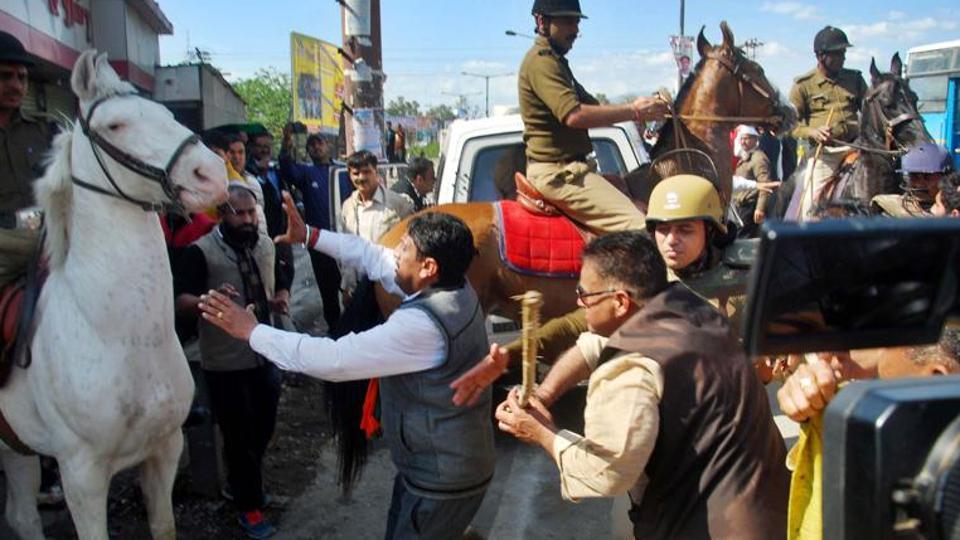
The chief judicial magistrate’s court in Dehradun acquitted five people including the small, medium enterprises minister due to lack of evidence and contradictions in statements of witnesses, Joshi’s counsel Manmohan Kandwal said.
Ganesh Joshi, the Mussorie legislator, was arrested in 2016 after outrage over a video clip that showed him brandishing a stick and appearing to strike the horse at a BJP protest on March 16, 2016 against the Congress government led by Harish Rawat. The video ended with the horse on its back, in pain, with a policeman trying to get it back on its feet.
The lawmaker, seen in the video holding a stick and poised to strike, was not seen hitting the horse in the video or the photograph. He also insisted that he did not hurt the horse. At the time and later, Ganesh Joshi, who spent about five days in custody before getting bail, insisted that he was innocent and was being framed on then chief minister Harish Rawat’s instructions.
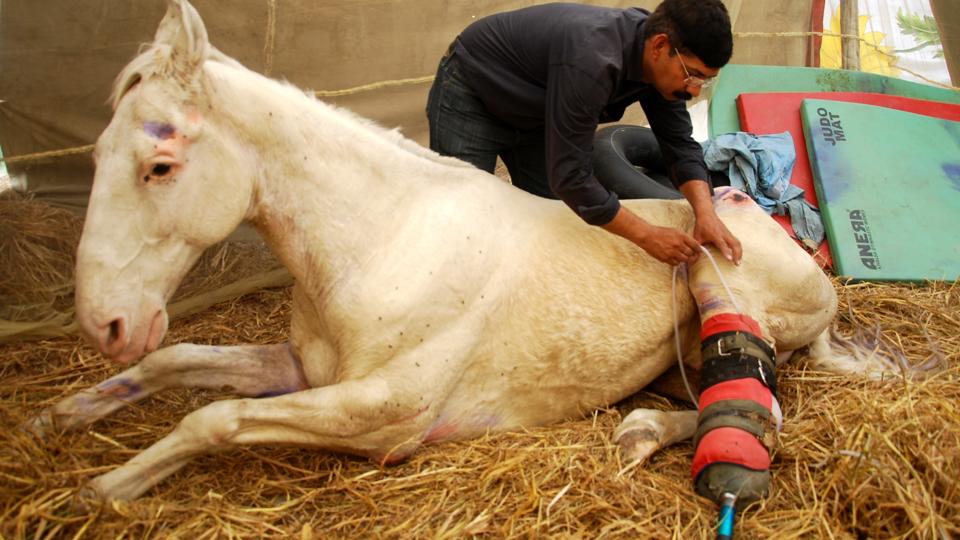
Following the injury, the horse’s hind leg was amputated and a prosthetic leg was fitted, but it couldn’t survive and died. As a mark of respect, Uttarakhand police named a petrol pump after Shaktiman and erected a statue at Police Lines in Dehradun.
On Thursday after the court verdict came in, Joshi said it was a victory of truth. “I was saying from the very beginning that I am innocent. Now it has been proved,” he said.
Devendra Bhasin, BJP state vice president, said the Harish Rawat-led Congress government at that time tried to frame Joshi in this case under a conspiracy. “They should now apologise to Joshi as the court has delivered its verdict and truth has won.”
Ganesh Godiyal, Uttarakhand Congress president, said his party respects the court’s verdict in the matter but “there is no question of an apology”. “Everyone knows what happened in 2016. It is there in photos and news reports of that time.”
When the BJP came to power in 2017, it recommended withdrawal of the case against Joshi, who was charged with rioting, hurting and charging with a stick towards the 13-year-old police horse Shaktiman who fell on the ground during the ruckus and fractured its hind leg. But the effort didn’t succeed.