
 E-Paper



Black carbon aerosols on Himalayan glaciers could speed up melting: Scientists
The warning is based on the analysis of the three-year data from two observatories with aerosol monitors set up near Gangotri glacier in Uttarakhand in 2016 at a height of about 3,800 metres

 Prefer HTon Google


Dehradun’s Wadia Institute of Himalayan Geology (WIHG) scientists have said they have for the first time found black carbon aerosols on the Himalayan glaciers, which could fasten their melt and have implications on the people living downstream the rivers emanating from them.
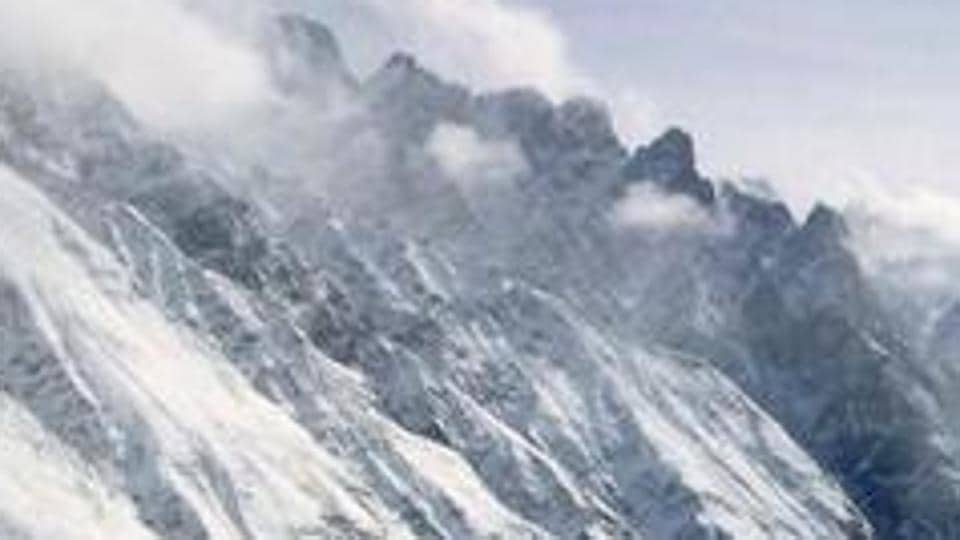
The warning is based on the analysis of the three-year data from two observatories with aerosol monitors set up near Gangotri glacier in Uttarakhand in 2016 at a height of about 3,800 metres. The scientists said that aerosols were the second major factor after greenhouse gases in the faster melting of the glaciers.
The aerosol is a suspension of fine solid particles or liquid droplets and is produced mostly by the burning of fossil fuels. Black materials absorb more light and emit infra-red radiation that increases the temperature. An increase in black carbon in the high Himalayas will contribute to the faster melting of glaciers.
India and China are the largest emitters of black carbon with emissions of up to 25-35%. These figures are expected to increase in the coming decades, according to a 2019 study published in the journal Atmospheric Research.
Also Read | Expert team widens mouth of Rishiganga lake by 15ft to prevent repeat tragedy
WIHG scientist PS Negi, who led the study, said before they set up the observatories, there were none in the Himalayas. “...[There were] 22 [observatories] in the plains to check black carbon aerosols. Our move not only proved the presence of the invisible particles in the Himalayas but their amount in a particular area also.”
Negi said they found black carbon in the Himalayas varied from 0.01 microgram per cubic metre to 4.62 micrograms per cubic metre. He added their analysis also suggested that the black carbons are coming even from Europe and other Asian countries apart from the plains of India.
“The climatic phenomena of Western Disturbance, which comes from Europe to the northern Indian states to cause rainfall and snow during winters also carries black carbon aerosols from there. When the Western Disturbance reaches higher reaches of Himalayas, the black carbon aerosols get deposited there causing significant damage to the glaciers by artificially increasing the temperature,” said Negi. He added a large amount of the invisible particle is coming from neighbouring countries such as China.
Negi said the black carbon aerosols were also affecting the Himalayan ecosystem and causing the snowline in the upper reaches to move upwards. “This is...adversely affecting the whole ecosystem there... changing the growth of native plants and other vegetation which is worrisome.”
Negi warned if this persists, then it could also lead to a major disaster as higher temperature caused by the black carbon could loosen the hold of glaciers on mountains. “That would then lead them to break in large chunks or cause a devastating avalanche or landslide like the one in recent disaster in Chamoli.”
A glacier breach on February 7 in Chamoli triggered flash floods, hit two hydropower projects and left 69 people dead. As many as 135 people remain missing in the aftermath of the disaster.
Negi said environment-friendly lifestyle changes needed to be adopted to reduce black carbon. He added this means people have to use lesser fossil fuels, commercial fuelwood, etc.


