
 E-Paper



NIH report finds Joshimath water is not from NTPC tunnel, says Uttarakhand govt
A section of the local people in Joshimath said that the government was trying to give a clean chit to NTPC without waiting for the final report

 Prefer HTon Google


The Uttarakhand government on Thursday said according to the preliminary report of the National Institute of Hydrology (NIH), the water outflow in the land subsidence-hit Joshimath is not from the tunnel of the NTPC project in the region.
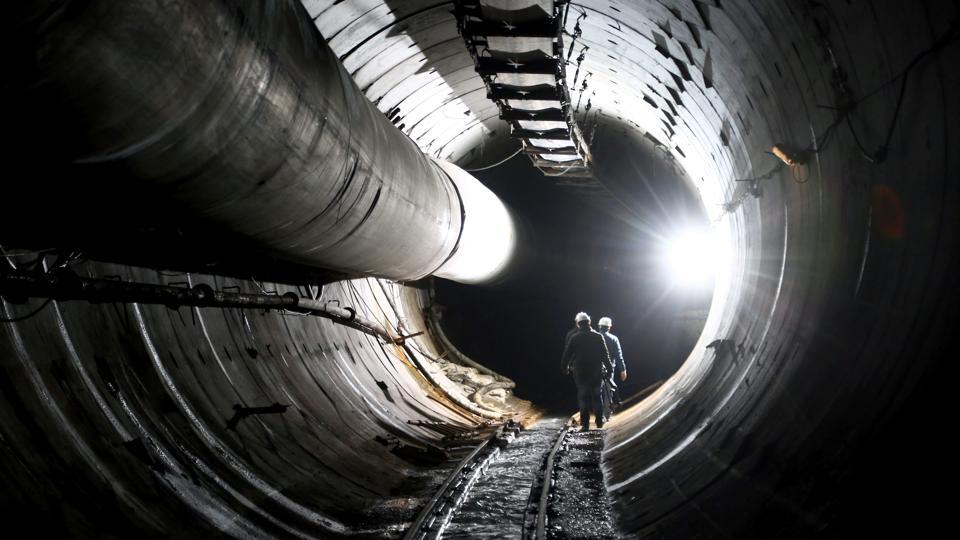
State disaster management secretary Ranjit Kumar Sinha said that in the preliminary report of NIH Roorkee, it has been found that the water samples taken from Joshimath and from the tunnel of the NTPC project are different. “The situation will be clear once the reports of other central agencies and the final report of NIH come out,” he said.
However, a section of the affected people in Joshimath said that the government was trying to give a clean chit to NTPC without waiting for the final report. They also demanded that the preliminary report should be made public so that they can make informed decisions.
Recently, posters against NTPC had come up across the holy town.
Atul Sati, convenor of the Joshimath Bachao Sangharsh Samiti (JBSS), said, “It is clear that the government is giving a clean chit to NTPC when the final reports of NIH and other institutions are yet to come. If they have nothing to hide, then they should make the NIH’s preliminary report public as this is a matter of life and death for us. If the report is made public, the affected people here can make informed decisions,” he said
“We have been saying right from the beginning that the water leaking near Jaypee colony is coming from water entering the tunnel of the Tapovan Hydro Project on February 7, 2021, when the tragedy hit this region. We have sent the water sample for testing on our own. Its report will come in a few days and all things will be clear,” he said
The NTPC has, however, refuted claims of locals saying that no blasts were conducted for the underground tunnel and described subsidence as a “natural” process in the Himalayas. On January 5, the NTPC in its statement said, “NTPC is being held responsible for the land subsidence problem in Joshi. In this regard, it is clarified that the tunnel built by NTPC doesn’t pass under Joshimath. The tunnel is dug by a tunnel boring machine and no blasting is being carried out presently.”
The disaster management secretary said the discharge of water in Joshimath, which was 540 LPM (litres per minute) on January 6, has now been reduced to 150 LPM at present.
Earlier in the day, chief minister Pushkar Singh Dhami, while reviewing the ongoing relief work in Joshimath at the state secretariat, said that as soon as the reports of all the technical institutions and scientists regarding the causes of land subsidence in Joshimath are received, further planning should be done expeditiously.
“After the final reports are received, treatment work should be ensured expeditiously,” he said.
The CM said that suggestions should be taken from the affected families for their rehabilitation. “Chamoli district magistrate should submit the report to the government as soon as possible after taking suggestions from the local people,” he added.
The chief minister said that for people who will be displaced from the affected area of Joshimath, better arrangements will be made by the government. He instructed the officers that in the other towns of the state which do not have proper drainage plan and sewer system, an action plan should be made in a phased manner for drainage and sewer systems.
In the evening, while addressing a press briefing, disaster management secretary Ranjit Kumar Sinha said the crack metres installed by the Central Building Research Institute (CBRI) to measure the cracks in the buildings have indicated no increase in the width of the cracks in the last three days. “This is a positive sign,” he said.
Sinha said the chief minister was updated about the status of the work done by technical institutions of the central government state governments during the review meeting on Joshimath. “In the meeting, the Urban Development Department was instructed to prepare effective urban town plans in each district,”, he added.
Sinha said the Chamoli district administration is also holding consultations with the affected people.
“So far 849 buildings have developed cracks. The survey work is in progress. Around 181 buildings have been declared unsafe. 259 families comprising 867 people have been shifted to safer locations,” he said


