
 E-Paper



Delhi must stand together to fight the forces of division
More than 2,700 people were killed in the city in the aftermath of the assassination of the then prime minister Indira Gandhi by her two Sikh security guards on 31 October 1984.


On February 26 when communal riots in north-east Delhi had already claimed 27 lives (which later climbed to 46), the high court bench of justice S Muralidhar and justice Talwant Singh said it won’t let another “1984 scenario” happen under its watch.
Not only the high court judges, anyone who had the faintest memory of the 1984 carnage could not help recall the worst bloodbath Delhi had witnessed since Independence.
More than 2,700 people were killed in the city in the aftermath of the assassination of the then prime minister Indira Gandhi by her two Sikh security guards on 31 October 1984. What followed were targeted attacks on Sikhs who were waylaid, pulled out of their homes, shops, gurdwaras and killed in the streets.
Although my neighbourhood was relatively safe, my family still remembers the rioting mob that vandalised one house down our lane. As a child, I watched my mother rush to stock essential supplies and frantically remove the Singh nameplate.
Some of my closest friends were Sikhs. From them, I heard the most horrific incidents — how rioters put burning tyres around the necks of young men and how terrified families went sleepless for nights.
Time barely heals such scars. Even for those who did not suffer directly, Delhi would never be the same again. In the months following November 1984, wooden gates gave way to iron ones in many houses in my neighbourhood.
As the memories of those unspeakable horror stories remained etched in our mind, few of us imagined that Delhi would relive ever again such violence made possible in 1984 by an administration indifferent, inefficient and complicit in equal measure.
In the aftermath of the Babri demolition in 1992, Delhi witnessed riots in Seelampur. At least 25 lives were lost but the police did impose curfew and open fire (for longer than necessary, say critics) to exert control. In 2014, Trilokpuri, an east Delhi neighbourhood that had seen the killing of 350 Sikhs in 1984, was on the boil again but no deaths were reported.
Nothing, however, brought back the memories of 1984 like the free run of rioting mobs in Jafrabad, Maujpur, Brijpuri, Bhajanpura, Shiv Vihar, Mustafabad, Brahmpuri, Kardampuri, Gokalpuri, Jyoti Nagar, Babarpur, Karawal Nagar and parts of New Seelampur and Khajuri Khas last week. This spate of violence was certainly not as one-sided as witnessed in 1984 but the capitulation of the state machinery was just as unnerving.
As many as 42 were killed and at least another 350 suffered injuries. Over a hundred properties were damaged or gutted. A vast stretch of Delhi reeled under waves and counter waves of most brutal mob violence as the law and order machinery took three long days to make any impact on the ground.
While scores of media reports have underlined the abject failure of the intelligence apparatus and the law and order machinery, equally unmistakable is the depth of hatred evident in the nature of violence on the ground. From mutilated, charred bodies with amputated limbs or countless stabbing wounds, to every switch smashed individually on switchboards inside burnt properties, the vengeance is stark and dehumanizing.
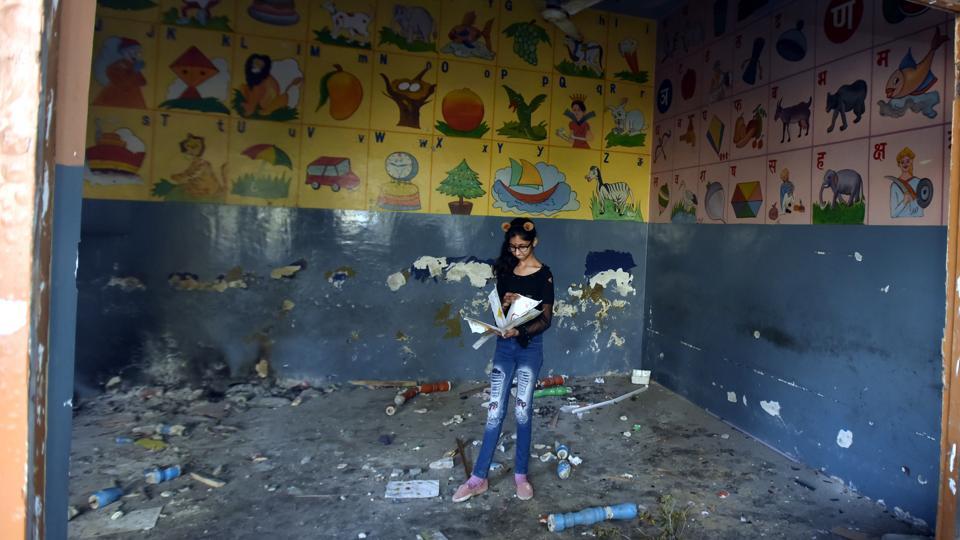
Fortunately, residents of different faiths have come together in parts of what are a largely mixed neighbourhoods. But these stories of resistance and hope cannot dispel the obvious distrust on display. As I walked the alleys, a number of residents claimed that Hindus were claiming victimhood by showing off as their own several destroyed properties abandoned by Muslims. Others insisted that a school owned by a Muslim bore marks of “only cosmetic damage” while another owned by a Hindu suffered total destruction.
Coming from neighbourhoods that have lived in relative harmony all these decades, such sentiments reveal a manufactured polarisation, fuelled by irresponsible communal rhetoric unleashed in the poll season and revved up in the context of the CAA-NRC politics since.
As failure of the administration stares us in the face, those shocked that a part of the Capital could be ravaged with such impunity for so long probably relied too much on a law-and-order remedy for the ills of divisive politics.
Delhi did not stand together in November 1984, and February 2020 is a dark reminder of the horror and violence of 35 years ago. That should be lesson enough, if we are not to relive our worst nightmares.


Stay updated with all top Cities including, Bengaluru, Delhi, Mumbai and more across India. Stay informed on the latest happenings in World News along with Delhi Election 2025 and Delhi Election Result 2025 Live, New Delhi Election Result Live, Kalkaji Election Result Live at Hindustan Times.


