E-Paper



2 years after ban, single-use plastic still a common sight in Delhi
During the spot check by HT, the rampant use of plastic cutlery was visible, apart from plastic bags with thicknesses varying from 10 to 15 microns

 Prefer HTon Google


It has been two years since the country-wide ban on 19 single-use plastic (SUP) came into force to phase them out but little has changed on the ground — indicating the need for stricter enforcement, and the lack of cheaper alternatives — spot checks by HT on Monday found.
The ban was notified on July 1, 2022, after which enforcement teams formed by the Delhi Pollution Control Committee (DPCC) and other Urban Local Bodies (ULB) set out to identify and penalise violators. The list of such violators includes anyone selling, stocking, manufacturing or importing these items, with a fine of ₹5,000 to be imposed per violation.
During the spot check, the rampant use of plastic cutlery was visible, apart from plastic bags with thicknesses varying from 10 to 15 microns. The standard thickness for such items is at least 120 microns.
DPCC officials, when contacted, said that the enforcement has not stopped and teams were taking action against violators regularly.
“Both ULB and DPCC teams are enforcing the ban. Our assessment of data from March 2023 till May 2024 shows 449 challans have been issued by ULBs, with fines totalling ₹14.16 lakh. DPCC’s teams have imposed an environmental damage compensation of ₹1.49 crore against violators, which includes 48 SUP manufacturers,” said a senior DPCC official, requesting anonymity, adding that a total of 4,540 units in Delhi were inspected during this period.
HT reached out to the MCD which did not respond to queries seeking comments.
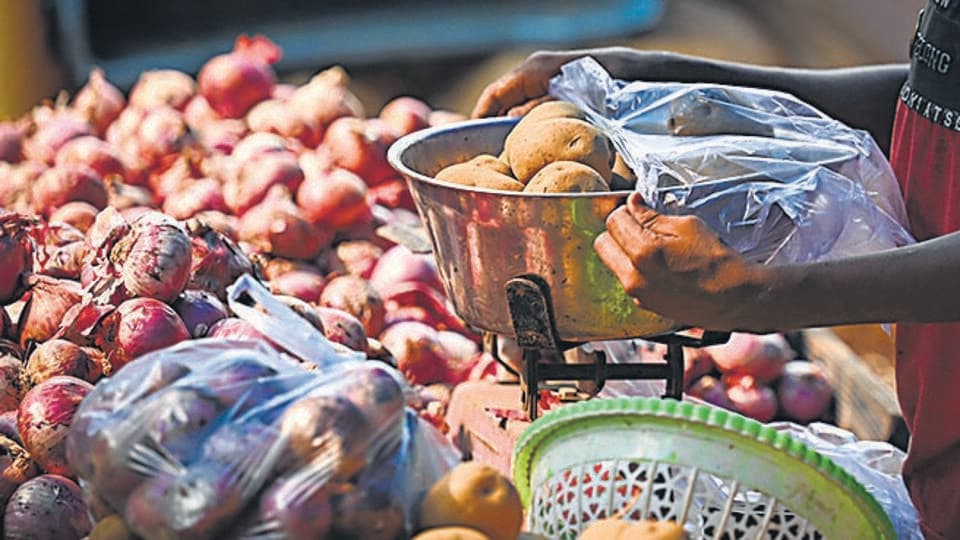
The ban was largely being flouted in the informal market areas, largely comprising fruit and vegetable vendors. Crowded areas like ISBTs and railway stations and tourist spots were no less, where street food vendors flock given the large footfall. At India Gate, plastic spoons were being used openly at food stalls, while straws and glasses were a common sight at juice stalls.
Asif Khan, a fruit juice seller at Sarai Jullena near New Friends Colony, said the lack of cheaper alternatives was still a problem, forcing vendors to use plastic straws. “We buy paper straws for nearly three times the price of a plastic straw. Until the price gap is bridged, people with limited incomes will continue to prioritise the cheaper option,” said Khan.
The 19 banned items include commonly used SUPs like earbuds with plastic sticks, sticks for balloons, candy sticks, cutlery including spoons, glasses straws and plates, etc. The ban is part of the Plastic Waste Management Rules, 2021.
A study released in October last year by the NGO, Toxics Link, found that among the five cities it took into account, Delhi was the least compliant with the ban, among Bengaluru, Mumbai, Gwalior, and Guwahati.
The study found the banned SUP items in 88% of the stores or markets it surveyed in Delhi.
“Alternatives to banned SUP have percolated high-end brands and restaurants. However, roadside vendors vendors continue to use them. The price difference between the banned item and its alternative is still very high. For example, a plastic bag will cost 10 paise a bag, whereas a paper bag would be close to ₹1,” said Priti Mahesh, an independent researcher, who was part of the study.