
 E-Paper



AIIMS doctors conduct remote ultrasound scan on man in Antarctica
Using a haptic control device at AIIMS Delhi, a doctor remotely operated a robotic arm positioned in Antarctica to perform the scan. The robotic arm replicated the doctor’s hand movements in real time, while ultrasound images were transmitted instantly to his screen.

 Prefer HTon Google


New Delhi: Doctors at the All India Institute of Medical Sciences (AIIMS) Delhi on Monday remotely conducted an ultrasound scan on a person stationed more than 12,000km away at Maitri, India’s research base in Antarctica.
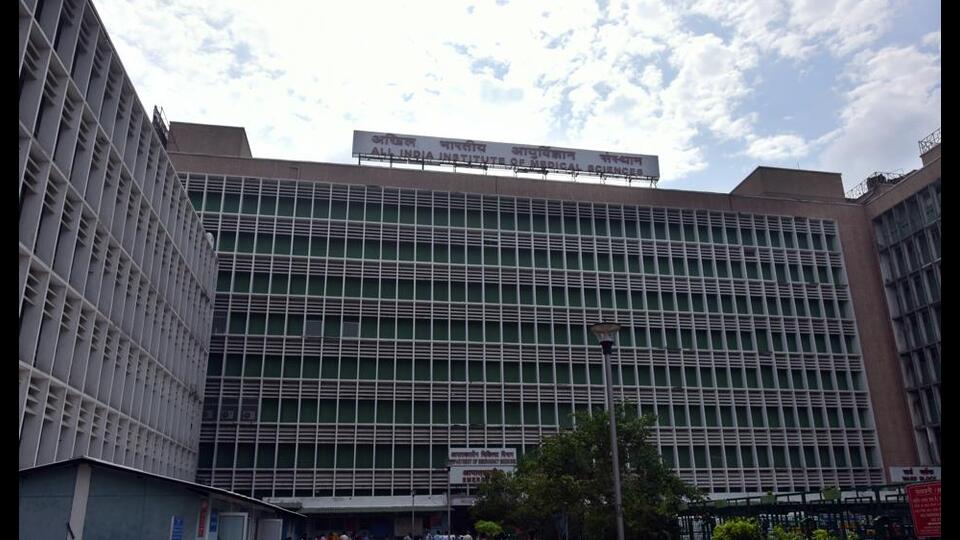
AIIMS officials said the scan — focused assessment with sonography in trauma (FAST) — was carried out to demonstrate the effectiveness of a tele-robotic ultrasound system that could potentially be deployed in rural and remote areas, disaster zones, war settings and extreme weather conditions to enable early diagnosis and timely medical intervention.
Using a haptic control device at AIIMS Delhi, a doctor remotely operated a robotic arm positioned in Antarctica to perform the scan. The robotic arm replicated the doctor’s hand movements in real time, while ultrasound images were transmitted instantly to his screen.
Prof Dr Chandrashekhara SH, who led the project at AIIMS, said the robotic system allows 60-degree movement with three translational and three rotational motions, closely mimicking the hand movements of an experienced sonographer.
“The image quality is diagnostically adequate with approximately a one-second delay. This demonstration shows how time-critical emergencies can be managed remotely in rural areas, disaster zones or extreme locations. Such technology can enable early diagnosis, faster referrals and improved outcomes without physically shifting the patient,” he said.
The system also provided force feedback, allowing the doctor to sense the pressure applied by the probe, a critical factor in obtaining accurate images in cases of ultrasound, as if physically present at the site.
The Extended Focused Assessment with Sonography in Trauma (EFAST) is an ultrasound procedure used to detect internal bleeding in the chest and abdomen, as well as conditions such as pneumothorax. In extreme environments like Antarctica, where evacuation can be delayed due to harsh weather, rapid diagnostic capability can be crucial in trauma situations.
The system has been developed indigenously through a collaboration between AIIMS Delhi and IIT Delhi, with a focus on affordability, robustness and adaptability to challenging environments.
The idea to deploy the system in Antarctica emerged from doctors associated with the Indian Antarctic Programme — a research initiative launched in 1981 by the Union ministry of earth sciences to conduct atmospheric, biological, earth and glaciological studies on the continent.
The demonstration was supported by multiple agencies, including AIIMS, IIT Delhi, the Union ministry of earth sciences and ISRO, which facilitated connectivity for the remote procedure.
Union minister of state for science and technology Jitendra Singh saidthe indigenous technology reflects coordinated efforts across ministries and has the potential to expand access to advanced diagnostics for people living in remote and inaccessible regions.


Stay updated with all top Cities including, Bengaluru, Delhi, Mumbai and more across India. Stay informed on the latest happenings in World News along with Delhi Election 2025 and Delhi Election Result 2025 Live, New Delhi Election Result Live, Kalkaji Election Result Live at Hindustan Times.


