
 E-Paper



Bhiwadi: NCR’s low-cost industry, housing hub
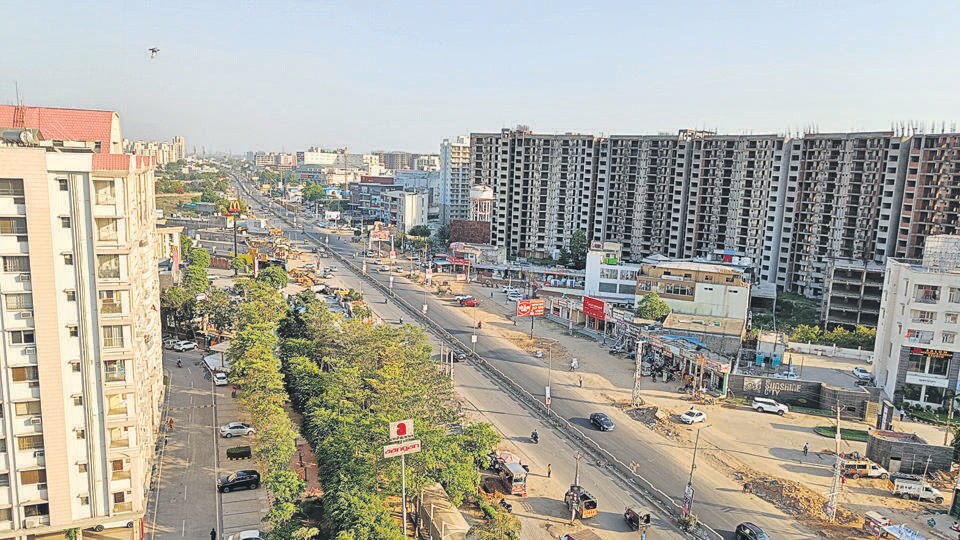
Once a sleepy village in Rajasthan’s Alwar, Bhiwadi — located 70km from Delhi’s Connaught Place — has over the past two decades emerged as one of the biggest industrial hubs in NCR

 Prefer HTon Google


It is 8 pm, and Rajesh Baranwal, an engineer with a multinational company in Bhiwadi, is at Genesis Mall with his wife and teenage daughter. The family had initially planned to travel to Gurugram for dinner, but eventually decided against driving 45km just for a meal, and chose to visit the mall in their city.
“Although in Rajasthan, Bhiwadi is culturally closer to Haryana. It is essentially a poor version of Gurugram. But things are changing for the better now,” says Baranwal, who has been living in Bhiwadi for the past 10 years.
Once a sleepy village in Rajasthan’s Alwar district, Bhiwadi — located around 70km from Delhi’s Connaught Place — has over the past two decades emerged as one of the biggest industrial hubs in the National Capital Region (NCR), and is home to around 5,000 factories catering to a wide range of products, from Honda Cars to Jaguar sanitaryware.
The city’s first industries came up in the 1970s, when the Rajasthan State Industrial Development and Investment Corporation (RIICO) set up the Bhiwadi Industrial Area. This industrial area has since expanded into neighbouring villages such as Ramur Mundala, Kharani, Shahdod, Kushkhera Pathredi, Karoli, and Tapukara to form a sprawling integrated industrial space, where more than 400,000 people — mostly blue-collar — work.
“The industrial boom here picked up here in the mid-1990s when a lot of factories shifted here from Delhi. Today, the city has all kinds of factories manufacturing everything from candies to cars,” says Surender Singh Chauhan, president of the Bhiwadi Manufacturers Association.
“What attracted industries here is the low cost of land and labour, and friendly government policies,” he adds.
Low-cost housing hub
The rising number of factories fuelled demand for housing. But unlike Sonepat, which over the past decade saw a major boom in plotted townships with a large demand for independent houses and villas, Bhiwadi has emerged as big group housing market.
Rohitashva Singh Tomar, CEO, Bhiwadi Integrated Development Authority (BIDA) says that around 8,000 of the estimated 25,000 apartments in the city are in the economically weaker section (EWS) or lower income group (LIG) category. “Bhiwadi is the low-cost housing hub of NCR,” he says.
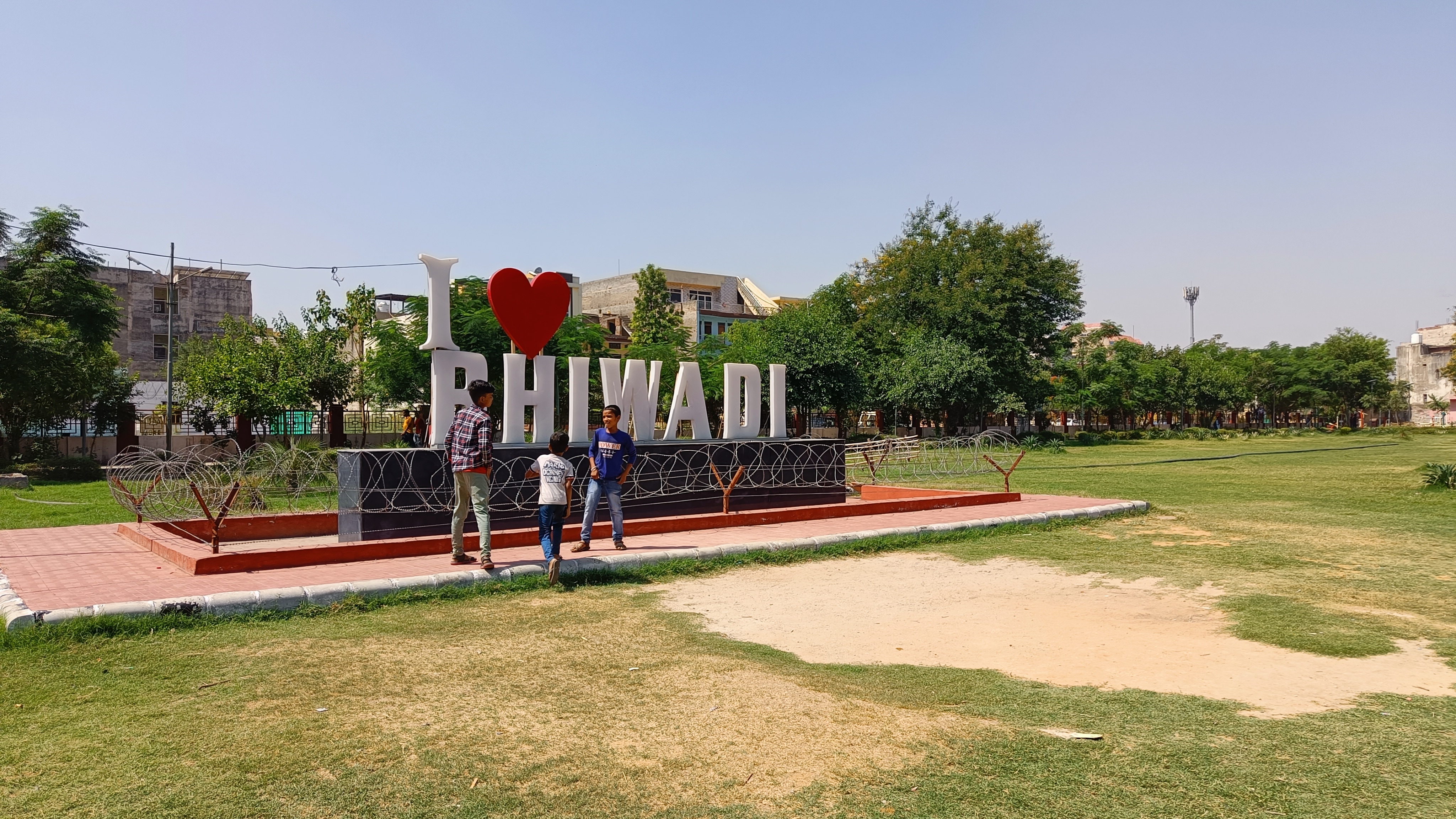
The first apartment complex that sprang up in the city was Ashiana Greens, launched in 1993 by Ashiana Housing, founded by Om Gupta, a civil engineer from BITS-Pillani.
“My uncle had an oil extraction unit in Bhiwadi, and during a visit to the town, my father realised that a lot of factory owners were from Delhi, who travelled to Bhiwadi every day. He saw a housing gap and decided to build apartments,” says Om Gupta’s son Vishal Gupta, the managing director of Ashiana Housing.
“Initially, he constructed 24 units, but things did not go according to the plan, and we could sell just five apartments in two years. I joined my father’s business in 1995 and would go factory to factory, convincing industrialists to buy our flats. Slowly, over the next few years, we were able to sell 120 units,” he says.
Since then, the company has built around 6,000 housing units spread across various projects, including two complexes as continuous care retirement communities —Utsav and Nirmay.
Other real estate developers also got in on the act, with the city witnessing a major realty boom between 2005 and 2014, when about 20 builders from Delhi, Gurugram and Jaipur entered the market.
“The result is that the supply now far outstrips the demand, and property prices have not risen for many years, unlike in Noida and Gurugram. A 1500 sq ft three-BHK flat in the city’s posh housing societies costs just about 50 to 55 lakhs. A real estate boom in Haryana’s Sohna has also affected property prices in Bhiwadi,” says Varun Aggarwal of Aggarwal Realtors, a property brokerage firm in the city.
Another reason why property prices have remained stagnant is the poor connectivity with Delhi, and the lack of colleges and hospitals in the city, says Anil Gupta, managing director of Ashadeep Group, a Jaipur-based real estate company that has built several group housing societies in Bhiwadi and neighbouring Neemarana.
Umesh Rathi, 28, who works with a pharmaceutical company in the city, is sitting with a group of friends in a rooftop café with only very basic facilities —bamboo furniture and a string of lights on the walls. “Unlike in other NCR towns, there is hardly any place for youngsters to go to after work in Bhiwadi because it is primarily a city of blue-collar workers,” he says.
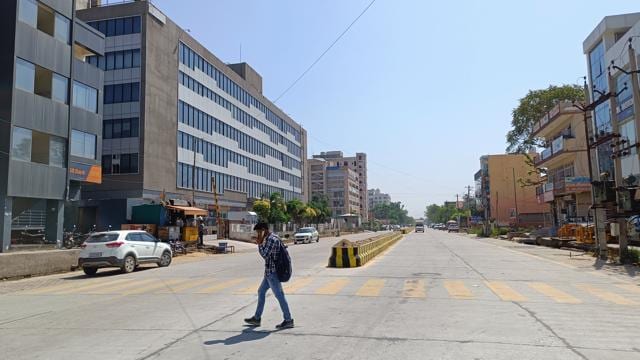
Today, many residents like Baranwal refer to Bhiwadi as a poor version of Gurugram because of the large number of high-rise residential towers in the city, but the lack of facilities like parks and malls.
Nitin Bhatia, who works with Honda Motorcycles, adds, “Bhiwadi has industrial areas and massive housing societies, but no social infrastructure. There are hardly any options for shopping and eating out. The malls are very small, and one has to travel to Gurugram to shop.”
Connectivity is such a problem that the nearest railway station is Rewari in Haryana, about 20km away.
But the city is now undergoing a bit of a makeover.
The Rajasthan government established the BIDA in 2018 to develop the Bhiwadi Integrated Township as a special investment region. Over the past couple of years, the authority has taken several initiatives, including the development of parks and the beautification of roads, including Alwar Road, which is the city’s nerve centre.
“On Alwar Road, we are moving all overhead wires underground, and are widening the road, which will also have a service lane, a green belt and a walking plaza, and designer lights. The ₹40 crore project will be completed by August,” says BIDA’s Tomar. “And work on a ₹21 crore sports stadium will start soon.”
He adds that the upcoming Dharuhera-Bhiwadi link road, which is being built by the National Highways Authority of India (NHAI), will boost Bhiwadi’s connectivity with the Delhi- Jaipur Expressway.
The Khushkhera-Bhiwadi- Neemrana region is being developed as an industrial township under Delhi-Mumbai Industrial Corridor project, and the elevated line of the Western Dedicated Freight Corridor (WDFC) cuts through the city.
Rising number of industries
The demand for housing properties in Bhiwadi may have somewhat stagnated over the years, but the demand for industrial plots continues to rise.
“Over the past two years, we have allotted about 200 plots to a variety of industries, including big firms such as Okinava scooters and Asian Paints, with a total investment of ₹2,100 crores,” says Kuldeep Dadhich, who heads RIICO’s Unit -2, which has new, upcoming industrial areas under its jurisdiction.
Satish Sharma, a real estate agent who deals in industrial land, adds, “Since 2021, the cost of industrial land has jumped from ₹15,000 per sqm to ₹30,000 per sqm. But Bhiwadi is still cheaper than neighbouring Gurugram and Manesar.”
The low cost of land is why Honda Cars India set up its manufacturing facility in Bhiwadi in 2008.
“In the late 2000s, when we were planning to open a new plant, we chose Bhiwadi because of the affordable cost of land,” says Rabindra Singh, vice president, human resources, Honda Cars India. The company’s massive 600 acre zero-waste plant rolls out about 120,000 cars per year.
“About 15,000 people work on the campus, about 4,500 people with Honda Cars, and others with our 80 OEM manufacturers, which have their units on the integrated campus,” says Singh, adding that the company stopped production in its Greater Noida plant in 2020 to consolidate all production at its Bhiwadi plant.
Hotbed of crime
Bhiwadi in general and Alwar district in particular perpetually seem to be in the news for all the wrong reasons, including incidents of loot, mugging, chain snatching, theft, and other, more serious crimes. In April 2019, chief minister Ashok Gehlot announced the bifurcation of Alwar into two police districts following the gang rape of a Dalit woman in Thanagazi town, a case that led to outrage across the country.
“Lawlessness has been a problem here. Vehicle theft and incidents of firing at busy markets have been rampant, creating a sense of insecurity among common people,” says Bhatia, the Honda Motorcycles employee.
Anil Beniwal, Bhiwadi superintendent of police, says the city’s proximity to Haryana regions such as Mewat, and its vast labour population, poses special policing challenges.
Police are currently in the process of installing about 200 cameras at crucial locations across the city for better surveillance as part of the state government’s Abhay Command and Control Centre project.
“We are cracking down hard on criminals. Incidents of vehicle theft and firings have come down significantly in the past three months,” says Beniwal.


