E-Paper



BS3 petrol, BS4 diesel vehicles banned in Delhi
Vehicles not conforming to latest emission norms will not be allowed to ply on Delhi’s roads with immediate effect, the transport department announced on Monday, as air quality worsened in the capital.

 Prefer HTon Google


Vehicles not conforming to latest emission norms will not be allowed to ply on Delhi’s roads with immediate effect, the transport department announced on Monday, as air quality worsened in the capital.
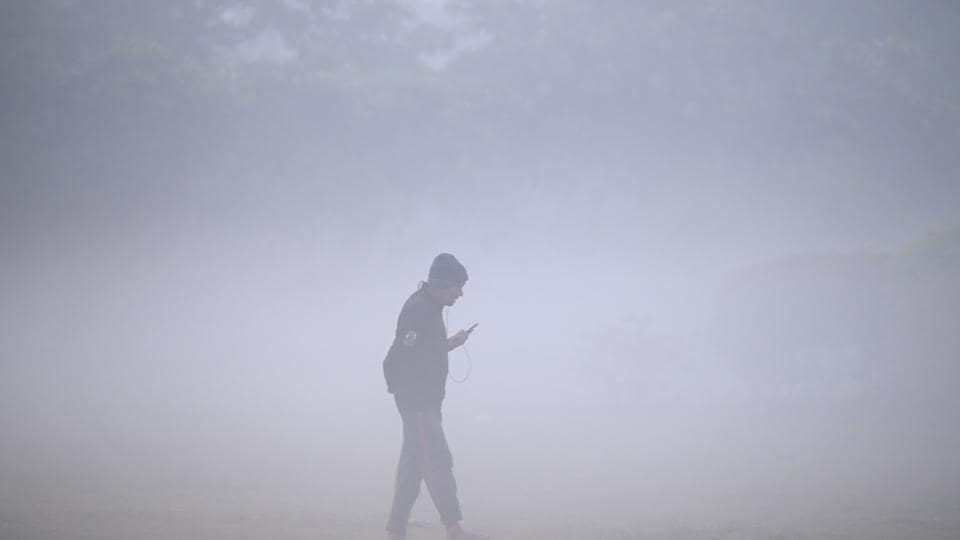
The deterioration in air quality prompted the Commission for Air Quality Management to trigger emergency measures under Stage III of the Graded Response Action Plan (Grap) on Sunday, which included a ban on all private construction activity.
Petrol four-wheelers with BS-III emission standards and diesel vehicles with BS-IV standards are banned till December 9, unless the commission lifts Stage III restrictions earlier than that, the transport department said in its order. Vehicles on government duty or providing emergency services are exempt, it said.
The Delhi traffic police have been informed of the decision, a transport department official said. Any vehicle found violating the ban can be fined ₹20,000. “Instructions have been relayed to the traffic police to comply with the order from immediate effect and fines can be issued based on this,” the official said, asking not to be named. “The ban will remain in place till December 9, unless the CAQM removes Stage III before that.”
Delhi’s Air Quality Index (AQI) deteriorated to the “severe” category for the first time in a month on Sunday, prompting the CAQM to invoke emergency measures. The AQI showed an improvement on Monday, dropping down to the “very poor” category with a reading of 347 at 4pm, a drop of 60 points from Sunday’s 407.
November 4 was the last time Delhi’s air was in “severe” category. A similar ban on vehicles kicked in on November 5 and remained till November 13.
State governments in the National Capital Region have an option to enforce such a ban when Stage III is triggered. There are currently around 0.3 million BS-IV diesel four-wheelers registered in Delhi, while there are around 0.2 million BS-III petrol vehicles.
Although these bans are disruptive, they are emergency measures aimed at controlling the spike in air pollution, said Anumita Roychowdhury, executive director, research and advocacy at the Centre for Science and Environment. “Such measures can be avoided in the future if long-term action is taken,” she said.
This is the first winter Delhi is seeing the impact of a revised Grap, which was modified by the CAQM in July as part of a new comprehensive policy to control air pollution in the national capital region. The new Grap has been linked to AQI instead of PM 2.5 and PM 10 concentration in the air, which was being done till last year.
Under the previous Grap, four-wheelers could only be banned if the odd-even road rationing scheme came into effect, and only when air quality was in the “severe plus” or “emergency” categories.