
 E-Paper



Capital turns dust bowl as AQI worsens
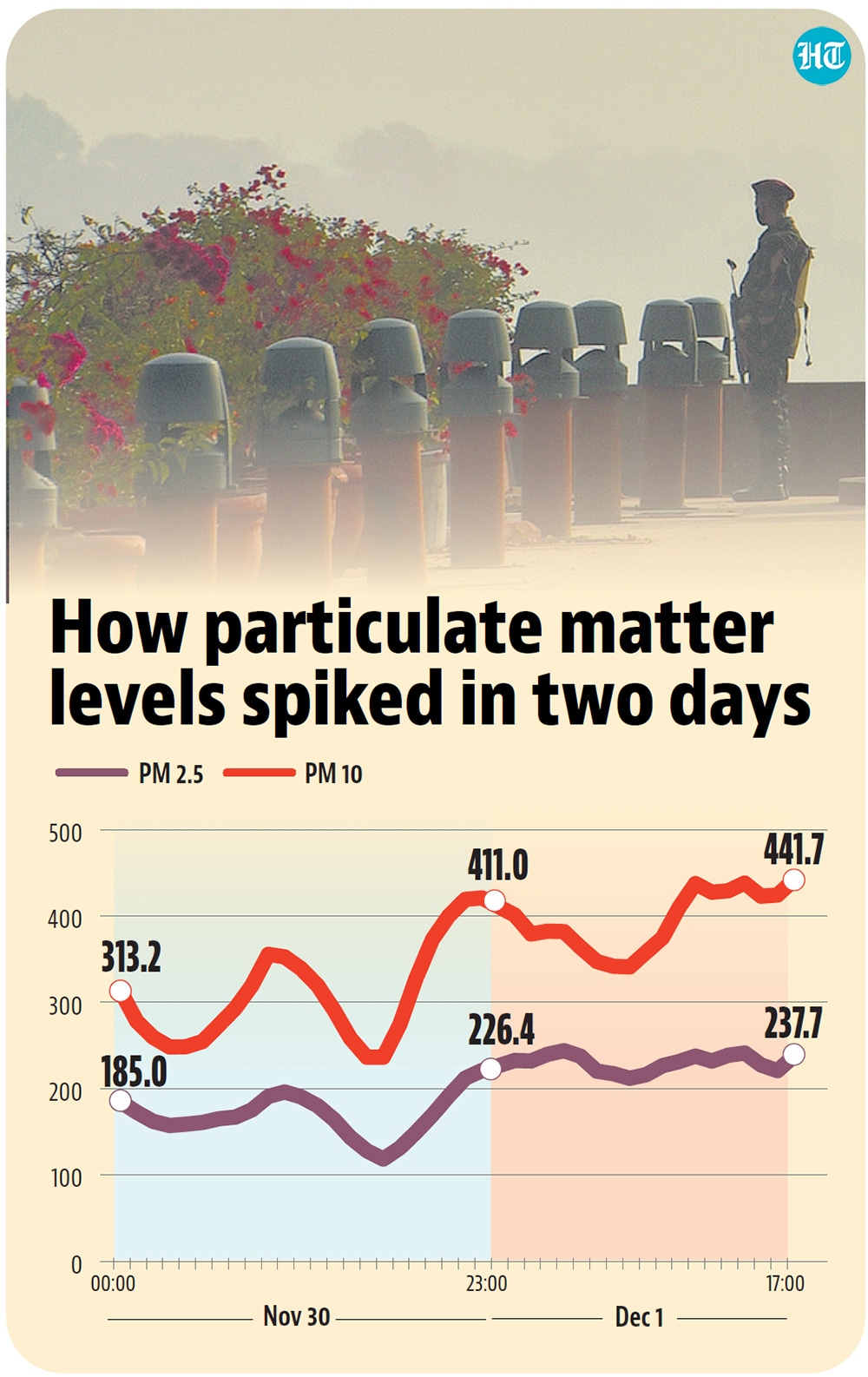
At 4pm on Wednesday, Delhi’s 24-hour average air quality index (AQI) was 370, considered ‘very poor’, up significantly from Tuesday’s 328, also in the same range.

 Prefer HTon Google


Cloudy skies and a lack of sunlight in the national capital trapped pollutants, making Delhi seem like a dust bowl on Wednesday, scientists at the India Meteorological Department (IMD) said.
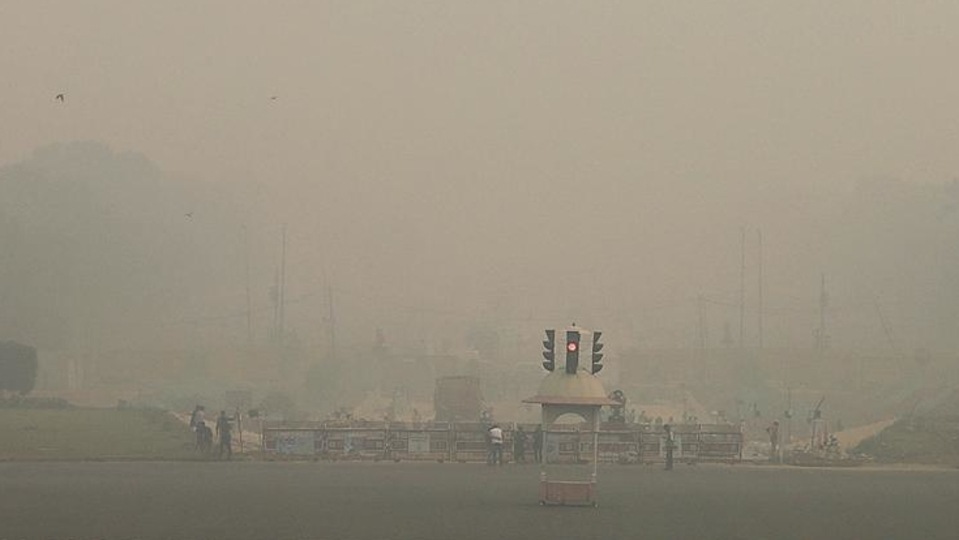
At 4pm on Wednesday, Delhi’s 24-hour average air quality index (AQI) was 370, considered ‘very poor’, up significantly from Tuesday’s 328, also in the same range according to Central Pollution Control Board (CPCB) recordings.
Cloudy skies and a lack of sunlight in the national capital trapped pollutants, making Delhi seem like a dust bowl on Wednesday, scientists at the India Meteorological Department (IMD) said.
At 4pm on Wednesday, Delhi’s 24-hour average air quality index (AQI) was 370, considered ‘very poor’, up significantly from Tuesday’s 328, also in the same range according to Central Pollution Control Board (CPCB) recordings.
|#+|
“The cloudy skies did not allow sunlight to penetrate and reach the ground. This gave an impression of haze and it looked like the pollution levels have spiked exponentially. While there was an increase in pollution levels because of low wind speeds, the AQI remained in the very poor zone,” said VK Soni, head of IMD’s environment and research centre.
IMD forecasters explained that the overcast skies in Delhi and neighbouring areas was the impact of a western disturbance, which is likely to cause light, isolated showers in parts of the Capital on Thursday.
The western disturbance will also lead to an increase in wind speeds from Thursday, which could improve the pollution in the city marginally.
“The winds will be easterly, blowing at a speed of 4-10kmph on Thursday and Friday. This will lead to a marginal improvement in the air quality but the AQI will continue to remain in the very poor range,” Soni said.
Delhi also saw temperatures climb marginally on the back of a western disturbance.
On Wednesday, the maximum temperature at the Safdarjung, Delhi’s base station, was 23 degrees Celsius—two below normal, and the minimum temperature was 11.5 degrees Celsius, two above normal.
This came even as the central weather office predicted that temperatures in the city are likely to fall from Thursday, even as it sees a largely normal winter, with few deviations in temperature.
Wednesday’s dip came a day after the end of the worst November on record in terms of average AQI, with the number hitting 376, worse than 2016, when this touched 374.
The national capital also recorded the maximum of 11 days in November when the index rose above 400, which is considered severe by the pollution watchdog, as it affects healthy people and seriously impacts those with prior illnesses. All days except two saw AQI values exceeding 300, which means residents had no respite from the toxic blanket that smothered the capital all November.


