
 E-Paper



Capital’s air least breathable from Nov 1 to 15, shows data
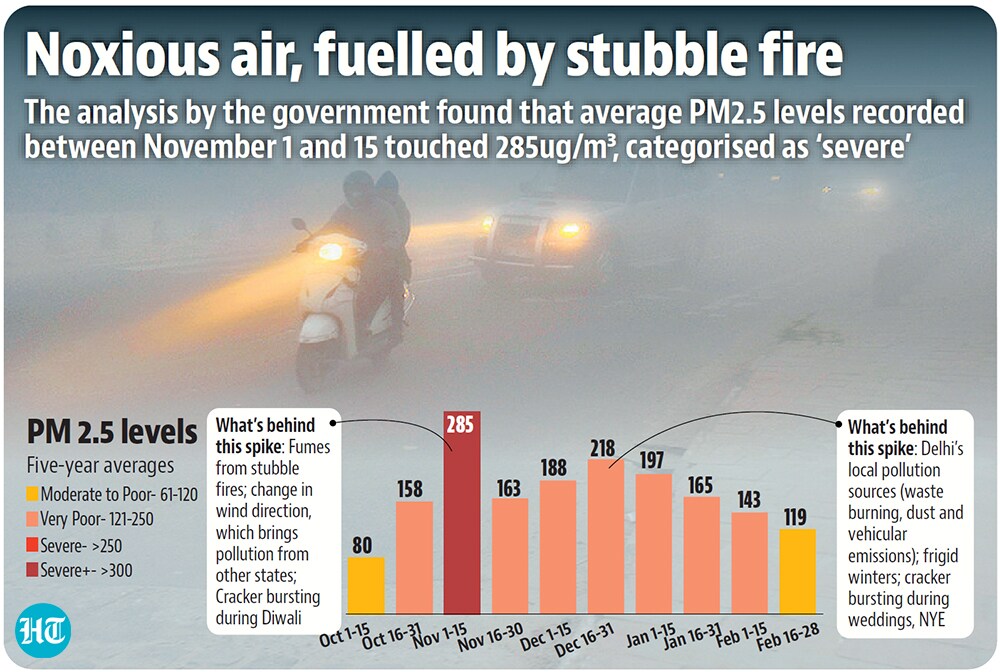
The analysis by the government’s environment department found that average PM2.5 levels between November 1 and 15 touched 285ug/m3, categorised as “severe” under regulations of the Graded Response Action Plan (Grap).

 Prefer HTon Google


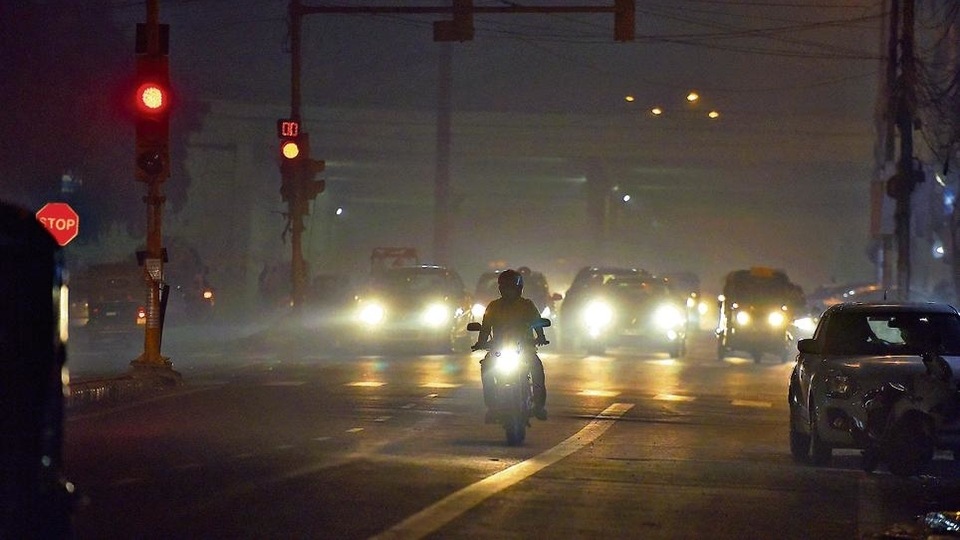
The Capital breathes its most polluted air between November 1 and November 15 when the smoke from stubble fires and firecrackers plunges the city into a health emergency, a Delhi government analysis of average PM2.5 (particulate matter with diameter less than 2.5 micrometres) levels over the last five years showed.
The analysis by the government’s environment department found that average PM2.5 levels between November 1 and 15 touched 285ug/m3, categorised as “severe” under regulations of the Graded Response Action Plan (Grap).
Senior Delhi Pollution Control Committee (DPCC) officials said November 1-15 is the worst pollution period for Delhi primarily because the city’s air is saturated with the smoke from farm fires in Punjab and Haryana. The situation is made worse by cracker-bursting during Diwali, and unfavourable winds that bring in pollutants from cities in the National Capital Region (NCR) into Delhi.
“The major contributor during this fortnight was stubble fires that happen in large numbers in Punjab and Haryana. These fires increase by October 15, but the impact on Delhi’s air peaks by November,” a DPCC official said, asking not to be named.
The official added, “Apart from this, over the last four-five years, Diwali was celebrated either in the end of October or the first half of November. Even though last year there was a complete ban on crackers, violations were reported because the ban was announced at the last moment, and also because people bought crackers from NCR cities such as Ghaziabad and Gurugram.”
In 2020, Diwali was celebrated on November 14; in 2019, it was on October 27, in 2018, it was on November 7, in 2017 it was on October 19 and in 2016, the festival was celebrated on October 30.
The trend may continue this year as well since Diwali will be celebrated on November 4, the official said.
The analysis focused on how winter pollution levels fluctuate between October and February. The months were divided between fortnights to check pollution levels, and to focus on particular sources during specific periods, so that government agencies can plan focussed action.
The analysis showed that the winter pollution season starts from October after the withdrawal of monsoon. In the first fortnight of October, the average PM2.5 levels were 80ug/m3. As stubble burning cases increased and the wind pattern over northwest India changed, the average particulate levels also spiked, settling at 158ug/m3 in the second half of October. After peaking at 285ug/m3 in the first 15 days of November, the PM2.5 levels came down briefly, reaching 163ug/m3 between November 16 and November 30, before rising again.
Between December 1 and 15, average PM2.5 levels were 188ug/m3. With temperatures dropping, the pollution levels went up to 218ug/m3.
In December, scientists said, the pollution sources were mostly local such as open waste burning, vehicular emissions and road and construction dust. “The spike in the latter half of December is very different from what we see in November. This is primarily caused by local factors. Delhi’s internal pollution sources are unable to disperse and remain close to the surface because of the cold conditions and low wind speeds. Other factors that add to the city’s pollution spike are cracker bursting during the New Years’ and also during weddings during this time of the year,” a second DPCC official said.
Officials said that this assessment of how the city’s air quality fluctuates will help the government target its action against pollution sources. The city’s first state-level winter action plan has also taken into account the findings of this analysis.
Anumita Roychowdhury, executive director (research and advocacy) at the Centre for Science and Environment (CSE), said that their own analysis has also showed that Delhi’s winter pollution spikes in two phase -- once at the onset of winter, and then again at the peak winter.
“We need to understand that winters are tricky because meteorological conditions do not allow easy dispersal of pollutants. Even under these conditions, the government can ensure that round the year action and targeted emergency action can help reduce spikes,” said Roychowdhury.
She added, “You cannot find a magic bullet, but the agencies can ensure that fuel is not added to fire. The weather conditions might not be conducive, but at least we can control the emissions from local sources so that the pollution load does not increase. We need a holistic winter plan, but we also ensure emergency measures during peak pollution days.”


