
 E-Paper



Centre may bring back dog-nose trucks
The “dog nose” refers to a truck design in which the engine and hood protrude in front of the driver’s cabin — a common sight until the late 1990s


The Centre is working on new regulations that may soon bring back the “dog nose” design for trucks and heavy vehicles — a structural change that could improve road safety and logistics efficiency, Union road transport and highways secretary V Umashankar said on Tuesday.
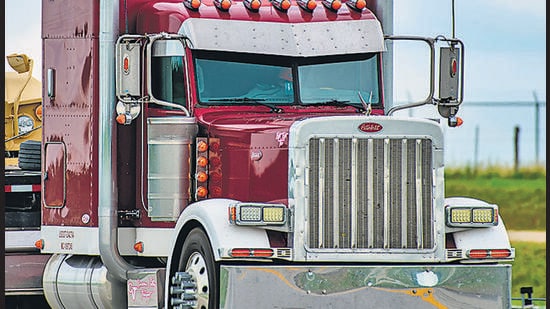
The “dog nose” refers to a truck design in which the engine and hood protrude in front of the driver’s cabin — a common sight until the late 1990s. That design gave way to flat-faced cabins when regulations started limiting the length of freight vehicles, which in turn began incentivised maximising cargo space. This, he said, inadvertently, may have introduced safety risks.
Umashankar now says that this seemingly small change could be crucial to improving visibility and reaction time on highways. “After all driving is based on sensory perception, your mind calculates based on what you see and takes actions. So, if the driver is not sitting on top of the engine, he can have a little bit of extra time.”
“This simple alteration gives drivers that extra bit of space and time — a space cushion — to see ahead and respond better,” he said.
Umashankar was speaking at the sidelines of Urban Adda 2025, a three-day urban mobility conference in Delhi organised by the Raahgiri Foundation in partnership with the International Council on Clean Transportation (ICCT) and GuruJal, and supported by Nagarro. HT is the media partner for the event.
Automobile safety experts say both flat-fronted and dog-nosed configurations have their own advantages.
An automobile designer, speaking on condition of anonymity, said, “In high-speed scenarios, the extra space provided by the nose would give better reaction time for the drivers, but flat-fronted trucks offer better visibility, which might be more advantageous in non-high-speed conditions, and particularly keeping in mind pedestrian safety.”
Umashankar said the ministry will soon begin consultations with truck manufacturers and other stakeholders to facilitate the transition. However, even if the regulation is enforced today, it would take at least two years for manufacturers to rework assembly lines and comply.
Beyond truck design, Umashankar said the government is also exploring the introduction of “puller trailers” — multiple-trailer configurations already in use in several developed countries — to enhance freight efficiency and reduce logistics costs. “We can have not just single, but multiple trailer systems. This will bring down the cost of freight movement and make the economy more efficient,” he said.
He added that road safety issues are not inherently complicated but require cooperation between authorities and citizens at the local level. “You need entire neighbourhoods to act as pressure groups. That’s when real change happens,” he said.
Drawing from his experience as municipal commissioner in Gurugram and Faridabad, Umashankar noted that urban mobility remains a pressing issue in most Indian cities. In many dense urban areas, app-based cab services are filling the gaps left by inadequate bus systems, he said. “These services have not reduced congestion, but they have provided a certain level of mobility,” he said, adding that the government will come up with aggregator guidelines by the end of the month, which will cover safety, service availability, and driver welfare.
He also struck a note of caution on metro rail as a silver-bullet solution to urban transit woes.
“Yes, metros can do bulk people movement, but Mumbai, for example, is a typical city which grew because it had a rail network that developed in the early 1900s when land was available and affordable. Today, creating a metro system takes 5–10 years. Without a complete network, ridership stays low,” he said.
He pointed to his own tenure in Gurugram, where he helped launch a public bus service funded by a 1% surcharge on real estate transactions. That viability gap fund made fares affordable. “Now, most cities do not make this kind of provision. So, we have loss-making services,” pointing to the failing service levels and bus ridership across major cities in India.”
‘India to build all its highways by 2040’
He said the ring-fencing of highway toll revenue has helped India steadily expand its road network. “By 2040, we should have completed building all our national highways. After that, the focus must shift to maintenance, encroachment prevention, and ensuring urban development doesn’t compromise highway efficiency.”

Stay updated with all top Cities including, Bengaluru, Delhi, Mumbai and more across India. Stay informed on the latest happenings in World News along with Delhi Election 2025 and Delhi Election Result 2025 Live, New Delhi Election Result Live, Kalkaji Election Result Live at Hindustan Times.


