
 E-Paper



Delhi finally declares 4,080ha of Southern Ridge as reserve forest after 31 years
Move gives forest department full enforcement powers; other Ridge zones remain stuck as 307ha stay encroached

 Prefer HTon Google


Nearly 31 years after Delhi moved to protect the southern Ridge under Section 20 of the Indian Forest Act, 1927, the final gazette notification was issued declaring 4,080 hectares, nearly two-thirds of the total area, of this ecologically sensitive stretch as “reserve forest”.
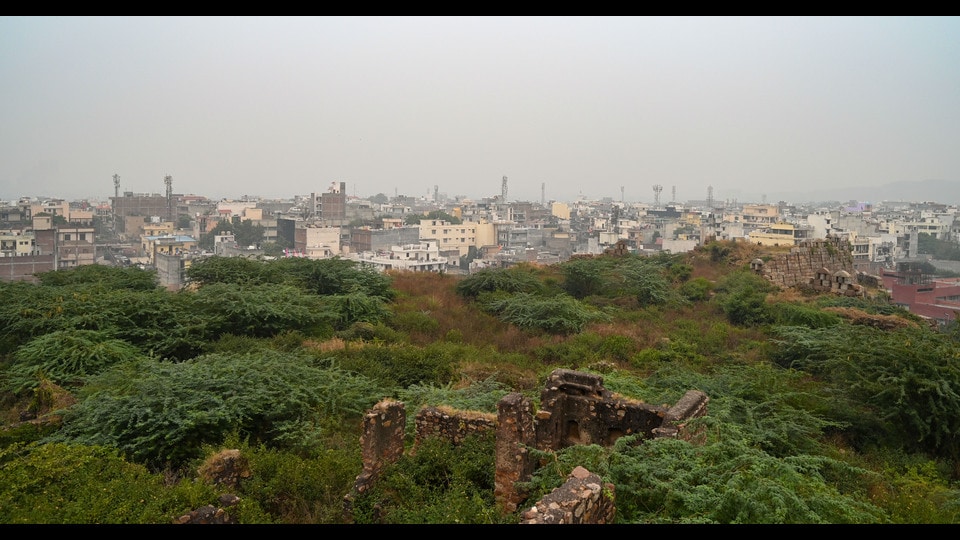
The gazette notification, issued on October 24 and published on Monday, comes after the Delhi chief minister Rekha Gupta gave her approval for the same on October 13. The file was then sent to the Delhi lieutenant governor for final approval.
The development marks the most significant legal protection granted to the Ridge in decades, granting the forest and wildlife department full authority to act against any encroachments, with boundaries now conclusively demarcated and all claims on the notified land settled.
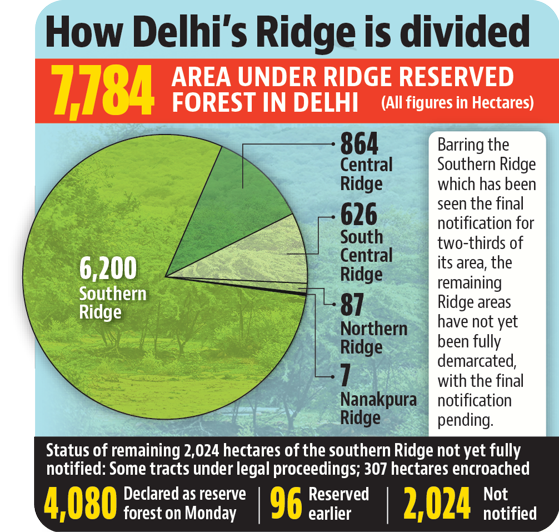
The Southern Ridge covers nearly 6,200 hectares, making it the largest of Delhi’s four major Ridge zones. Yet until now, only 96.16 hectares had been notified under Section 20, the final step required to declare land as reserve forest. To be sure, Section 4 – under which Delhi first notified the Ridge on May 24, 1994 – only grants preliminary protection. For full legal status, the land must be surveyed, claims settled, and a forest settlement officer (FSO) must certify that it is free of encumbrances. The new notification completes this process for roughly two-thirds of the Southern Ridge.
This push for final notification comes after years of legal and political tussle over Delhi’s Ridge lands, which have long been under pressure from real-estate interests, construction activity, and government projects. Environmentalists have frequently accused successive governments of delaying the protection process, despite a series of directions from the National Green Tribunal (NGT). Experts said the sheer scale of encroachment – coupled with the slow pace of boundary settlement – has meant the Ridge has steadily shrunk even as litigation continued. Monday’s notification, they said, is a landmark step, but one that comes “woefully late” for an already degraded landscape.
The document, a copy of which HT reviewed, states that a joint status report with village-wise survey maps was submitted on April 5, 2019. It adds that FSO “inquired into and determined that no right exists in favour of any person… and has certified that no claims or appeals thereof are pending”.
With this, the lieutenant governor formally declared the listed parcels as reserve forest.“The Lt Governor of the National Capital Territory of Delhi is pleased to hereby declare such lands as specified in the schedule below, as reserve forest, with effect from the date of publication of the notification in the official gazette,” it said.
The notified area spans 13 villages, including major forested tracts: 770.1 hectares in Bhatti, 651.7 hectares in Dera Mandi, and 542.3 hectares in Asola. Together, they form the forested backbone of south Delhi, connecting the Asola Bhatti Wildlife Sanctuary with the Aravalli landscape extending into Haryana.
Delhi’s Ridge – often described as the city’s “green lungs” – covers roughly 7,784 hectares and includes the central Ridge (864 hectares), south-central Ridge (626 hectares), and northern Ridge (87 hectares). A seven-hectare stretch in Nanakpura also falls under the south-central zone. Despite repeated court orders, most of these areas remain stuck in procedural delays.
In March this year, the forest department informed NGT that it could not issue final notifications for the central, northern, Nanakpura and south-central Ridge zones because boundary demarcation for these areas was still pending. The admission came during a hearing on a petition filed in 2015 by Delhi resident and environmentalist Sonya Ghosh, who urged the tribunal to intervene to prevent further encroachment. In 2017, NGT directed the removal of encroachments from the Ridge; in 2021, it ordered the Delhi government to complete the final notification for all Ridge areas within three months. Ghosh later filed an execution application stating that these directions had not been followed.
The slow pace of action is reflected in official records. Of the 2,024 hectares yet to be notified, around 307 hectares are still under encroachment, according to a forest department affidavit submitted to NGT in March. Officials familiar with the matter said boundary disputes, overlapping land records, and resistance from entrenched occupants have repeatedly stalled the process.
Environmentalists, however, say the delays cannot be explained away. Bhavreen Kandhari, an environmental activist questioned the delay. “It has been three decades now and even then, it was not pro-activeness of the department but rather, the NGT nudging them forward. The delay has meant already so much area of the Ridge in Delhi is encroached upon and removing this will take several years,” she said.


Stay updated with all top Cities including, Bengaluru, Delhi, Mumbai and more across India. Stay informed on the latest happenings in World News along with Delhi Election 2025 and Delhi Election Result 2025 Live, New Delhi Election Result Live, Kalkaji Election Result Live at Hindustan Times.


